Molly McPherson: Navigating Crises & Walking the Irish Soil


 Apple Podcasts

 Spotify

 YouTube

 Overcast

 Podcast Addict

 iHeartRadio

 PocketCasts

 Amazon Music

 Castro

 Castbox

 Podchaser

 TuneIn

 Deezer

 Spreaker

 RSS Feed
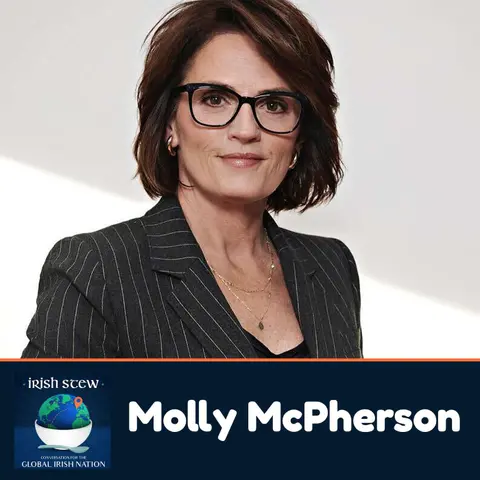
When you are in the middle of a crisis and the media comes knocking, who you gonna call?
Molly McPherson, according to leading companies, brands, and celebrities. Even the media calls on her to breakdown trending crises, including the New York Times, NPR, NBC News, and the Wall Street Journal…
…and now the Irish Stew podcast, too, because Molly is one proud Irish American.
"There are people who are Irish, and then there are people who are IRISH. They live it, and it's a part of their being. I'm the latter." Molly says of her upbringing in Minnesota where for one golden teenage year, Molly got to wear a green cape and a crown
"I was St. Paul's Miss Shamrock, which is one of the best princesses you can be out there. You're in the St. Patrick's Parade, you're going to all the bars, you're singing all the songs,” she recalls fondly.
A self-described ‘newsie” from an early age, Molly says, "I was always drawn to crime and that mayhem and trying to untangle who did what and why…I don't think I'm drawn to the chaos. I'm drawn to seeing through the chaos."
She had to see through the chaos of multiple crises in early job postings in the cruise industry and FEMA, the Federal Emergency Management Agency, where she anticipated the trend towards storytelling through the kind of short form, online video that now dominates TikTok and Instagram.
Today she shares her hard-earned crisis management insights as a consultant, keynote speaker, and social media thought leader, focused on building her Substack community.
“Own it, explain it, promise it--that’s my mantra and I live by it. The mistake people make is they don't own it, and they just come up with excuses. They do step two first, and that's when things go sideways," Molly tells Irish Stew
She proudly owns her Global Irish identity.
"When we went to Ireland recently, I needed to walk the soil, if you will… I don't even call them ancestors…to me they're family. I wanted to see the church where they were baptized, where they lived," she recollects from their time in County Laois. “I just felt that tether back to this woman who had a five-year-old and had to go to America. It was a moment for me, and for my kids."
She made sure that the itinerary included Derry and Belfast, saying “Being there brought up really good conversations with my kids that I'm so happy I had.”
Before she sprinted off to a speaking engagement in Times Square, Molly reflects on the past and looks to the future.
"People who work in crisis usually live a crisis. My career kind of mirrors what I needed to do myself in life. I've just been hustling to raise four kids. That's really what I've been doing,” she says. "I'm at the stage of my career where I have boundaries where I can slowly move out of the client work and sit in the work in my head. I don't want to be a tinkerer. I want to be a thinker. And I want to write a book."
LINKS
MOLLY MCPHERSON
- Substack
- TikTok
- YouTube
- Podcast: The PR Breakdown with Molly McPherson
- Website
- Speaking inquiries: APB Speakers
IRISH STEW LINKS
- Website Home Page
- BlueSky
- Mastodon
- Media Partner: IrishCentral
Episode Details: Season 8, Episode 31; Total Episode Count: 172
00:00 - Introduction
02:05 - The Ohio Campaign Ad
06:50 - Irish Roots in Minnesota
11:13 - From Newsie to Crisis
16:51 - Walking the Family Soil
21:50 - North of Ireland
24:29 - Spotting the Tell
27:29 - Trump Resets the Table
30:02 - FEMA and Rebuilding Trust
33:05 - Own, Explain, Promise
35:53 - What Fergus Learned
38:08 - Owning Your Platform
41:52 - The Power of Silence
42:48 - The Seamus Plug
44:19 - What Stayed With Us
46:49 - Join Our Listener Episode
47:35 - Credits
Irish Stew: Molly McPherson
Episode transcript · Released November 9, 2026
This transcript was generated with AI speech-to-text and lightly edited for readability: filler words, false starts and repeated words have been removed. Names, places and organizations were reviewed and confirmed by the Irish Stew production team. The episode itself is the authoritative record.
Speakers: Martin Nutty
Jump to chapter
# TIME CHAPTER
1 0:00 Introduction
2 2:05 The Ohio Campaign Ad
3 6:50 Irish Roots in Minnesota
4 11:13 From Newsie to Crisis
5 16:51 Walking the Family Soil
6 21:50 North of Ireland
7 24:29 Spotting the Tell
8 27:29 Trump Resets the Table
9 30:02 FEMA and Rebuilding Trust
10 33:05 Own, Explain, Promise
11 35:53 What Fergus Learned
12 38:08 Owning Your Platform
13 41:52 The Power of Silence
14 42:48 The Seamus Plug
15 44:19 What Stayed With Us
16 46:49 Join Our Listener Episode
17 47:35 Credits
0:00 Introduction
Martin Nutty [0:00]
Before we begin, two quick things. Every Wednesday we send out a short newsletter with the week's episode and the stories behind it. You can sign up at our homepage, irishstewpodcast.com.
John Lee [0:14]
And stay with us to the end of this episode. In December we're making a special episode built around you, our listeners, and we'll tell you how to take part.
Molly McPherson [0:27]
I haven't had an easy life. I've had to hustle. And people who work in crisis usually live a crisis. My career kind of mirrors what I needed to do myself in life. So being in Ireland this past spring was so important to me, because I just felt that tether back to this woman who had a five-year-old and had to go to America. And it was a moment for me.
Martin Nutty [0:53]
That was the voice of Molly McPherson, crisis communications expert. I'm Martin Nutty, and you're listening to the Irish Stew podcast.
John Lee [1:02]
And I'm John Lee. You know, Martin, we share an interest in media and journalism, 15 episodes in that category to date. Well, today we talk to a media thought leader in crisis communications and reputation management: a crisis consultant, keynote speaker and podcaster. She's active across social media, especially these days on Substack. With my communications background, I've been following Molly McPherson's podcast, and I picked up on the breadcrumbs she's been leaving about her Irish roots. And though she is the go-to crisis resource for media outlets like the New York Times, NPR, NBC News and the Wall Street Journal, she liked the idea of a change-of-pace Global Irish Nation conversation with us, and made the time to meet with us in person in New York, one week before America's midterm elections. So let's not keep her waiting, and welcome Molly McPherson to Irish Stew. Molly, welcome.
2:05 The Ohio Campaign Ad
Molly McPherson [2:05]
So happy to be here.
John Lee [2:06]
Great to have you. I've been following you from my PR perspective, and my past experience dealing with crises on social media, and on your podcast for a long time. Great to have you here in person. I know you dropped a few breadcrumbs in your podcast about your Irish background, so I said, she's legit for Irish Stew. So here you are. You were very polite. You turned off the phone before we started, but let's say you didn't.
Molly McPherson [2:31]
Yes.
John Lee [2:32]
What would happen if you looked down and saw it was a client calling you right at this moment, and you felt like there's a crisis coming on?
Molly McPherson [2:41]
Well, I'm at the stage of my career where I have boundaries. I just have certain client days, certain days of the week, because it took over my life for many, many years. But now I'm at this stage where I slowly want to move out of the client work and sit in the work in my head. I don't want to be a tinkerer. I want to be a thinker. And I want to write a book. So I'm kind of clearing the decks to do that.
John Lee [3:09]
Excellent. Well, let's say you look down, though. You did glance. You left your phone on silent, and you glanced down, and for some reason your caller ID picked up the names of either Vivek Ramaswamy or Dr. Amy Acton. Whose call would you pick up?
Molly McPherson [3:25]
Well, our job is not to make snap judgments, but I would listen to both messages. Vivek has the more interesting crisis angle, because he has more moves in play in his response: not just with the ad, but how he responded to the ad, what was said, and also who he put out to speak on his behalf, J.D. Vance, and then what he quietly did with the ad, which was take parts out of it. So that's the more interesting story to me, because crisis work to me is spotting the moves.
John Lee [3:56]
Let me just, because we have a global audience here. The only reason I led with this is because I was listening to Hugh Linehan's Irish Times Inside Politics podcast last night, and they went through this in great detail. So if they're talking about this in Ireland, we can talk about it here. These are the two candidates for governor of Ohio. Very significant spot. Vivek is the Republican and Dr. Amy Acton is the Democrat. Maybe you could just capsulize the crisis.
Molly McPherson [4:25]
Yeah, so Ramaswamy had an ad. We don't quite know where it originated, but it was an ad essentially framing her as a liar. And at the center of the ad was her estranged mother, calling her out as a liar. But what made this ad so pointed, and why people felt it, is that she was not only estranged, but she was estranged because her stepfather, her mother's husband, sexually assaulted her. That's a very personal story, but it's one that's universally felt, whether you've been assaulted or not. It landed with an oof. Everyone knew it felt like a bridge too far. So now people started paying attention to, well, now what is he going to do with that response?
John Lee [5:09]
And for Dr. Acton, who is on the receiving end of this kind of slash-and-burn advertisement?
Molly McPherson [5:15]
Well, you put out an emissary. Her brother went out and spoke, who is the perfect spokesperson. He could speak from experience. He could speak from the family experience and make it more about family. But the framing out of Vivek and J.D. Vance and the Republican Party, honestly, was just to label her as a liar. They were changing the narrative of the ad. J.D. Vance went out and said, well, if you're going to waste your time talking about ads and advertisements... So it's that framing where you dismiss it. And those are the things that I pay attention to. People make moves because they know they have to. That's what we pay attention to.
Martin Nutty [5:55]
It's all over the news, and it even goes up above J.D. Vance. We have Donald Trump coming in on top of it and saying something to the effect of, hey, I would have used it too. Help or hurt?
Molly McPherson [6:10]
Depends on who you're asking. I think it hurts Vivek a lot, because he stumbled a lot in his campaign. I think he's trying to be more of a Mamdani, a digital approach, and he's falling flat, and people are noticing that. So then he pulls from the Trump playbook, which is... you want to say crash and burn, but it's that kind of scorched earth, because he wants to appeal to a base who he thinks will like this type of adversarial advertising. But this was a piece where everyone has a family. Lots of people have toxic families. I think it went beyond politics, and that's why it was so damaging to Ramaswamy's campaign.
6:50 Irish Roots in Minnesota
John Lee [6:50]
Well, speaking of family, Molly, I mentioned I picked up Irish threads in your conversations. Tell us about your background: the Irish American family, the full deal, kind of a vague sense of Irishness, an Irish Catholic identity?
Molly McPherson [7:04]
Isn't it interesting how you can categorize people? There are people who are Irish, and then there are people who are Irish. They live it, and it's a part of their being. I'm the latter. My family, certainly. We know where we go back to, County Laois. We know the family line. They came over to the U.S. via Canada. At first they settled in New York, and then eventually in Minnesota, in a farming family in Rosemount, Minnesota, which is a very Irish community.
John Lee [7:34]
Where's that in conjunction to...
Molly McPherson [7:36]
South of the Twin Cities. So it's farming. And my great-great-great-grandfather, Thomas Callaghan, was a wealthy farmer. He was known there. He fought in the Civil War. Our family has a really strong identity, and so much of it is from my mother, my mother's side, my mother's neighborhood, and also her friends and their big Irish families. So that identity has always been important to me. I was also a member of the St. Patrick's Association in St. Paul, Minnesota. And when you're part of that association, when you're a young woman, you are coaxed, coerced, whatever it is, to run for Miss Shamrock. So I was St. Paul's Miss Shamrock a number of years ago, which is one of the best princesses you can be out there, because in Minnesota they have Queen of the Snows and all these other ones. But with this one, you're in the St. Pat's Parade, you're going to all the bars, you're singing all the songs. And it was just a wonderful time in my life.
John Lee [8:40]
I didn't know the story was going to be so deep here. We've had celebrities on, but we've never had a Miss Shamrock before.
Molly McPherson [8:45]
Well, there's my marker right there. There it is.
Martin Nutty [8:50]
I think we've had two guests that have Minnesota deeply connected into them. One of them is the chief operating officer [Andrew Dolan] of an organization in Washington, D.C., called Solas Nua, and he has seven generations of Irish roots in Minnesota. And the other one is Natalie Nugent O'Shea, who runs the Celtic Junction Arts Center in Minneapolis... St. Paul. In St. Paul, yeah. She's also, I think, got deep roots. And it was a surprise to us at the time, and I think maybe to many Irish listeners, the footprint of the Irish in Minnesota. Because when people in Ireland think Irish America, what do they think of? They think Boston.
Molly McPherson [9:38]
Yes.
Martin Nutty [9:40]
They think New York. They think really the Northeast. They don't think of all these other places that are out there. And of course, the Irish are sprinkled all the way over.
Molly McPherson [9:46]
They're sprinkled everywhere. And you're right, they think of big towns. They even think of Chicago, in the Midwest. But the rural communities and the farming, that's what brought a lot of Irish out there as well. And that was my family.
Martin Nutty [9:59]
It is one of the bizarre stories of Irish history that most of the folks that came over in the famine... and there were many ways of migration, but we mostly think about the famine when we think about migration out of Ireland. I should say An Gorta Mór, the big hurt, which is the Gaelic for it. Famine is a disputed term. Most of them came out of rural areas, and what did they do? They fetched up in New York and Boston, and all of a sudden, in one generation, they go from being rural to city. But there are the exceptions, the ones that managed to get out of the city and get land, et cetera. But Minnesota, that's the state you tie into as your origin point.
Molly McPherson [10:39]
Yes, and specifically St. Paul, Minnesota. We have St. Paul and Minneapolis. St. Paul, that's where the Catholics landed. The Italians are there, the Irish are there, and it's a very rooted family there. That's where the St. Patrick's Association is as well. But I went to school at Boston University, so that's what brought me back east, and I stayed there. And so my kids were raised, two were born in Massachusetts, two down in Washington, D.C., but they have this kind of route back to the Midwest, and certainly their Irish heritage as well.
11:13 From Newsie to Crisis
John Lee [11:13]
Well, Molly, how did you move from... taking off the crown and handing it off to the next Miss Shamrock must have been a trauma. But how did you move from that? Give us your entry point into journalism and media. Martin and I are fascinated with it. We've had a lot of good journalists as guests, and we've had documentary filmmakers who are in that journalism world. What drew you to that world, and then what drew you to the other side of the desk?
Molly McPherson [11:40]
I have been a newsie my whole life. I was the kid who read the newspaper. I was the kid who watched the television news. I read the TV Guide. I just love television, and I love the medium of television. I'm such a Gen Xer, because we sit in between the analog and the digital, and we can appreciate both and maneuver both. But I've always been fascinated by stories, and I have endless curiosity. I was at a dinner last night, and the woman next to me, Irish, said, how are you getting me to tell my deepest stories? It's a superpower that I have. For years I thought, oh, maybe it's the newsie in me being inquisitive, but really I have such a deep interest and curiosity in people. And when you research people and you watch people, that ties in so deeply with news. So I always wanted to be a journalist, and that's what I studied. But when I was at Boston University, it was the time when the internet was just starting. My class was the first to have email. So that's a date check right there. And when I got there, I thought, this is the future. So I ended up working in media, TV and radio, but they wanted me to start the internet program in news, and I've been fascinated by it ever since. Even back then, I'm so rooted in the same principles as what I do today.
Martin Nutty [13:15]
I'm curious. People become news hounds. I count myself as one of those. So as a fellow news hound, where does that come from? We've had another interesting guest, a guy called Mark Little. I just finished reading his book, and he talks about his desire to follow news stories as based on anxiety, meaning he grew up, and so did I, during the nuclear age. And sitting in Ireland, you're always wondering, are the Americans going to go off half-cocked against the Soviets, blah, blah, blah. So his news hound interest came from anxiety, and trying to understand the world that he found himself dropped into.
Molly McPherson [13:55]
That's fascinating. You know, when I think of what drew me early on, I was always drawn to crime and that mayhem, and trying to untangle who did what and why. We didn't have the internet back then, and I remember books and reading about murder. Maybe this was crime talk before it was a thing. But whether it's anxiety or suffering or trying to just untangle an issue, that's probably what has drawn me to media.
John Lee [14:24]
Well, that's kind of interesting. You're interested in murder and crime. And I'm looking at your resume, and I mentioned before we got on my kinship with you in PR, and also crisis. I worked in horse racing, at the New York Racing Association, which I would often describe as a crisis-making machine. We went through just about everything, from injuries to doping, betting scandals, bankruptcy and federal investigations. So, fun times. But here's the question. You worked in the cruise industry, and you joined FEMA, the Federal Emergency Management Agency, the people who jump in after every tornado, hurricane, flood, fire, natural disaster. Were you looking for trouble?
Molly McPherson [15:12]
Well, I've always been drawn to it, and I always have that kind of warning system. I had a therapist say that to me. Maybe it's the middle child in me. We're the forgotten people, but we're the ones who are always paying attention to everything. So I'm constantly scanning. I had those jobs because I was married at the time, a military marriage. I had to bounce around. I wanted to go into journalism and media. I really didn't have a choice, so I had to land somewhere. So that's how I ended up on the other side, in the public information role, when I went to Washington, D.C. But because I had interest and knowledge in technology, I was able to get these positions. Everything's about timing, too, when you look at timelines. When I was there, that was 9/11. That was also the Norwalk virus. This was the first time we really had a virus attack an industry. It was all over cruise ships. And I was the one saying, well, they didn't get the virus on the cruise ship, they got it on the airplane, so why are we getting all the heat? And I created the first dark site for our website then, for crisis. So it was a very interesting time to be there. And then through back and forth, I ended up at FEMA, doing disaster. So yes, I'm drawn to it, but I don't think I'm drawn to the chaos. I'm drawn to seeing through the chaos.
Martin Nutty [16:33]
Dark site? That sounds sinister. How does it apply to what you do?
Molly McPherson [16:37]
Oh, a dark site. PR people know this term. Everybody throws dark site around. It's a part of the website that you keep dark until something happens, and then you turn it on and all the information is there. It was a big buzzy word back in the day.
16:51 Walking the Family Soil
Martin Nutty [16:51]
You mentioned military marriage, moving around. Tell us a bit about that, because one of my pet theories, and John can roll his eyes on this one, is that I think uprooting is at the roots, to overuse a word, of a lot of the difficulties that Americans face. Think about the main uprooting: the big move from old Europe into America is your first uprooting. But Americans tend to pride themselves: okay, I started in Minnesota, I went to Washington, D.C., I'm now in Boston, or near Boston, or Maine. It's kind of a chest-thumping thing, but I think that can be really difficult and stressful, because that web of community, I think we treat somewhat cavalierly in America. I wonder what your thoughts are on that, since you've moved around a lot more than I have.
Molly McPherson [17:53]
Yeah, it makes me sad to leave Minnesota, and a big part of that community is that most people don't leave it. I was the only one to leave. Family and friends, like my second mother, Barb McIntyre. She was a McFarland. Her sister and husband run the Irish Gazette, and they would publish articles about me. There's just this sense of community. But when I left, I had to leave. It's almost like the Irish leaving for America. I needed to experience something different. And with marriage, and marriage ending, comes kids, and my kids are Irish American on the other side too, so they're full Irish kids. And you're absolutely right about the leaving. I'm going to skip ahead a bit. I know I'm going to go off your notes. You saying that really struck a chord with me, because I had four kids in three years, and I was on my own, because the husband at the time was underway, gone. When we went to Ireland recently, I needed to walk the soil, if you will, knowing where my family... I don't even call them ancestors. To me they're family. When you have a name and you know dates... and thankfully, with technology, Ancestry.com... the Irish records were so elusive, and now we see more of them and you can find out more. So when we traveled, my son was studying abroad at the University of Galway. I planned the trip with my oldest daughter. She serves in the military, in the U.S. Coast Guard, right now. We went over there for his break, and it was so important to me and to my kids that we go to the area where the family was. And not just like the Americans that come over and say, we want to see the county; they just want to know the county that we're from. I wanted to see the church they were baptized in. I wanted to see where they lived. Because the grandfather, the Callaghan who left Ireland, his father died when he was five, and there was a mother there, and that's who spoke to me. Because I haven't had an easy life. I've had to hustle. And people who work in crisis usually live a crisis. My career kind of mirrors what I needed to do myself in life. So being in Ireland this past spring was so important to me, because I just felt that tether back to this woman who had a five-year-old and had to go to America. It was a moment for me, and for my kids. And because they moved around a lot as well, they're so tied into their history, especially their Irish history.
John Lee [20:37]
What was the town?
Molly McPherson [20:38]
Oh, it was Arless. That's in County Laois. It's like horse county. As soon as you get out of the car, you can smell it. It's by the Rock of Dunamase, and we walked there, which was the most incredible moment. When you go to Ireland, you know you're going to have a moment. Galway, beautiful, the water, the sea, it's wonderful. But when I was walking up there with my kids, it's like we all felt it. You walk up these medieval steps and you just feel that much closer to God. And you're in a country that understands it, because people are losing their Catholic faith, I feel. Irish Catholics aren't identifying with it as much in the U.S. But to be there and to be in it was really special, and to do it with my kids was special.
Martin Nutty [21:25]
Yeah, just by way of elucidation, the Rock of Dunamase is probably an undervisited location. It's a phenomenal place, a really photogenic place to visit. And it's probably not quite on the main tourist track.
Molly McPherson [21:42]
And it should be.
Martin Nutty [21:42]
And it should be.
Molly McPherson [21:43]
It was incredible.
Martin Nutty [21:44]
Or it shouldn't be. We want to keep it for ourselves.
Molly McPherson [21:47]
That's true. It was incredible.
21:50 North of Ireland
John Lee [21:50]
Anything else jump out to you about your time in Ireland, and other great moments?
Molly McPherson [21:55]
Oh my. Well, of course, I'm the mother scrambling like crazy and calling: we're visiting, we need the records. But it was really important to visit the north of Ireland too. That needed to be a part of it for us. So we went to Derry, we went to Belfast. We went to the Titanic Museum, which was beyond fantastic. Nobody mentions that.
John Lee [22:16]
I had no interest in the Titanic particularly, but, wow, this is incredible.
Molly McPherson [22:21]
That was incredible. But spending time in Derry, spending time in Belfast, hiring a guide to tell the story... and the timing of it, too. You understand the occupation. I think it was different when you would hear the news years ago, how I would take it in with the news, when Adams was at the Clinton White House and you'd hear about the IRA. You just hear all the stories. But when you walk it and you see it, you see Bobby Sands on the wall and you hear the stories and you live it, then you have a new understanding of what an occupation means. And it was really important for my kids to see that, especially now, with news narratives and what's happening with Gaza and what's happening with Israel. This is a conversation point. It's a dialogue happening now in our conversation globally. So being there brought up really good conversations with my kids that I'm so happy I had.
John Lee [23:17]
We did a week of episodes in Belfast a couple of years ago. I've been a few other times. I took my family there once. My daughter, I'm going to guess she was 14 or so at the time, 16, 15. I'm not too good at that. So my wife and daughter and I went to Belfast. We started the trip in Belfast and then went back to Dublin, and my daughter said, I feel like I can breathe again. She was picking up on that sort of tension in the air. You could describe it a different way. Our friend Máirtín Ó Muilleoir calls it the electricity. There is something going on in Belfast that's really, really exciting. But you can also pick up this underlying tension that's going to take a long time.
Molly McPherson [23:58]
Yeah, that's well said. Even walking in Derry, you feel that heaviness there, and you just feel the quiet, and it's unsettling. You can't put your finger on it exactly, but it's good. And I think it's good for Americans to walk it and feel it and understand it. It gives you a different viewpoint on how you look at other global issues happening right now.
24:29 Spotting the Tell
John Lee [24:29]
Let's bring it back to the crisis conversation. But we're going to stay sort of in Ireland for a moment, because I know there's an anecdote. I'd really like to get into the topic that you use, and I wonder if you're a poker player, because I think you'd be really good at it: the tell. You talk about the tell. And I think this would fall into that category: you were in line at the airport and you saw the tell from the Pam Bondi story.
Molly McPherson [24:55]
She was testifying. It was around the Epstein files. Anyone who follows these things knows that whenever you have someone from the administration testify, they're testifying from a playbook. It is the Trump playbook. They have to speak a certain tone. They have to be condescending. They have to have contempt for every question that's asked. So Pam Bondi had that type of testimony. It ended, and I was reading a New York Times article where they quoted Donald Trump, and he said, oh, Pam Bondi, she did great. And when I saw that, that was the tell. And I said, in line, she'll be out within the day. And she was. She was gone. Because you can see, he'll only compliment people on their way out.
John Lee [25:39]
Do you ever see a tell that tells you there's a crisis coming?
Molly McPherson [25:43]
I look for the twitch. People will follow big stories. They'll look at the quotes: they did this, they did this. Not only do we have journalists, but we also have citizen journalists on Reddit and TikTok and Instagram. Everyone loves to dive in now. Everyone has this intense curiosity, but they also have the resources to do it, because of the internet. So I see a lot of distractions there. Sometimes there'll be red herrings that people will put out, like Comey being indicted for the third time. That's a distraction. So you look for those. But the twitches that I look for are these human elements that come in. People don't want to fully admit accountability. They don't want to admit anything. They don't want to atone for anything. So the twitch is usually deflective, and that comes in a quote. It comes in dropping some obscure news story in the administration. It could be an indictment, whatever it is. I'm also looking for double downs. We were talking about Vivek Ramaswamy. The ad: she's a liar, Acton is a liar. That wasn't working, so now we're going to double down and say it was the ad. Like J.D. Vance: if you're all going to worry about an ad, well, then you don't know what you're worrying about. These are double downs, when you're digging a hole for yourself. Another tell is when someone's in the middle of a crisis and their first move is legal. When someone calls me and says, I want to send a cease and desist, that tells me they're hiding something. I don't know if it's big, or it could be small, but there's something they don't want to get out. Those are the types of tells I'm looking for.
27:29 Trump Resets the Table
Martin Nutty [27:29]
I like the phrase double down, because I think we have a president that specializes in doubling down.
Molly McPherson [27:36]
Oh, yes.
Martin Nutty [27:37]
And I'm curious. We're probably 10 years now into the Donald Trump domination of politics. It feels to me that he has torn up the book. I recall quite early on, when he was campaigning on his first presidential run, he was critical of John McCain. McCain, senator from Arizona, no longer with us, was considered to be an all-American hero. He had spent many years as a POW in Vietnam under horrible circumstances. And Donald Trump was quite critical of the fact that he had been captured, et cetera. And I remember the media gaggle... well, gaggle's the wrong word, but the media world reacting, saying, oh, that is the end of his candidacy. And in many respects, that would have been true.
Molly McPherson [28:32]
Mm-hmm.
Martin Nutty [28:33]
So, takeaways from that one: did Donald Trump reset the table politically for everybody?
Molly McPherson [28:42]
That's a really interesting anecdote that you bring up, because John McCain was considered the maverick. I think, yes, you could look back and say common sense and reason would tell you that in this country of patriotism, anyone who fought in the Vietnam War, but also was a POW, has a special, sacred space. We do not attack them. The fact that he did that, I think it was co-opted, because not only what he said, but his base was starting to grow. But where he got a lot of his power: he was our first Twitter president. Obama wasn't our first social media president. He used it for fundraising, but not for messaging. Donald Trump was the first to use it for messaging, and that's what built his base. And I think he found out through analytics and immediate feedback that it worked. And with Steve Bannon behind him, I think they thought, John McCain, for as powerful a maverick as he was, wasn't independent. He didn't have a strong base. People certainly respected him. When I moved to Washington, D.C., the first time, I actually volunteered for his campaign before I found a job, because I was so drawn to his independence. But he just didn't have enough support. And that's why I think Trump was able to get away with that, and also build from it.
30:02 FEMA and Rebuilding Trust
Martin Nutty [30:02]
Yeah. And it's interesting you raise the name of Steve Bannon, obviously a man of Irish extraction. And the phrase I associate with him is flood the zone.
Molly McPherson [30:08]
Mm-hmm.
Martin Nutty [30:15]
I'm curious on your take on that. It seems that we live in a world now where, between the various platforms, Twitter and Facebook and TikTok, et cetera, the zone is constantly being flooded. And each of these platforms represents potential for crises.
Molly McPherson [30:36]
It does, yeah.
Martin Nutty [30:37]
So I wonder if you'd reflect on that.
Molly McPherson [30:39]
Here's where it took hold for me: working for the Federal Emergency Management Agency, coming out of Hurricane Katrina. When I speak now, I'll say it in a room and I can look at the eyes, and most people don't even know what that was. But at that time, it was a big media event. FEMA was the agency that took the hit for the damage, the lack of administration, the mess of it, the bad PR of it. There were a lot of mistakes, a lot of blame to go around. FEMA took a lot of it. The president at that time, George W. Bush... many people don't remember the administrator of FEMA, but heck of a job, Brownie. That was a quote. It was a soundbite that landed, and landed hard, in the press. Plus we had cable television, so it moved. So coming in and being part of the core of public information officers, my job was to help with that. Where I saw it, my job was to help turn that reputation, because I would go out in a disaster and be with the people who lost everything. And FEMA would be there with their shirts and the emblems, handing out cash to get them back on their feet. The people, the stakeholders out there, loved us. And it was my idea then, saying, well, wait a minute. If I'm looking in the eye the people who love FEMA, and the Beltway hates us, there's a discordance here, and I think technology can bridge it. So I asked my boss, can I go out? I was a backpack journalist before the term existed. I had a backpack with gear in it, and I started filming people, and I followed people through the process, and I saw reputation. What I had on film was trust. They trusted me. They trusted FEMA. Because I captured it on film and brought it back, I said, let's do a series of vignettes. It's like a documentary. That's where my mind was going. This is the newsie Molly, the six-year-old Molly. And I said, but what if we chop it down? We'll put it on our website. It's just like a reel now. I was making reels in my head before it was a thing. But the goal was to restore trust, and to restore it with our owned channel. The press hated us. The press would laugh at me if I'd call and pitch a story. I'm like, fine, we don't need you. The public is going to determine our reputation, and we're going to rebuild the trust. And that was the start of the social media program at FEMA. And it's never left me. The public determines the trust. Not the press, not social media. It's the public.
33:05 Own, Explain, Promise
John Lee [33:05]
I know trust is a very big word in how you look at these crisis situations. How about "own it, explain it, promise it"?
Molly McPherson [33:14]
Well, thank you for saying that. I live by it. It's my mantra. I have a crisis doctrine that I'm building, and I'm writing it, and this is eventually going to be a book. These are hardcore principles that I live by, as a communicator, but also as a person, because they're intrinsically tied together. People experience crisis. Not a building, not a corporation: it's the people going through it. "Own it, explain it, promise it" is a framework that I adopted at FEMA. We just have to come out and own what we did. Because even with Hurricane Katrina, FEMA could own some things. But you know what? Other people did things. But if you explain what happened, in the context of the time, people will allow you the context. I believe that. But the mistake people make is they don't own it, and they just come up with excuses. They do step two first, and that's when things go sideways. And then the last piece of it is the promise. You're actually psychologically bringing people through the crisis, because people just want to hear you not own up to it. That's all they're waiting for. And that's where cancel culture came from, because no one would own it. Oh, you're not going to own it? I'll make you own it. You're going to pay for it. I'm going to dig, and I'm going to dig, and I'm going to find it. And then they were doomed. You could never come back. But you take the power if you say, yep, I did it. Yep, we did that.
John Lee [34:33]
Yeah, I've been in the position of answering the media's questions in a crisis, and I think I acquitted myself fairly well. But in general, why is it so damn hard for people to say the right things during a crisis? There's a phrase about public relations: it should be the truth well told. Why is it so hard to tell the truth the right way?
Molly McPherson [34:54]
You know from your experience. You've been in the room. You're that trusted advisor. Many comms people aren't, unfortunately, and they should be, because comms people have the wisdom of reading the room. And we're also looking out; we're the backstop too. And we need to have the trust first of the person at the center of it, and my job is to make them feel confident enough to do it. But every professional crisis is a human crisis to that person. It is a natural reaction: people do not want to admit fault. It's just protection. Fear drives every crisis. People are worried about being exposed, about being found out. And it's usually not the big story. They might not have done anything, but there's this one sliver of the story they don't want to get out, so they don't want to do anything. They don't want to say anything. So transparency goes out the door.
John Lee [35:50]
The cover-up can be worse than the crime, as we've learned.
Molly McPherson [35:53]
That's where we get it, of course.
35:53 What Fergus Learned
John Lee [35:53]
You passed on some important notes to your dog, Fergus, recently online.
Molly McPherson [35:59]
My dog, Carrickfergus.
John Lee [36:03]
Is that the full name?
Molly McPherson [36:04]
Yeah. We were driving by Carrickfergus, actually, and we were trying to come up with that strong Irish name. Our first dog was Finbar, and this is Fergus.
John Lee [36:12]
Beautiful. So you have to get to know the dog before you can just say Fergus. The whole name is Carrickfergus. So what advice did you pass along to Fergus?
Molly McPherson [36:21]
What advice did I pass along to my dog, Fergus?
John Lee [36:24]
Yes, it was online. The crisis management lesson: stop listening to what people say, start watching what they do. You told Fergus.
Molly McPherson [36:32]
Yes, I did tell Fergus that, because he came into my office as I was filming it. Oh my gosh, John, you're so good. It's so true, because people will craft statements, and wordsmith statements, and redline statements. You and I can see through a redlined statement like nobody's business. But you have to watch the reaction and what they do. I'll give you a very quick example. There was a huge Hollywood story that consumed people for two years. I've done so many interviews about it: It Ends With Us, with Blake Lively and Ryan Reynolds, and the big story that fell apart. Everybody is looking at every detail, and the lawyers, and all of this. That is a crisis case with so many tangled webs. I go back to the very beginning, to the premiere, when the director was sitting in the basement with his family. He directed the film, he acted in the film, Justin Baldoni, and he was in the basement. That's where he was for the premiere. That's the move that tells you everything. Someone put him in the basement. That's the crisis. Everything else is a distraction. That's where you know the crisis started: who put him in the building, and why.
John Lee [37:55]
I told Martin beforehand, I said, I'd better warn Molly, I'm not too strong on the pop culture references.
Molly McPherson [38:00]
But you know that story.
John Lee [38:01]
I've been trying not to know who Blake Lively is.
Molly McPherson [38:04]
I know. Well, that's where we are. I'm the same way. I don't like pop culture stories.
38:08 Owning Your Platform
Martin Nutty [38:08]
You're a one-woman business. I'm curious about you hanging out your shingle. And also, you seem to be very successful at leveraging platforms. I notice your Substack has 10,000-plus followers. You have a podcast. You have an Instagram profile with more than 100,000 followers. I think your TikTok is 600,000.
John Lee [38:39]
Stop it. That's too much. Come on. Too much for one person.
Martin Nutty [38:42]
Talk to us about the cultivation of that, and also, danger here, a double-barreled question: investing too much in a single platform. John and I, when we started off the podcast, were on Twitter regularly. Now Twitter, in our view, is a wasteland, and we don't engage with it anymore.
Molly McPherson [39:05]
Nor do I.
Martin Nutty [39:05]
The dangers in platforms, and the danger of losing control, if you will, of building a network, a digital network?
Molly McPherson [39:19]
When I started my business, I really had no choice. I was working at FEMA, and at the time my former husband, coming out of the military, didn't have a position. So, FEMA had a job opening, and I very reluctantly left my job. I was an adjunct for a year and then put out a shingle, if you will. I've had teams. I have people who support me; it's not just me. I definitely have a team of people who help me. But the crisis work is all mine. That's what's in my head. Many times I've thought, do I want to run a business? Do I want to run the firm? There's no shortage of business. But I like having the ownership of my knowledge, so I can keep it. And it's hands-on. And I'll be honest, I've just been hustling to raise four kids. That's really what I've been doing. But now I'm at the point where I can take a breath. I don't have to take every job. And taking that breath has allowed me to think deeper, and really understand the strategy and the theory, really getting into what's going on. I've appreciated this time greatly. So the platform piece of it allows me to own my channel. Like you, I was on Twitter. It's now X. I don't go there anymore. I don't want to give up my name, because I don't want someone to take it. On TikTok, I was an FBO. If you're a first, best, only, if you're one of those people, you can be very successful on a platform that pushes an algorithm. I benefited from that. I was the only one doing what I was doing. And it gives you a sense of confidence that people are interested in what you're talking about, the personal aspect of it. But I moved to Substack because it's more about publishing. It's not just riffing on social media, hot take, hot take, hot take. I don't like to take down people. I like to break down the situations that involve people. And Substack has become this place where not only can you publish your own work, but you can also build a community of like-minded people, and that's why I like it so much. Because if you own your knowledge, your doctrine and everything else, it belies where you go. And when someone takes over a Twitter, like an Elon Musk, you know the direction is going differently. Even from PR, that was the go-to site for news, all of it. I sent all my clients there. As soon as the ownership became the story of the platform, that's when I changed.
41:52 The Power of Silence
John Lee [41:52]
The poet Seamus Heaney wrote, "Whatever you say, say nothing." And I would have said, no, Molly won't like that comment at all. But from things you've said about the power of silence, is there a time in what you do when saying nothing is the best thing of all?
Molly McPherson [42:08]
Absolutely. And I've become more comfortable advising on silence. Following the social media news cycle, silence was always a killer, because people will fill the space with their own narrative. But now there's so much noise out there, we don't always have to inject something. Sometimes it's just sitting back and taking a breath. It's no different in life, when people speak. When there's silence, people get nervous, and then they fill the air. But the person who says nothing can be very strong. It doesn't mean a lack of transparency. That's what's important. But it doesn't mean you always have to be in that discourse.
42:48 The Seamus Plug
John Lee [42:48]
And not feed the news cycle. So let's move on to the Seamus Plug, our good friend who allows our guests a chance to plug away.
Molly McPherson [42:57]
Yeah. So my shameless plug right now is the Substack. And it's less about the Substack than about the community that I have on Substack. So many people in that community are like-minded. They're either communicators or strategists, they work in politics, or they're just interested in people, and in breaking down these crises, these stories, as they happen. Because I want to help people spot tells and spins, because everything that you see in the press, you're going to see in life. So if I can point out what a politician does or what they say to get out of admitting something, well, the person you're dating, or you work for, or a parent, whatever it is, they're using the same moves on you. So that's why I really enjoy Substack, and the more that I write, it just helps my thinking. And eventually I'm turning it into a book.
John Lee [43:50]
Molly, thanks so much. A real treat for me. And I hope when Irish Stew has its first crisis, you'll pick up our call.
Molly McPherson [43:58]
You, though, will be the first person to handle that crisis, and then you can pick it up.
John Lee [44:02]
You always need a little outside consulting at times.
Molly McPherson [44:05]
Oh, this was fantastic.
John Lee [44:06]
Thank you.
Molly McPherson [44:07]
I love speaking with you two. So interesting. Thank you.
44:19 What Stayed With Us
Martin Nutty [44:19]
Great conversation with Molly McPherson. What stayed with you, John?
John Lee [44:23]
I love her mantra: "own it, explain it, promise it." A lot of what she's doing applies to the crisis communications world, but she's developing her thoughts around the way these ideas apply to the world in general. I loved her reaction to the Seamus Heaney quote, "Whatever you say, say nothing," and her thoughts about the potential power of silence. I loved her personal reflections on visiting Ireland, especially what she had to say about her time in Belfast and Derry. And of course, I love the story of her being named Miss Shamrock.
Martin Nutty [44:58]
Yes, and I think silence is appropriate, especially when it comes to certain platforms. That was part of our discussion, when we said we had left Twitter, and it turns out so had Molly. Her answer to that scenario is to own your knowledge, so you can pack up and move. We couldn't agree more.
John Lee [45:20]
You can find Molly on Substack, at The PR Breakdown. It's a community of communicators, strategists and people who like watching a crisis unfold and learning from it. And the podcast of the same name is wherever you listen.
Martin Nutty [45:35]
And make sure to keep an eye out for her book, too. She's turning her crisis doctrine into what will no doubt be a bestseller.
John Lee [45:45]
Molly was in town to give a talk a few blocks away, and she carved out the time for us, so we really appreciate her fitting us into her schedule. And thanks to Tania Sheikh at the Bank of Ireland NYC Hub for hosting us once again.
Martin Nutty [46:03]
Irish Stew is brought to you with our media partner, IrishCentral.
John Lee [46:07]
IrishCentral covers Ireland and the Irish around the world: news, history, travel, culture and opinion, and also podcasting.
Martin Nutty [46:16]
It was founded in New York, where we podcast from too, and it's still where a lot of the Global Irish Nation goes to keep up with home.
John Lee [46:27]
And if Molly's trip back to County Laois has you wondering about your own family's story, the IrishCentral Roots section is a good place to start.
Martin Nutty [46:35]
Find them at irishcentral.com.
John Lee [46:39]
And until next time, slán go fóill.
46:49 Join Our Listener Episode
Martin Nutty [46:49]
One more thing before we go. We're putting together a special episode for December, and we want you to be in it.
John Lee [46:57]
We're looking for four listeners from across the Global Irish Nation. Boston to Ballina, Sydney to São Paulo, wherever you are.
Martin Nutty [47:06]
Just record a short voice memo on your phone. Tell us your name, where you live, why you listen to Irish Stew, and your favorite episode.
John Lee [47:16]
Keep it to about a minute and email it to irishstewpodcast@gmail.com. I'll repeat that: irishstewpodcast@gmail.com.
Martin Nutty [47:25]
The deadline is November 15th.
John Lee [47:29]
Different places, different kinds of Irish. That's what we're after, so don't be shy.
47:35 Credits
Martin Nutty [47:35]
Irish Stew is produced by John Lee and Martin Nutty. Editing, mixing and mastering by Lochlainn Harte. Music on Irish Stew was composed and performed by Rosa Nutty, with Donal Bowens on drums and Cathal O'Riordan on bass and synthesizer. For more on Rosa Nutty's music, please visit rosanutty.bandcamp.com.
Crisis Communicatiosn Strategist
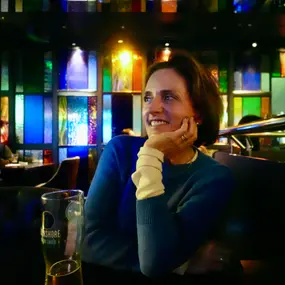
Molly McPherson is renowned for transforming chaos into control, a leading crisis communication strategist who provides crisis and reputation management insights across social media and is building a growing Substack community. Molly is best known for her incisive analysis of brand and celebrity actions and ability to foresee and manage public relations crises. Whether delving into innovation in crisis management or guiding teams through social media backlash, Molly’s expertise shines through, making her an indispensable asset to any organization facing a media storm.
With an APR certification and a rich career spanning various high-stakes clients, from corporate to celebrity, Molly has a proven track record of innovative crisis communication. From her pioneering digital media strategies at FEMA to creating early crisis communication web resources for cruise lines during significant events like the 9/11 attacks and the 2002 Norovirus outbreaks, her experience is vast and varied. Molly is the author of Indestructible: Reclaim Control and Respond with Confidence in a Media Crisis. Her media commentary has been featured on major network programming such as The Today Show, Good Morning America, NBC News, CNN, NPR, MSNBC, and the CBC. She is also a recognized Adweek Creative Visionary Award winner and a Forbes.com contributor, sharing her leadership and crisis management insights.