Sept. 13, 2026

Gerald Angley – Surviving & Thriving as Ireland’s Consul General in New York

Gerald Angley – Surviving & Thriving as Ireland’s Consul General in New York
Irish Stew Podcast
Gerald Angley – Surviving & Thriving as Ireland’s Consul General in New York

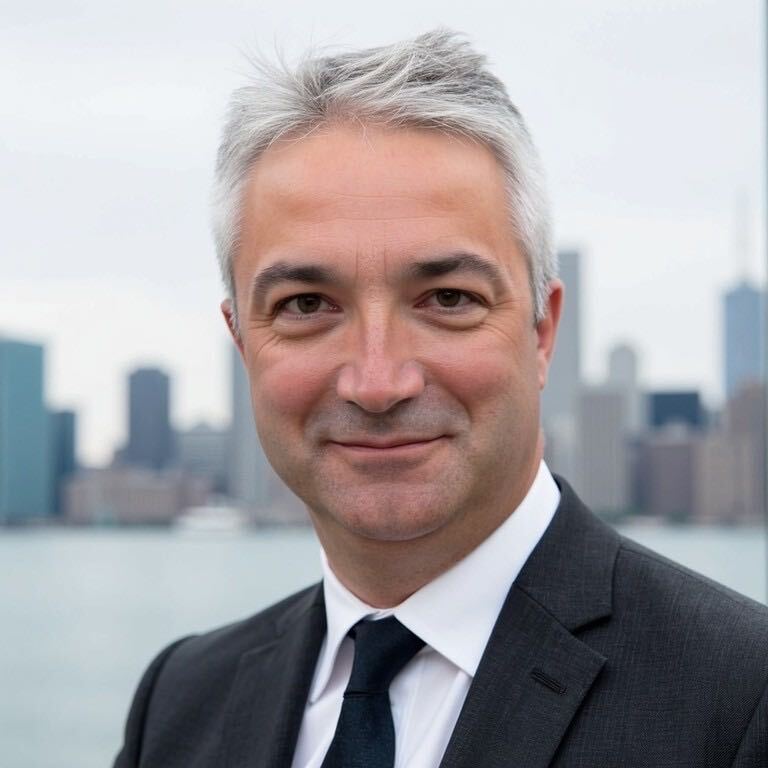
One year and a week since taking his new post, the Consul General of Ireland in New York Gerald Angley hosted the Irish Stew podcasters in his office high above Park Avenue for a behind-the-scenes look at Irish diplomacy in action while sharing his reflections on the first year on the job.

One event stands out for Gerald.

"The scale of St. Patrick's Day blew our minds,” he says. “It's 24/7 for a number of weeks."

Gerald walks listeners through the impressive scale of his six-state consular territory of New York, New Jersey, Delaware, Connecticut, Ohio, and Pennsylvania.

"That's 59 million people. That's the same population as the UK," he notes, adding that the region ranks as the world's third-largest economy in its own right.

The conversation traces Gerald’s path from a University College Dublin commerce degree and a stint at Citibank to a career in the Department of Foreign Affairs, with postings in Brussels, Paris, and London during Brexit. On landing the coveted New York job, he admits to a bold move: "I wrote a letter that said, 'I dare you not to pick me.'"

Talk turns to the perennial Irish Stew topic of diaspora engagement, where the diplomat reflects on evolving Irish American identity, saying, "We have to look at it not as purely Irish-born people, but rather people who have several identities."

He also points to what distinguishes Ireland's mission from other consulates: "We're one of the only countries that has an immigrant support fund... we need to be bigger than most of the other consulates, and we are."

As the episode wraps, Gerald provides the listeners with his must-read book recommendation and previews of the imminent launch the Green Pages, the new directory of Irish organizations in his consul region.

And what’s it like to be a Consul General in New York? Gerald quotes a predecessor in his role who said, "It’s Wall Street by day, Broadway by night!”

Links:

Gerald Angley

Consulate General of Ireland in New York

Episode Details: Season 8, Episode 23; Total Episode Count: 164

Send us Fan Mail

00:00 - Introduction

01:37 - A Diplomat's Daily Routine

03:20 - Six States, 59 Million People

04:04 - Power, Politics, and Budgets

06:13 - From Banking to Diplomacy

09:15 - Brussels, Brexit, and the EU

13:05 - Landing the New York Posting

15:26 - St. Patrick's Season

17:33 - Two Missions, One City

19:45 - Balancing Finance, Tech, and Culture

23:15 - Ireland's Edge Among Consulates

25:03 - Diaspora Engagement and Growing Diversity

28:52 - Sport as a Connector

30:41 - Confronting Diaspora Fade

32:49 - Life Beyond the Irish Bubble

34:22 - A Book Recommendation

35:38 - Seamus Plug

36:50 - John & Martin Recap

38:25 - Credits

Irish Stew — Episode Transcript

Consul General Gerald Angley
Disclaimer: This transcript was generated with the assistance of AI speech-to-text tools and lightly edited for readability (filler words, false starts, and repeated words removed; a number of proper nouns and place names corrected, all confirmed by production — see the notes at the end of this document). It has not been independently verified against the original audio in full.
Martin Nutty
John Lee
Gerald Angley
Chapters

0:00 — Introduction

Martin Nutty [0:00]
Before we start — if you enjoy Irish Stew, hit follow or subscribe wherever you're listening. It takes two seconds, and it means every new episode lands in your feed. And if you've got a thought or a question, drop us a comment — we'd love to hear it. Go raibh maith agaibh go léir.
Gerald Angley [0:19]
It's a particular priority of mine to increase the Consulate's profile and involvement in the business world. But everything we do in that is in partnership — we sit here in Ireland House with our state agency colleagues, who we share this floor with. Sometimes we have a convening power that can bring people together from a mix of sectors and backgrounds, put them in one room, and hopefully create a value-adding event that introduces people to each other.
Martin Nutty [0:47]
That was the voice of the Consul General of Ireland in New York, Gerald Angley, and I'm Martin Nutty.

0:54 — A Diplomat's Daily Routine

John Lee [0:54]
And I'm John Lee. When you travel in New York City's Irish circles, you're likely to find yourself on the 17th floor of 200 Park Avenue, high above Grand Central Terminal, at Ireland House. It's home to Enterprise Ireland, IDA Ireland, Bord Bia, our friends at Tourism Ireland, and especially the Consulate General of Ireland in New York. So join us there for our Global Irish Nation conversation with Consul General Gerald Angley — one year and a week into his prestigious posting here, after roles in Brussels, Paris, London, and Dublin, and a business backstory as well. Gerald, on my way down here today, I scanned a few Irish news sites to see what was going on — what might be impacting your world, beyond Andy Burnham's pronouncement that there's no border poll coming up. I imagine that's the kind of thing you focus on before you start your day. What does a diplomat look at on a daily basis to stay informed?
Gerald Angley [2:06]
We look for news from home, so we're in touch with what's going on there and what the government's response might be — we sometimes get sent details by email. But our main job, in a way, is to keep an eye on the news here in the areas we cover. A member of the team is focused on communications and media and does a media summary out of New York for the whole of the US. But personally, I have my copy of the New York Times, I listen to 1010 WINS in the morning for local news, and we watch out for things of interest to Ireland and the Irish community. Part of our job is to follow US politics too — with midterm elections coming up, we're following campaigns across the six states we cover.
John Lee [2:54]
And on baseline consular activity, you're also concerned with things that might impact Irish citizens traveling here — natural disasters, that kind of thing?
Gerald Angley [3:03]
That's right. Anything that affects travel or immigration. A major disruption at an airport, flights being canceled, with implications for Irish citizens traveling — we watch out for that.

3:20 — Six States, 59 Million People

John Lee [3:20]
We know you as the Consul General of Ireland in New York, but New York is only your headquarters. What is your realm here in America?
Gerald Angley [3:28]
It's quite an area to cover — New York, New Jersey, Delaware, Connecticut, Ohio, and Pennsylvania. I crunched some numbers when I arrived: that's 59 million people, the same population as the UK. If you look at the economic numbers, that group of states is, in its own right, the world's third-largest economy. And of the 59 million, I think 7 million claim Irish heritage — 2 million in New York State alone.
John Lee [3:58]
It's spread out over a lot of territory.
Gerald Angley [4:00]
It is. But the Irish presence is everywhere.

4:04 — Power, Politics, and Budgets

Martin Nutty [4:04]
We've had the pleasure of talking to some of your colleagues and former colleagues — and I know not to ask a diplomat a highly political question — but tell me, what shape does that political monitoring take?
Gerald Angley [4:18]
It's of interest to us, just as it would be to any journalist — who's in, who's out, who's winning, who might win or lose. But we go a little deeper: if somebody with a strong connection to Ireland is retiring, will their successor have the same interest in Ireland and the Irish community? Is there a new person coming through with a strong Irish identity? We keep an eye on this at every level — the seats in Washington, but also the state capital assemblies and senates, and the city councils. New York City Council, for example — last year's elections led to quite a turnover, and the new Irish caucus there has a lot of new names and personalities, which is great to see.
Martin Nutty [5:12]
I think local American politics has probably lost people back home — they see the high level, Congress, the president, but not the state level, or the city level within New York.
Gerald Angley [5:27]
What we try to do is help educate people back home — our colleagues and political leaders — about just how powerful individual states are, and how large their budgets are. Their legal powers are considerable. And the powers of an individual mayor are extraordinary: when you look at Mayor Mamdani and all of his predecessors, the budget he and his team manage is larger than the budget of the Irish state. That's probably not well known in Ireland, and we like to make people aware of it.

5:55 — From Banking to Diplomacy

Martin Nutty [5:55]
I've heard the mayor's job in New York City described as the second most difficult job in American politics. I remember looking up the budget recently — something in the range of $110 billion a year, similar to New York State, though I think the city budget is actually bigger. But tell me about your people, and that triangle — Dublin, Cork, Tipperary. How does that shape the man sitting here looking down Park Avenue right now?
Gerald Angley [6:22]
It gives me options — GAA teams to support, rugby teams to support, Leinster and Munster. First-generation Dublin — that's where I was born and reared — but like many people, my parents came from different parts of the country. My mother's story is fairly straightforward: from Cahir, Co. Tipperary, where her father was a well-known businessman. My father's story is a little more complicated — he was actually born in the UK, but his father was from Fermoy, Co. Cork, and his mother from the same area, though they moved around as my grandfather worked as a civil servant, a tax inspector, between Britain and Ireland. My dad went on to become an engineer with the ESB, working on the commercial side of the business — in the years before he retired, his role was to help large investors in Ireland build their plants and factories and secure electricity for them. Imagine that role today, with data centers and pharma plants. That was public service, in its way, and I think it got into all of us — that's part of why I found my way here.
Martin Nutty [7:36]
And your own academic career — you went to UCD, studied business?
Gerald Angley [7:43]
That's right. I had a real interest in business, and still do — the degree is called Commerce, at UCD. Some of the best years of my life. When you're applying for a job afterward, naturally you're looking at the business world, so I started with the Irish Life Insurance Group, and then Citibank, which had just started a massive expansion in Dublin. I applied for one of the first jobs in their new international centre and joined for about three years — a mid-twenties, entry-level job, but really good work, connected to New York, to Asia, to Europe. It gave me an international flavour that ultimately led me, after a few years, into what I do now.
Martin Nutty [8:26]
Talk to me about that pivot point — what triggered it?
Gerald Angley [8:29]
I'd retained an interest in government, politics, public service, and this was private-sector work — every day roughly the same. I'm the kind of person who needs to get out and about, needs every day to be a bit different. There was simply an advertisement in the newspaper — that's how people found jobs in those days — saying the Department of Foreign Affairs was recruiting a new round of junior diplomats, third secretaries, please apply. I went through the process and somehow got through, and made the change. It was actually kind of a pay cut to join. But I was at an early stage of my working life, without commitments yet, so a pay cut was possible to take.

9:15 — Brussels, Brexit, and the EU

John Lee [9:15]
So — Brussels, twice in Paris, London — some great international experience, right into the heart of EU affairs, and right into the middle of Brexit. What did it look like from your vantage point?
Gerald Angley [9:29]
I seem to find myself in busy places. It was a great posting, 2000 to 2004 in Brussels — the most important thing that happened in the EU at the time was that the Union itself expanded, from 15 member states to 25 in one go, bringing in most of the Eastern European states in 2004, during an Irish presidency of the EU — a role we hold again right now. It was a very significant historic moment — could the EU still work with far more member states? I think it's proven that it can. The other thing that happened, bringing us closer to where we sit today, is that September 11th happened during my time there, and then subsequent terrorist attacks in Madrid and London. The EU had to respond — in transport security, in a much stricter European arrest warrant system to pick up terrorists quickly. So that was a very interesting four years.
John Lee [10:39]
Some very serious, detailed policy work.
Gerald Angley [10:42]
Absolutely — bringing high-level political decisions into practice, basically.
Martin Nutty [10:49]
Talk to us a bit more about Brexit — it's still playing out, though it seems to be calming a little. Do you envisage Britain re-entering Europe in some form, and what does that mean for Ireland?
Gerald Angley [11:12]
I spent seven years working directly on Brexit, from 2013, when Prime Minister Cameron announced his planned referendum, to about 2021.
Martin Nutty [11:21]
Was that an "uh-oh" moment — did it seem like a bad idea when he announced it? Britain doesn't have much real experience with referenda.
Gerald Angley [11:32]
I think that's true, and it's accepted by most people in Britain as well — they didn't have much experience of referendums, or of how they can run away from governments that think they can win them. They did have the experience of one, with Scotland, which they almost lost. Coming back to today: the British government now — Keir Starmer first, and now Andy Burnham and his team — really want to work closely with the EU. I don't foresee rejoining the EU on any timeline you could name — that would involve another referendum and negotiation. But there are ways to get closer: bringing parts of the single market into alignment, joining programs on student mobility, food and veterinary standards, that kind of thing. With everything else going on geopolitically, the UK is clearly a major loss to the EU in some areas, but they're in a lot of the meetings and discussions — mechanisms designed to bring them in. In our EU presidency, for instance, we'll host a meeting of the European Political Community, an idea originally of President Macron's, convening leaders of the EU 27 plus others — the UK being a key one of the "plus others." So there are workarounds, and the UK is on the pitch.

13:05 — Landing the New York Posting

John Lee [13:05]
You're in one of the most important consular postings in the Irish diplomatic service, for many reasons — a unique position to be in. What's the process of earning this posting, and what was your reaction once you found out it was going to happen?
Gerald Angley [13:22]
It's one of the great jobs in our whole service, much in demand — you get a list every year of what's coming up. I'd been home in Ireland for about three years, which is typically the moment you come under pressure to make yourself available to go abroad again. Consulate General of New York was on a short list of postings, and I thought, lots of people will go for this. A predecessor of mine told me he'd done this: written a letter that said, "I dare you not to pick me." I did the same thing without knowing he'd done it. I made the case that I had relevant experience — I'd done a lot of work on Northern Ireland and Brexit, of great interest to the community here; I'd been director of the US-Ireland desk in Dublin; and I had a background in business and economics between the Department of Finance and New York, a great global financial city, and I wanted to work with the community and the cultural world. I made that pitch, and eventually got a call to privately signal that this was the likely outcome. It's one thing to apply for something and hope for it — it's a hell of a moment to be told it's actually happening.
John Lee [14:48]
I assume you talked to many of your predecessors in the role, to get a sense of what was coming. We're at just about the one-year mark of your term — was it what you were expecting?
Gerald Angley [15:02]
I'm one year and one week in exactly, and it's great — it flew, the way it always does when you're enjoying it. My boss back home, the Secretary General of the Department of Foreign Affairs, Joe Hackett, told me to find every former Consul General I could find and sit down with them. Brilliant advice, and I did it — I went all the way back to a Consul General from the mid-1980s and spoke to almost everyone since.

15:26 — St. Patrick's Season

Gerald Angley [15:26]
With all the preparation, and a great handover from my predecessor, Helena Nolan, there weren't really any surprises — but if I had to pick one thing, it's that the scale of St. Patrick's Day blew our minds. We're a mostly new team here, and we could see the dates coming, but the totality of it is massive. There was an excellent graphic on social media of all the parades in the tri-state area — I think it was 59 of them over the space of four weeks. We didn't get to all 59, but we tried to get to a good number. That's just the parades, starting the 1st of March and finishing on the 31st. Then there's the level of preparation that goes into the Fifth Avenue Parade, and the scale of the others — St. Pat's for All, which is wonderful; we were in Morristown with the Minister in New Jersey; the Taoiseach was in Philadelphia. And beyond the parades — business events, cultural events, Martin Hayes at Carnegie Hall, Friendly Sons of St. Patrick dinners in several states, people flying in from Ireland to do business in New York and Washington and elsewhere. The scale of it is extraordinary.
John Lee [16:42]
We see a lot of the counties trying to get tickets for Mass.
Gerald Angley [16:46]
Yes.
John Lee [16:47]
And you mentioned St. Patrick's Day — I was going to say St. Patrick's month, but it really starts—
Gerald Angley [16:51]
St. Patrick's Season. The run-up to it.
John Lee [16:53]
Bridget's Day now seems to be the start of the whole thing.
Gerald Angley [16:57]
We've already had next year's Grand Marshal for Fifth Avenue announced, and there are events called "Six Months to St. Patrick's Day." So "St. Patrick's Season" might even be an underestimate — the sheer number of people involved, all in a concentrated space of time, you have to see it and experience it to really understand. It's a huge operation for us. It's 24-7 for a number of weeks.
John Lee [17:22]
But you're smiling.
Gerald Angley [17:23]
Probably from the first of April onward, really.
John Lee [17:25]
For the record, the Consul General is smiling while recounting the events of St. Patrick's Day.

17:30 — Two Missions, One City

Martin Nutty [17:30]
There's a lot of complexity here — and I think what's interesting about New York is that Ireland doesn't have just one mission, but two: the Consular office, where we're sitting, and the mission to the United Nations. Talk to me about playing nicely together in the sandbox — how does that work?
Gerald Angley [17:53]
Two important offices with two very different pieces of work, but we work together quite a lot. In the next couple of weeks we'll have UN Week in New York, when world leaders and foreign ministers come in for a week of meetings — we expect the Taoiseach, the Minister for Foreign Affairs, and at least three other ministers in town. We join with our UN mission to devise programs for each of them.
Gerald Angley [18:23]
Some of those programs are run by the mission at the UN itself, others are with the New York Irish business and cultural community, run by us — about a 50-50 split. We normally get a full day working with the Taoiseach, and something similar with Minister Helen McEntee. We hand our political masters back and forth to manage the events, but it's all joined up. And while we lead on the Irish community, the UN mission has a great group of Irish people who live in New York and get personally involved. We've also had a change of ambassador — Fergal Mythen, who did a great job over the last four years, has moved on to be ambassador in the United Arab Emirates and will be greatly missed, including in the GAA community. Now we have an excellent colleague who's just arrived, Martin Fraser, who's come from being ambassador in London — he and his wife Deirdre will be seen and heard in New York in the years ahead.

19:45 — Balancing Finance, Tech, and Culture

Martin Nutty [19:45]
I want to go back to your business experience — John and I noticed there are three clusters of major multinational activity in Ireland: finance, tech, and pharma, all with a massive footprint here. Obviously this is the home of Wall Street; pharma is concentrated down in New Jersey; and tech, while not Silicon Valley, is still a substantial part of the business. How do you balance all these different pieces, and how much do you engage with each?
Gerald Angley [20:31]
One of my predecessors had a great catchphrase: Wall Street by day, Broadway by night. Not a bad description. We have to cover everything, because part of our job is discovering new champions for Ireland — business people who want to invest in Ireland, or give business to Irish companies looking to win work here in the US. Sometimes those people come to us because they love Irish culture — the Irish Rep Theatre, the Irish Arts Center, Irish music — and if we meet them through that, we can introduce them into the business world. So the two areas cross over quite a bit.
Gerald Angley [21:17]
It's a particular priority of mine to increase the Consulate's profile and involvement in the business world — but everything we do there is in partnership with our state agency colleagues here in Ireland House: Enterprise Ireland, IDA Ireland, Bord Bia, Tourism Ireland. They focus on the business piece in their individual sectors; we, as the government's office in New York, work with them, and sometimes we have convening power that can bring people together across sectors. For the St. Patrick's Day program, for example, there were individual business elements organized by the state agencies, but I also convened around 50 senior business people at the Consul General's residence to spend time with the Minister for Enterprise — some of whom didn't know each other before. In financial services particularly — we sit in Midtown Manhattan, a couple of blocks from JPMorgan Chase's new headquarters, and a short subway ride from Wall Street.
Gerald Angley [22:26]
There's so much going on there — some of the leading investors are headquartered here, JPMorgan, BNY Mellon, and others, so we keep close to them. In tech, Silicon Valley is the global hub, but here there's a strong fintech scene, and a wonderful network called Digital Irish, which started out of New York and is going global — a bunch of people, on a voluntary basis, building an extraordinary network that directly assists Irish tech entrepreneurs growing their businesses in the US, finding partners and investors. There's a Digital Irish tech week in October.

23:15 — Ireland's Edge Among Consulates

Martin Nutty [23:15]
When I describe my background to people who aren't that familiar with Ireland, I often say the Irish are unique in their ability to connect. You have colleagues across the diplomatic spectrum here — every major country probably has a consulate in New York. Is that just me talking us up, or do you observe that as a practical matter?
Gerald Angley [23:49]
It's interesting to compare notes with my consular colleagues. The European Union ones tend to convene together — I'm currently chair of the EU Consuls General in New York, because of our EU presidency — and we'd see a bit of other consulates too, particularly the British one. What's very clear is that we're one of the biggest, which makes sense given the scale of the community and the business relationship. Every consulate fits what it needs for its own links to New York — if you think of similarly sized economies in the EU, several of them are very focused on business, with some culture alongside it, but a huge focus on business. We have that focus too, but what's unique to us is our community — that's really what makes us bigger, why we need to be bigger. We're one of the only countries with an immigrant support fund that requires administration — a lot of grant recipients who need to be worked with and monitored. So we need to be, and are, bigger than most other consulates.

25:03 — Diaspora Engagement and Growing Diversity

John Lee [25:03]
The Irish government recently put out its five-year plan for diaspora engagement. You must be somewhat the tip of the spear here in New York. Talk a bit about your involvement, and how you'd like to see it move forward over the next three years.
Gerald Angley [25:24]
It's a huge part of our work, rightly so. For the new diaspora strategy, the Minister for Diaspora, Neale Richmond, traveled first to Philadelphia and then to New York for a huge consultation with community leaders. We made sure he met the most diverse and varied group of community leaders—
Gerald Angley [25:44]
—to listen to. What's emerging is that the diversity is growing. There are wonderful, well-established groups — the County Associations, the Emerald Societies — but also new types of groups emerging: a growing baseball scene, the St. Pat's For All parade and its team, the LGBT community, our involvement with the Pride March, which we invest heavily in. There's also Dennis Brownlee and the African-American Irish Diaspora Network — New York is a big base for them, though they're a US-wide organization. That's an example of why we have to look at the diaspora not just as Irish-born people, or people with one Irish parent or grandparent — it's people with multiple identities. You could be Italian-Irish-American, African-American-Irish, and so on. We're trying to embrace those multiple identities — and there are spouses and partners of Irish community members who are almost more into the Irish scene than anyone. Embracing greater diversity is part of what the next few years looks like.
John Lee [27:05]
There's a lot of different "Irish Americas" out there — Buffalo, New York; Dublin, Ohio. Some regions attract people from particular counties, for whatever reason.
Gerald Angley [27:20]
Cleveland and Mayo.
John Lee [27:22]
There you go. What are some of the discoveries you've made about the different Irish-American communities?
Gerald Angley [27:29]
Part of our job is to get out of Manhattan, out of New York State. Cleveland — there's a lot going on there; we have an honorary consul based there, and a relatively new Aer Lingus flight doing well. That's a community with big Mayo links, which is unique. Dublin, Ohio — I was there a couple of months ago, looking forward to the 40th anniversary of their Irish festival next June, an extraordinary story built from nothing 40 years ago. Buffalo — a great honorary consul there too, and the library's Joyce collection is superb. Pittsburgh now has a direct flight; Jim Lamb is our honorary consul there, a man of many talents — business, and music; he plays in venues around the city. There's the Steelers connection, the Rooney family, and some of the big businesses that invest in Ireland are clustered there — and Pitt's football team is set to play in the Aer Lingus College Football Classic next year. Every time we go somewhere else in our consular region, it's time well spent.

28:52 — Sport as a Connector

Martin Nutty [28:52]
You mentioned sport, and that was clearly a thread emphasized in the recent five-year diaspora plan. How's that going to manifest under your guidance?
Gerald Angley [29:07]
The obvious thing to mention is the GAA, in its various codes — football, hurling, camogie — often the first port of call for anyone young who's just moved here to stay connected to home. But there's a second, hugely important dimension: if you're Irish-American, second or third generation, this is how you connect your kids and grandkids to all things Irish — music, Irish dancing, or the GAA. GAA New York is run by a strong team now, raising money to complete the Gaelic Park project, which had stalled for a while; Redmond Park, in Yonkers, is also an amazing facility that's had a lot of investment. Then there are American sports — efforts to build up baseball a bit, American football, college football, the occasional NFL game in Dublin. Those events bring families, investors, and tourists to Ireland with huge payoffs for the economy, but they also come back with a deeper connection and want to act on it here. Sport is going to be a huge part of what we do — and we'll enjoy it. Maybe we can get into the basketball scene too, given the Knicks' run earlier this year.
John Lee [30:33]
There's a new arena being planned for Dublin. So that means hockey and basketball, if it goes through.

30:41 — Confronting Diaspora Fade

Martin Nutty [30:41]
It strikes me, when you say sport is a channel to connect with the second and third generation, that speaks to what's sometimes called "diaspora fade." Sport is one channel — are you looking at other areas to keep that connection strong between the small rock off the coast of Europe and this massive continent we're sitting in right now?
Gerald Angley [31:14]
It's on our minds. Diaspora fade is hard to measure — there's a census question every ten years about identity, and you can tick as many boxes as you like. I think 31 million ticked the Irish box in the last census, down from the previous one. That's not entirely surprising, given the waves of immigration — going back to famine times, but also more recent waves—
Gerald Angley [31:43]
—the 1950s, the 1980s, and a smaller wave around 2010, as the global financial crisis hit. The Irish economy, over a hundred years since independence, has built to a position of strength, and there are other places to emigrate to if people choose — Canada, Australia — which is simply reducing the numbers. That's a function of the country's success back home, which isn't a bad thing in itself. But we have to manage the changes: newer generations go into different lines of work, and don't necessarily live in Irish clusters the way earlier generations did. There's no magic answer or five-point plan. But people are drawn to something in that part of their identity — Irish theatre, music, sport — and if they can show interest, maybe introduce their kids to it, it may not be their whole life, but it keeps them connected. Culture and sport are a big part of that, but it could be a business connection too.

32:49 — Life Beyond the Irish Bubble

John Lee [32:49]
Gerald, we're sitting next to your conference table, and I can see a lot of papers awaiting your attention, so we'll let you get back to your real job in a moment. But you're in one of the great international cities in the world, and we've been talking Irish, Irish, Irish — I'm sure you get a chance to break out of the Irish bubble here. What are some of the great things you've found in this city, outside your Irish concerns?
Gerald Angley [33:15]
Not much time to do that! But it is a great global city, and it feels it — as a cultural city, it's mind-blowing, truly extraordinary. I've gotten around to some of the great museums, the Frick, MoMA, Broadway theatres. But in many ways — and I think I speak for my colleagues here too — you can see great international culture anywhere, but you want Americana, you want things American, so we're going to the baseball tonight. I'm also trying to get to know the other boroughs — I live in Manhattan for the job, but if I could choose my own place to live, I'd probably pick Brooklyn, based on what I've seen — it's developing, it's cool, it has a different feel to it. Seeing more of America generally — upstate New York is great to go and discover.
John Lee [34:03]
You were in Saratoga recently?
Gerald Angley [34:04]
I was — that was wonderful, the races, and just how democratic it is. People are let in for $7, they can bring in a picnic, including drinks, and really enjoy themselves. That's pure America — one of the great things you get to see. I've also been getting around the rest of the US — Miami, Chicago, a few other places since I got here.

34:22 — A Book Recommendation

Martin Nutty [34:22]
I have a question around inspiration — a book, a person, a place, a thing you'd direct our listeners to that was particularly meaningful for you?
Gerald Angley [34:37]
It's funny — my favorite book from the last five years or so is by the Irish author Paul Howard, best known in Ireland for the Ross O'Carroll-Kelly series — a satirical take on a South Dublin rugby type, very sharp humor. But he's also written several biographies and other works that show an extraordinary talent, and this one is called "I Heard the News Today, Oh Lord." It's about a member of the extended Guinness family, Tara Browne, who only lived to be 22 or 25, part of the elite end of the family, involved with his brother in the creation of Claddagh Records and the revival of Irish music, but who left that world for London and a hedonistic lifestyle, while by all accounts remaining a kind guy. It's a picture of Ireland and Britain in the 1960s — that fast world — but brilliantly written, and a hell of a read.

35:38 — Seamus Plug

John Lee [35:38]
Gerald, I can't thank you enough for welcoming us into your office here at 200 Park Avenue, and I'm sure our paths will cross frequently over the next year. We end the show with the Seamus Plug — your chance to plug away at something near and dear to you.
Gerald Angley [35:54]
Sure — we've got something coming up. We're going to publish, in an old-school kind of way, a directory of Irish organizations — not-for-profits — across the six states we cover, which we're calling the Green Pages. We put out an appeal over the last few months for organizations to propose themselves for inclusion. The idea is a one-stop shop — if people want to find something Irish in their community, or a specific theme like music or sport, this directory should be a good first place to look. It'll go up on our website — search "Consulate General of Ireland, New York" and you'll find it, called the Green Pages. It's not ready quite yet, but should be by the third or fourth week of September.
John Lee [36:38]
And we'll be sure to link it in our show notes. Gerald, thanks so much — really enjoyed it.
Gerald Angley [36:43]
Thanks, John. Thanks, Martin.

36:50 — John & Martin Recap

Martin Nutty [36:50]
John, great to sit with Gerald Angley in his office at 200 Park Avenue. I think we all have a thumbnail understanding of what people like Gerald actually do, so it was interesting to probe that on a deeper level. Some mind-blowing numbers came out of it — six states, 59 million people. It's a big job, and it transcends business, culture, and sport.
John Lee [37:32]
A high-pressure job, but with some fun that comes with it — he'd just been up at Saratoga Racecourse for a Horse Racing Ireland event the day before we spoke. Life is about to get very busy for Gerald — UN High-Level Week and the "Halfway to St. Patrick's Day" festivities are just days away as this episode drops — so his time is precious, and we're grateful he gave us an hour of it. And we're always grateful to be featured on IrishCentral — a great way to spread the word to their global audience, and a great place for you to keep up with the Irish scene around the world, or get travel tips if you're heading to Ireland.

38:27 — Credits

Martin Nutty [38:27]
Irish Stew is produced by John Lee and Martin Nutty. Editing, mixing, and mastering by Lochlainn Harte. Music on Irish Stew was composed and performed by Rosa Nutty, with Donal Bowens on drums and Cathal O'Riordan on bass and synthesizer. For more on Rosa Nutty's music, visit rosanutty.bandcamp.com.
Gerald Angley Profile Photo

Consul General of Ireland in New York

Gerald Angley was born in Dublin, Ireland. Over the course of his diplomatic career, Gerald has completed foreign postings in London (2017-2021 as Deputy Ambassador and Political Counsellor), Paris (2006-2011 as Economic, EU and Trade Counsellor and later as Deputy Ambassador in 2013/2014) and Brussels (2000-2004 at the Permanent Representation of Ireland to the European Union).

Gerald has further served in a range of positions in Dublin, including most recently as Counsellor (International Relations) on secondment to Ireland’s Ministry of Finance (Treasury) from 2022-2025. Prior to that, he was Chief of Protocol at the Department of Foreign Affairs and Trade. From 2014-2017 Gerald was Director (British-Irish Relations) and served as Director (North America), working closely with the Consulate in New York. Earlier assignments included the Protocol, European Union and Consular Divisions of the Department of Foreign Affairs and Trade. In addition to his roles in the Department of Foreign Affairs and Trade,
Gerald has also served in several roles at the Department of the Taoiseach (Prime Minister’s office), including as Director (Policy Communications) for Ireland’s Presidency of the Council of the European Union in 2013.
Gerald joined Ireland’s Department of Foreign Affairs in 1999 after an initial period working in banking and insurance, including with Citibank NA in Dublin.