European Surfing Champion Gearóid Mcdaid on Chasing Big Waves and Gold in LA


 Apple Podcasts

 Spotify

 YouTube

 Overcast

 Podcast Addict

 iHeartRadio

 PocketCasts

 Amazon Music

 Castro

 Castbox

 Podchaser

 TuneIn

 Deezer

 Spreaker

 RSS Feed
Gearóid Mcdaid, known across the surfing world as G-Man, grew up twenty minutes from Mullaghmore, County Sligo's fearsome slab wave, and now holds the 2025 European shortboard title with an eye on the 2028 LA Olympics. John and Martin caught him mid-vacation in New York, tucked into Georgie's Chelsea, right under a photograph of the man himself mid-wave.
"It's a pretty cool thing that surfing's in the Olympics now," he says. Gearóid's victory at the European Championships last year did its part for the sport back home, proof, as he puts it, that Ireland has surfers who can compete with the best in the world.
Gearóid walks us through the two lives of a pro surfer: the technical, judged world of competition, and the far riskier business of chasing 50-foot slabs at Mullaghmore, a wave made by limestone reef geology and giant North Athlantic swells. Chasing those waves takes a safety crew on jet skis and a fair amount of nerve, skills built on a childhood his surfer father set in motion, long before Mullaghmore's entered the picture.
"You're always scared," he admits, "but it's just trying to push through it and enjoy it."
He talks sponsors, wave pool training in Scotland, four straight years of injuries, and the tight-knit, fast-growing surf scene back home. "The Irish surf community's so small," he says. "Everyone knows each other that surfs."
Next up for G-Man: a video trip to France for Monster in October, then the World Championships in Peru in November, all building toward one goal. As Martin puts it, fingers crossed we'll see the Irish flag flying on a beach at the LA Olympics in 2028.
LINKS
GEARÓID MCDAID
GEORGIES CHELSEA (our hosts for this episode)
POINTBREAK (this episode's featured music)
IRISH STEW LINKS
- Website Home Page
- Media Partner: IrishCentral
Episode Details: Season 8, Episode 24; Total Episode Count: 165
00:00 - Introduction
01:42 - Meeting the G-Man
02:53 - Roots in Sligo and Strandhill
06:05 - Chasing Storms and Swells
07:55 - The Science of Mullaghmore
11:02 - Big Wave Fear and Safety
13:23 - The Business of Pro Surfing
15:55 - The PointBreak Interlude
17:08 - Inside Competitive Surfing
20:18 - Crossover and Wave Pool Training
22:36 - Injuries and Comebacks
24:18 - The Road to LA 2028
25:12 - Growing Ireland's Surf Scene
26:33 - Surfing Ireland as a Visitor
28:58 - Alan Mulrooney and Wave Pools
30:03 - What's Next for G-Man
30:48 - Seamus Plug
32:09 - John & Martin Recap
34:02 - Credits
Irish Stew Podcast — Geáróid Mcdaid Episode
0:00 — Introduction
Martin Nutty: Before we start, if you enjoy Irish Stew, hit follow or subscribe wherever you're listening. It takes two seconds and means every new episode lands in your feed. And if you've got a thought or a question, drop us a comment. We'd love to hear it. Go raibh maith agaibh go léir.
Gearóid Mcdaid: It's a pretty cool thing that surfing's in the Olympics now. It's making it a whole lot more mainstream and you see it so much at home. Even me winning the European Championships last year was huge. Brought a thing to the mainstream in Ireland of like, oh, there's good surfers here that can compete against the best in the world.
Martin Nutty: That's Gearóid Mcdaid, champion surfer and Irish surfing ambassador. And I'm Martin Nutty.
John Lee: And I'm John Lee. Surf's up on our latest Global Irish Nation conversation heard across the known podcast universe and at irishcentral.com.
Martin Nutty: There might have been a time when being called the best surfer from Ireland was being damned with faint praise. But our guest hails from what's become a global surfing destination. The big wave country of the rugged coast of County Sligo.
John Lee: He's a big wave specialist, a popular surfing content creator, an eight-time Irish national surfing champion, and a 2025 European shortboard surfing champion. And he's got his eyes on the Olympics. So join us at his cousin Paul's place, Georgie's Chelsea in New York City, as we catch the wave with the G-Man.
1:42 — Meeting the G-Man
John Lee: Well, Martin, we've recorded episodes in bars before, but we've never been in a pub talking to somebody where right over the guest's shoulder is a picture of him in action in doing what he does and doing what attracted us here today. That's the sport of surfing. Gearóid. How'd I do?
Gearóid Mcdaid: Pretty good. That was a good one.
John Lee: Give me the full reading.
Gearóid Mcdaid: Gearóid Mcdaid.
John Lee: Gearóid Mcdaid.
Gearóid Mcdaid: It's a pretty hard one to get all the time.
John Lee: You know, I'm stumbling over the name here, and I'm also stumbling over a lot of the terminology for surfing. Because, you know, I came out of a specialized sport myself, horse racing. Very specialized language. A lot of people from the outside didn't get it. So, yeah. I looked up surfing terms, and you tell me if people are still using these, okay? Stoked.
Gearóid Mcdaid: Yeah, that's like, people say that quite a lot.
John Lee: Okay, it means like you're really excited.
Gearóid Mcdaid: Yeah, you're pretty happy. Everything's good.
John Lee: How about kook with a K?
Gearóid Mcdaid: Yeah, that's like a pretty big thing. It means like a beginner surfer. It's probably not the best thing to be calling people.
John Lee: And then what about a grom?
Gearóid Mcdaid: A grom, that's like a kid surfer, like a young whatever, under. You're kind of a grom under 16.
2:53 — Roots in Sligo and Strandhill
Martin Nutty: So let's talk about your people. You're from Sligo. You have an Irish last name. You're Strandhill, is that correct?
Gearóid Mcdaid: Yeah, so I actually grew up in just like the other side of Sligo town, but now I live out in Strandhill, like on the beach. And like I used to drive in and out all the time. But yeah, in the last three years, I've moved out right on the beach. So it's pretty nice to be able to walk down to the beach every day.
Martin Nutty: And so Strandhill is pretty close to Ireland's preeminent surfing spot, which is, well, big wave surfing spot, I should say, Mullaghmore.
Gearóid Mcdaid: Yeah, so Strandhill is the perfect place for me to live. Like 20 minutes to Mullaghmore, which is like the main big wave spot in the country, but it's becoming one of the biggest spots in the world at the moment. Like there's guys flying in from all over the world for every swell. So it's a pretty good place to situate.
Martin Nutty: And I understand you started surfing quite young. Your dad introduced you to the spot, yeah?
Gearóid Mcdaid: Yeah, my dad, he surfed. He's from Ballyshannon up in Donegal. So he started surfing when he was younger, out in Rossnowlagh and stuff and around Bundoran, and then from when I was probably four, five, six he'd bring us out to like, surf once or twice every summer, and then once I turned about 10 was like something switched, I was like oh I love doing this I just want to do it every day, and then started doing some competitions, started doing good, and yeah, 14 got a couple sponsors, and yeah luckily now I was able to turn it into a career.
Martin Nutty: And your dad I guess then is kind of a bit of a pioneer in a way in the sport. But the notion of surfing in the northwest of Ireland, for many people, strikes them something tainted with a bit of madness, I think.
Gearóid Mcdaid: He definitely wasn't the first crew of surfers, but he was one of the first crew around Ireland. There was the Brittons, and they probably were the most well-known first surfers. He would have been really good friends with all the Brittons and used to go surfing with them all around the country. So he was definitely one of the first.
Martin Nutty: Yeah, and I saw a video of Barry Britton surfing and it looked like Santa Claus on a board. Bushy white beard.
Martin Nutty: Yeah. And he told the story that his mother had gone out, I think, to California and brought a couple of surfboards back. And him and his brothers got hold of it. It was downhill after that, from what I understand.
Gearóid Mcdaid: Yeah, I think it was, there might have been like a surfer from California might have come through Ireland or something on a trip. I remember I watched a video on it and they were saying like, they met the Brittons, and then they got into surfing, and then, yeah, they just got hooked on it straight away. And it's pretty crazy. They started when they were 18 or whatever, and they're still out there surfing every single day. It's pretty cool to see.
Martin Nutty: So we have to thank the Brittons, and we have to thank your father, who is a Gerry, am I correct? Is it Gerard, your father's name?
Gearóid Mcdaid: No, no. My dad's name's Ray. It's my mom's father's name that was Gerard, that's where I got it from, the English version to the Irish version.
Martin Nutty: So you got the old traditional Irish naming thing where you're named after a grandfather.
Gearóid Mcdaid: Yeah, yeah.
6:05 — Chasing Storms and Swells
John Lee: And in the international surfing community, you're G-Man, because nobody knows how to navigate around that.
John Lee: International. This is really a global sport. You mentioned something just there about people from around the world flying in for every swell. And that brought to mind something I was thinking of before I came down here is so much of sports now is conducted in ideal situations over a pristine playing field, perfect conditions, maybe some weather dependent, but they're all weather tennis courts, there's all-weather football pitches, there's all-weather horse racing tracks. You've got people flying in for every swell. You don't know what's going to happen. You're dependent on old mother nature for your sport.
Gearóid Mcdaid: Well, one thing if you're chasing swells in that kind of way, you're like constantly looking at forecasts, watching the storms as they're moving. I get messages from like all the guys all over the world. They're like, oh, what do you think this one's going to be like? But like because the storms in Ireland especially change so much, someplace in the world you can tell what the storm is going to do like a week out. But like in Ireland, it moves so fast, you can't tell what the winds are going to do. And the winds are like what make the waves, if the wind's the right direction it makes it better. You're getting messages the whole time and I'm like I don't know man it could change pretty quick, like could change tomorrow by the time you get here. But it's one of those things, you have to take the risk on them and then hope for the best, and sometimes it works, sometimes it doesn't. But it also, in competitions it makes it so much harder because like you said, if you're playing a football match it's an even playing field, everyone's got like everyone's the exact same, whereas like in surfing, like you make your own luck in it essentially, but if you take one wrong wave, and then there's like another bigger one that just comes that you weren't expecting coming, the other guy gets it, he gets a better score. It's even but uneven at the same time. It's a weird one, like.
John Lee: A crazy way of thinking about it, you have a sport that's popular here, bull
Gearóid Mcdaid: riding, yeah, a lot of it depends on what bull you're with. Yeah, yeah, the bull could not be in a good mood that day.
7:55 — The Science of Mullaghmore
Martin Nutty: It strikes me in hearing you talk about it is to take advantage of the surfing experience means you have to be part meteorologist.
Martin Nutty: And you have to actually understand a bit about geology in a way, because Mullaghmore is now becoming one of the world's preeminent surf spots. Can you explain to our listeners what makes it good?
Gearóid Mcdaid: We're pretty much weathermen at this point, how much we look at the weather and all the storms and systems. But the rock formations in Ireland is like mostly limestone. It's quite flat slab rock. And that is what makes the waves in Ireland so good. And Mullaghmore is that, and it's like just perfectly shaped. And it's like deep outside it, then shallow. So when it goes from deep to shallow, that's what makes it break big and heavy. It breaks on shallow water, but then on the other side of it is really deep. So it needs to be really big for it to actually break. A lot of waves will break when it's small, but Mullaghmore doesn't.
Martin Nutty: So you have offshore from Mullaghmore a reef, right? It's a flat limestone slab. And that's why you use the word, I saw the word being used a lot, slab wave.
Gearóid Mcdaid: Yeah, yeah, yeah.
Martin Nutty: Slab meaning if you get a big storm out of the Atlantic, right, and it's pushing in against the coast, that causes the wave to come up really high, right? Yeah, yeah, yeah. And so you can get waves up to close to 50 feet.
Gearóid Mcdaid: I mean, there's always waves that can get up to 50 feet every winter, but it's only if they're rideable is if the wind direction is good. You want the wind to be offshore. So you'll see days where it looks like super rough out in the ocean, and that's when the wind's onshore. But when the wind's offshore, it blows from the land off the shore. And when that combines with the big swell, that's when it gets really good.
Martin Nutty: So it makes the wave stand up a bit.
Gearóid Mcdaid: Yeah, it makes it stand up a bit more and makes the water clean and groomed, and that's what you're waiting for, really.
Martin Nutty: Yeah, because I saw, and we'll post links to this in our show notes, but I saw a video of you, and it was interesting, because it was August, I think, and you had Hurricane Erin in the middle of the Atlantic, which seemed entirely appropriate for an Irish surfing story. And you were kind of saying, you said, you know, this is a bit weird. You know, you're walking around in your shorts. It's woohoo, it's 20 degrees Celsius for American listeners or 68 degrees, which was a freaking heat wave for surfing in Ireland, you know. Because the truth is, as I understand, the best time to surf there generally is the winter, right? January, February is when the winds tend to be more right.
Gearóid Mcdaid: Pretty much from October to March, April is when we'll get like those kind of normal big wave storms in the Atlantic. But last year was super strange. There was Hurricane Erin, and I think it hit here pretty bad maybe and then tracked over to us. And yeah, whatever way it tracked over, the winds were good and it brought like pretty warm weather. 20 degrees is pretty warm for us. So it was great. Like being warm out there, you're usually, could be sideways rain and freezing cold like one or two degrees Celsius and you're trying to get out there, so it made a big difference that it was so warm and nice.
11:02 — Big Wave Fear and Safety
John Lee: Is there a point where you're getting into something like this where you go uh-oh
Gearóid Mcdaid: There's definitely, there's a lot of scary moments out there. Like I'm always scared on those kind of big days, but it's kind of pushing through it, and we have such a good crew around us out at Mullaghmore that we have a safety team, there's always someone doing safety on the jet skis, so if something does go wrong, someone's going to come get you. It's reducing the risk as much as you can, but there's always a risk of everything, so yeah, you're always scared, but it's just trying to push through it and enjoy it.
John Lee: And what about like focus, and then is there a point like where there's a, you know, oops, I've just lost my focus for some reason
Gearóid Mcdaid: I think like when you're surfing the wave you don't think about it, like you don't really think, it's all like it's quite instinctual, like what you're doing on the wave. So like, you definitely, there's the moments that you do lose it and you'll fall or whatever. But I know for me, like, I'm not thinking what I'm going to do next. It's just what pops up in front of me and it's reaction to what is happening at that time.
John Lee: And let me ask you one other thing about that film out there. Besides you and your friends doing an heroic, unbelievable, cool-looking, beautiful-looking stuff coming down through these big waves, there's the dude floating around there with the camera who's just in the right position who knows exactly where you're going to be. Tell us about the team.
Gearóid Mcdaid: I got a lot of good friends at home that we filmed with. And one of the guys, Clem McInerney, he would be on the back of a jet ski. And he has his camera on the back of a jet ski filming us out at Mullaghmore. And then there's a couple of other friends, Conor Flanagan. He would be swimming in the water with his camera and holding the housing and swimming in those crazy situations. It's pretty cool. I know everyone always is like, oh, the surfers are crazy. But the filmers are also pretty crazy, they're swimming out there by like in these heavy conditions as well, so it's, and they're in the
John Lee: right place at the right
Gearóid Mcdaid: time, yeah, yeah, it's, I mean Mullaghmore is a pretty easy wave in one certain, because it breaks in the same place every time and like breaks the same way every time, so you can like pinpoint where you want to be pretty easily, but I wouldn't want to be swimming around out there with just a camera in my hand.
Martin Nutty: How shallow is the water? And another wave pitches up before you get to the reef, right? Yeah. But do you actually surf over the
Gearóid Mcdaid: reef at times? You surf over the rocks. Yeah, I surf, but it is pretty deep. Like, I've never hit, people have hit the bottom out there. Like, there's a lot of other waves around Ireland that are really shallow, and you will hit the bottom, but, like, Mullaghmore isn't a wave that you'll ever hit the bottom on that much.
13:23 — The Business of Pro Surfing
John Lee: You were talking about the crew out there and the video and all that. And when I'm watching that, I also realize this costs some money to put together, just this little video. And you're also talking about people jetting around the world to catch the perfect wave. Tell us about the career of being a professional surfer.
Gearóid Mcdaid: It is a business at the end. I'm a business in myself, really, because I've been super lucky in what I've had. I've made a career out of it. I've got sponsors that pay me to do it and, pay me to make videos and make the content, and they'll pay filmers to be out there and that kind of stuff. So it is like, it is a business, you are going to work, because like if you don't perform or get the wave and then you've spent money, it's like you are under a bit of pressure to perform to get the videos and that stuff if you're spending money on it and all that stuff. And then it's all a constant thing of keeping your sponsors happy so that you'll get a contract next year and all that stuff. So it's a hard one to figure out because the surf industry is changing all the time and like, the surf industry isn't like that big compared to a lot of other sports, so there's definitely not as much money in it as a lot of other sports, but um, I can't complain, I get to call it my job.
Martin Nutty: Why don't we give you the chance to give your sponsors a shout
Gearóid Mcdaid: Yeah, well I got Rip Curl who are my like clothes and wetsuits, Monster Energy drink sponsor, they're like amazing, they support so many projects and stuff. I've got Bradley Surfboards and the guys at Bell. They're down in France. They make my surfboards, and I couldn't do it without some good surfboards under me, so that makes a huge thing. And I've got Uriage, which is sun cream, so it protects your skin.
John Lee: Seems like a natural, especially on Irish skin.
Gearóid Mcdaid: Yeah, yeah, we definitely need that.
Martin Nutty: Maybe not in Sligo, but once you get warm, right?
Gearóid Mcdaid: You still need it out there. And then I'm lucky, one of the local car dealerships at home, Porter Ford, they sponsor me with a car, and it's amazing to be able to drive and chase the waves and all that stuff. And now getting support from one of the local bars over here as well, Jackdaw Bar. Yeah, it's cool to have that link over here with New York, so it's pretty cool.
15:55 — The PointBreak Interlude
John Lee: Quick pause here. You've probably clocked some music playing on the bits of this episode. That's from the Dublin instrumental surf rock band PointBreak. And yeah, we know, a surf band on a surfing episode, Irish guys playing surf music, we couldn't resist. They've been around since 2014, blending that classy, twangy surf sound with jazz, funk, and even a bit of Celtic psychedelia. If you're into hearing music woven into the show like this, please let us know, if the response is good we'll make it a regular thing, and stick around to the end too, we've got another PointBreak track closing us out. But right now, here's their surf rock version of Cooley's Reel.
17:08 — Inside Competitive Surfing
John Lee: The other side of this is you're a competitive surfer, and you are the European surfing champion, gold medal winner of 2025, and I know the Olympics are in your view. So what's competitive surfing? What are they judging you on?
Gearóid Mcdaid: Yeah, so it is, there's two different sides of being a professional surfer. There's that side of the videos, the content, big wave stuff, and then there's competitions, which is like you're going through heats. It's always heats of four people, two progress and two lose, and you'll go through the rounds up until you get to the final. The contest usually lasts about a week, and then you surf one round every day until the final. And they're judged on your best two waves in 20 minutes, a heat's 20 minutes long, the maneuvers you do on a wave, whether it's turns, airs, all that kind of stuff. And there's a panel of usually around five judges that'll put in the score between one and 10, and then those scores, those five scores average out and that's what gives you your score. And then, yeah, your best two waves against those other four people and then get through the heats and go up through that.
John Lee: Very different skills, right?
Gearóid Mcdaid: Yeah. Big wave stuff is like, and videos is just getting barreled and like that kind of stuff or like exploration, like chasing and kind of different types of waves and all that stuff. And this is very much like the technical side of surfing. Like the finest, the smallest details matter in like your boards and your fins and all that stuff, and like how big your turns are, how much spray you throw on your turns, all that stuff, it makes a big difference to the scores. So, for me, anyway, the contest side of things is just like way more, I'm way more into the finer details of it all. And it's super fun. I'm a very competitive person, so I love it.
Martin Nutty: And you're a shortboard specialist, or at least that's what you got your European title in, was the shortboard. And as I understand it, in the Olympics, that is also a shortboard event.
Gearóid Mcdaid: The main part of surfing is shortboarding. There is longboarding too, which is like a separate kind of discipline within surfing.
Martin Nutty: And how would they differ from each
Gearóid Mcdaid: other? Longboarding, the board has to be over nine foot in length, it's very different, like ours are judged on like your turns and airs because you're very much more maneuverable with a smaller board, whereas those, they like walk up and down the board and do like hang fives, hang tens, yeah, all that stuff, so it's judged on that kind of stuff. But yeah, then the Olympics is all about shortboarding, the longboarders will probably hate me saying it, but the main discipline in surfing. And then the qualifying for that is going to be the European Championships next year is going to be a qualifier for that. So that's one of the main goals I'm working towards, because it's a pretty cool thing that surfing's in the Olympics now. It's making it a whole lot more mainstream and bringing it to such a wider audience. And like you see it so much at home, like just even me winning the European Championships last year was huge and like kind of brought a thing to the mainstream in Ireland of like oh, there's like good surfers here that can compete against the best in the world. So it's a cool thing to have, and it would be amazing to qualify, but it's definitely still going to be pretty difficult, there's not that many spots.
20:18 — Crossover and Wave Pool Training
Martin Nutty: Big wave surfing is one thing, this competitive thing is totally different, is there a lot of crossover between those two communities?
Gearóid Mcdaid: So yeah, there's crossover between a lot of, like there's a lot of guys who are competitive surfers that will go do the big wave stuff as well. Like, the best competitive guys in the world, like the top guys, like say your Kelly Slaters and that kind of thing, they'll go out when it's big and they're not scared of waves. So they're like just as good as any of the big wave guys in big waves.
Martin Nutty: I saw some video of you where you're doing like these incredible 180s. You're literally surfing right back up the wave, kind of spin around and drop down.
Gearóid Mcdaid: It's called like an air reverse in surfing, but like the training is like super important. It's like being strong, like training in the gym and all that is one thing. And that is one thing that transfers a lot into big wave surfing because you need to be strong and ready for that too. But then the wave pools, they're like relatively new in the surf world, whatever, in the last 10 years. And they're like massive in the training for your turns and technical ability in surfing, because when you're out in the ocean, you might get one little section to work on, the one turn you want to work on or the air you want to work on in a two-hour surf. Whereas in a wave pool, you can get that section every two minutes. Like you're just on rotation with the exact same thing over and over and over again, so it kind of makes it a bit more like other sports where you can, like on a skateboard you can hit the same ramp and try the same trick a hundred times if you want, whereas surfing you might only get that opportunity to try that trick once in an hour. So the wave pools really are like huge for training that, your technical ability to have that repetition, like it's definitely moving the sport on crazy fast in the last couple of years.
Martin Nutty: So the wave pool that you guys use is in Scotland, is there going to be one in Ireland, are you aware of any
Gearóid Mcdaid: There's been talks of it coming to Ireland one day, I'm not sure if it'll ever fully happen, I hope it does. The one in Scotland got built in Edinburgh there, and it's super easy for us to get to, like quick flight, half hour flight from Ireland. And all the guys there, we get on super good with all the Scottish, and we've partnered with them, our surf federation has partnered with the wave pool over there, Lost Shore, as like having that as our training facility for the Olympic qualifiers anyway. Yeah, it's very cool.
22:36 — Injuries and Comebacks
John Lee: With sports, professional sports at a high level comes injuries. What are some of the, you know, things you've had to deal with and bounce back from?
Gearóid Mcdaid: It's kind of mad. Like my whole life, I never was injured at all up until like three or four years ago. And then I've had like a pretty bad injury every single year in the last four years. And like, luckily, I've been able to like bounce back quick. And four years ago, I broke my shoulder. Then after that, I like split my shin open really bad, I had to get surgery and stuff on that. And then after that I tore the ligaments in my elbow, and then this year I tore the ligaments in my knee, so it's just the last couple years have been pretty non-stop, but I've been super lucky, I've trained hard and got back quick enough to be ready for the milestones of the Europeans or when there's big swells and all that, so, I'm lucky it hasn't kept me out of, stopped my career from going too far.
Martin Nutty: So that's a little different than other sports, like I came up in track and field and usually the injuries are kind of wear and tear, repetition injuries. This sounds more like accidents while you're
Gearóid Mcdaid: surfing, right, yeah. So I go to the gym and stuff to like prevent those wear and tear injuries, so that your knees don't give way and all that stuff. But like, these are just injuries that I couldn't prevent, like, well, I could have, but they're from like doing an air and landing wrong, or my arm got stuck under a rock and that's what tore my ligaments in my elbow, and then, yeah, I did an air, landed on my board, and that's what cut my shin, and the same on my knee. So they're kind of unfortunate rather than overuse.
Martin Nutty: Is this a case of you're trying to do harder stuff?
Gearóid Mcdaid: Yeah, probably. Trying to push too much, that's it. You want to try and always be pushing on and going to the next level. So it is causing injuries.
24:18 — The Road to LA 2028
Martin Nutty: Next year, the European Championships is every two years, am I correct? Yeah. So if you win next year, like you did last year, that gives you an automatic berth into the Olympics, if I understand it, because you'd be continental champion, right?
Gearóid Mcdaid: So that only just came in for this Olympics, now that the Europeans get a spot. And yeah, so too bad it wasn't last year. It would have been pretty good to be qualified already. But yeah, I mean, we'll just try and...
Martin Nutty: What are some of the other pathways?
Gearóid Mcdaid: Over the next three years, there's different ways in each different world championships. Over the three years, there's a certain amount of spots for people to qualify. It's so complicated, but yeah, that's pretty much the simplest way. There's different pathways within the next three world championships. So it'll be the Europeans, and then the World Championships over the next three years will be the opportunities to qualify.
John Lee: G-Man. I can call you G-Man.
Gearóid Mcdaid: Yeah, yeah, yeah.
25:12 — Growing Ireland's Surf Scene
John Lee: Let's shift focus a little bit and talk about surfing in Ireland. You know, I looked it up. There's more than the big waves where you're risking your neck surfing. There's other ways to participate in the sport around the island nation of Ireland. And tell us about the surfing scene in general and how it can grow and what it can mean to Ireland and people, young people.
Gearóid Mcdaid: It's amazing because, obviously, it's still a lot smaller than a lot of other countries. And I literally, like someone will go, oh, do you know this person that surfs down the complete other side of the country? And I'll know them because the surf community is so small. Like they'll travel up to where I'm from, or like everyone knows each other that surfs really. It is growing, it's growing a lot in the last number of years, and it's cool to see a lot more and more kids coming up. Like there was me and one of my friends when I was a kid, and that was it kind of in my age group, in my area. But now, like in all the areas there's like 10 kids, 10 kids of 14 to 16 here, then 10 kids of 14 to 16 down there, like maybe the generation above me have all started having children, so they're all getting into the sport now, which is pretty cool. It's so friendly, everyone who travels to Ireland is always like, oh, it's the best place to come, everyone's so friendly in the water. There's obviously fights sometimes, but not like a lot of other places where people are super aggressive in the lineup and stuff. Everyone is super friendly in Ireland.
26:33 — Surfing Ireland as a Visitor
John Lee: Well, I wanted to ask you about that. What about somebody who's done a little surfing in the US? You know, there's a surfing scene on Long Island. There's other places that people don't, you know, it's not California, but people still surf. So people have a little surfing experience, they want to come to Ireland, include surfing as part of their vacation. What do you recommend?
Gearóid Mcdaid: If you're like a full beginner surfer, you want to go to one of the surf schools. There's surf schools in all the main surfing areas, like in Strandhill there's a bunch, in Lahinch, in Bundoran. Pretty much wherever there's a beach there's a surf school. So if you're a beginner, go there and they'll teach you how to surf, all the safety aspects of the water and all that. And then, I mean, if you're a good surfer and you're coming, there's always, in the surf shops, the people there are pretty, they're always super helpful. They'll tell you where to go and, like, you'll find out pretty easily where to go on what different type of swell and stuff, so.
John Lee: Can you rent a board,
Gearóid Mcdaid: rent equipment? It depends. Well, it's a nightmare, but I always travel with my stuff. But, yeah, you can rent boards from all the surf shops around, and it's easy. It is a nightmare traveling with a big board bag, but, yeah, we do it.
Martin Nutty: Anyway, anybody who knows anything about Irish surfing knows, Mullaghmore is a big one. But I was watching some video of somebody surfing Aileen's, which is at the bottom of the Cliffs of Moher, which is probably one of the more scenic spots that you can surf. Have you been on that one at all?
Gearóid Mcdaid: Yeah, we go down there, down in Clare a lot, down to the Cliffs of Moher. It's like such an iconic place for everyone. It's like just a tourist attraction for everyone who comes to Ireland. It's got one of the best big wave spots in the world then as well. It's like pretty crazy. You have to walk, hike down the cliff and then paddle out underneath like one of the biggest cliffs in Europe. So, it's a pretty crazy situation you're putting yourself in, and it's just mental down there.
Martin Nutty: Yeah, I can imagine some of the attraction for doing what you're doing is actually looking back on shore. Yeah. Like Mullaghmore's got that iconic castle that you can see from the, I don't know if you can see from the waves. You can, yeah.
Gearóid Mcdaid: Yeah, you can see it up there. It's pretty, oh, Ireland has such cool landscapes. So like you're always looking back on like some pretty beautiful cliffs or like meadows and hills and landscapes.
Martin Nutty: So this is a whole different way to enjoy Ireland's scenery from the top of a surfboard, if you can stand up, unlike me,
Gearóid Mcdaid: Yeah, fully. It's pretty cool.
28:58 — Alan Mulrooney and Wave Pools
John Lee: I heard you, I just saw a magazine article where you were called the best surfer ever to come out of Ireland. I thought that was Alan Mulrooney.
Gearóid Mcdaid: Alan, he's one of my good friends at home. And yeah, he's a legend. He used to do all the contests and stuff when he was younger.
John Lee: He was a guest and he introduced us. He's an Irish Stew alumnus, so we like to slag our alumni.
Gearóid Mcdaid: Alan's a legend and he helps me out with a lot of stuff. So it's cool to have guys like him. He still surfs a lot every day now in the business side of things. It's cool to have those connections and make connections around here like that. So it's good.
Martin Nutty: Can we persuade Alan to build a wave facility?
John Lee: On the Wild Atlantic Way, that's a natural.
Martin Nutty: Alan, if you're listening, we need a wave pool. Yeah.
Gearóid Mcdaid: But the Western development needs to develop. Absolutely. We need a wave
John Lee: pool to build out the infrastructure. So what comes next? We talked about the Olympics down the road and various championships. What happens when you go back? What's the next six months look like for you?
30:03 — What's Next for G-Man
Gearóid Mcdaid: So, yeah, I've been having an amazing holiday here. It's pretty rare I go on a holiday without going surfing. So it's been pretty cool to come to New York with my girlfriend. Yeah. But yeah, so I go home next, like tomorrow, and then back into training in the gym and surfing for the next probably three weeks, and then I'll have a video trip, I'll go to France for Monster in October, and then back for two weeks full training again, and then the World Championships are on in Peru in the start of November. So that's kind of the main things I've been working on at the moment, but things change pretty quick, I could get a call and have to be on a plane in a couple of days, so you're always up in the air, what's going on.
30:48 — Seamus Plug
Martin Nutty: Unfortunately, we're at that point in the podcast where we have to introduce our friend Seamus Plug, and this is your opportunity, Gearóid Mcdaid, to plug. So what is your Seamus plug?
Gearóid Mcdaid: I guess all my sponsors that always support me, like all over the world, and now especially having support from the Jackdaw here in New York, one of the best pubs here. So, yeah, if you're around New York, go check out over there.
Martin Nutty: So we will put a link to the Jackdaw into the show notes, along with some links to a couple of your videos, but you have quite a well-developed YouTube channel, and you're also on Instagram. So make sure, listeners, to check this out, because we can talk about surfing all we want, but there's nothing that beats the incredible visuals that you've managed to generate. So on behalf of our listeners, I'd like to say thank you so much to Gearóid Mcdaid. We're looking forward to watching what develops, and fingers crossed that we will see the Irish flag flying on a beach in the Olympic Games in LA in 2028.
John Lee: Thank you.
Gearóid Mcdaid: Thanks for having me.
32:09 — John & Martin Recap
John Lee: Martin, I've always been stoked to learn about specialized lingo. I come out of a couple of worlds that had its own way of talking, and I always kind of loved the idea of surf lingo. It really emerged when I was a kid, when surfing really became popular, and, you know, I was always kind of impressed with that insider language they had. And I think it also speaks a little bit to the global nature of surfing, because I kind of picked up that the lingo is not entirely universal. He said, well, you know, some things that he still might say in California or Australia, but we don't say it here in Ireland. So I'm a big fan of learning about the lingo, although I will forever be a kook.
Martin Nutty: A lot of fun sitting with Gearóid and learning a bit about his life. And I was struck with the duality of his life. He's a European champion, which is actually a first for the podcast. But that competitive surfing is highly technical, and the moves made are with judges in mind. And then there is the alternate life of Mullaghmore, and other places where big waves appear, where that particular experience is to a greater degree purely for the challenge and the pleasure of the surfer. Now, of course, there's a cameraman sometimes in the water, there's a drone overhead capturing that for those awesome videos. And we'll put a link to a couple of videos in our show notes, so make sure you check that out. What I'd also like to do is say a thank you to Paul Mcdaid of Georgie's Chelsea for hosting us, them and their staff. It was a lovely early morning experience with Gearóid.
34:02 — Credits
John Lee: Hey, I look forward to getting back there and try a nice breakfast there sometime. And we also want to thank the guys at PointBreak, the Celtic surf band that I found on the internet, for letting us use a couple of their tracks. So stick around for their version of The Foggy Dew. Irish Stew is produced by John Lee and Martin Nutty. Editing, mixing, and mastering by Lochlainn Harte.
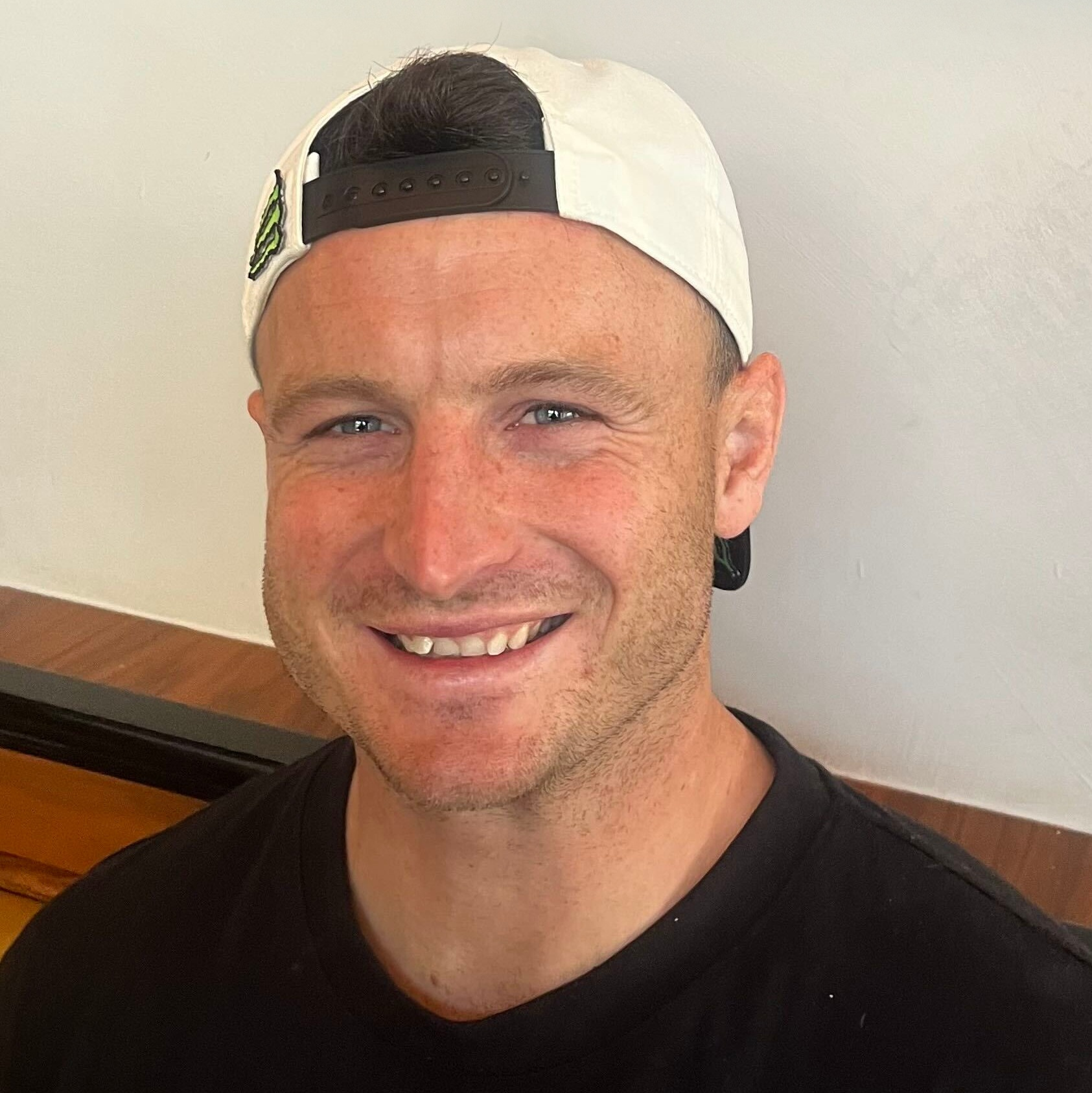
Surfer
Gearóid Mcdaid is a professional surfer from Strandhill, County Sligo, and the reigning 2025 European Shortboard Surfing Champion. Introduced to surfing as a child by his father, he turned competitive around age ten and landed his first sponsors at fourteen, eventually building it into a full-time career. He splits his career between competitive shortboarding and big-wave surfing at Mullaghmore, one of the world's most significant big-wave breaks. With his sights on the 2028 LA Olympics, Gearóid competes at the World Surfing Championships in Peru this November.