Dr. Martin Russell: Ireland’s Global Diaspora Thought Leader


 YouTube
 TuneIn
 Deezer
 Spreaker
 Podcast Addict
 RSS Feed
 Apple Podcasts
 Spotify
 Amazon Music
 Overcast
 Castro
 iHeartRadio
 PocketCasts
 Castbox
 Podchaser
 Through its ongoing “Global Irish Nation Conversation” Irish Stew is all about connecting the worldwide Irish family, so sitting down with Dr. Martin Russell, one of the world's foremost diaspora engagement strategists, felt like a meeting of kindred missions. The proud Corkonian has spent nearly two decades turning diaspora theory into practice, working with governments and communities across Africa, Latin America, the Caribbean, and the Balkans, all while championing Ireland's potential to be a global leader in the field.
Hosts John Lee and Martin Nutty open with a thought-starter on the "diaspora World Cup" unfolding across North America, then trace Russell's journey from a would-be mathematician at UCC to a scholar of the Irish diaspora's role in the Northern Ireland peace process. Along the way, Russell unpacks the famous 70 million Irish worldwide figure, his four pillars of diaspora engagement, and the crucial distinction between migration and diaspora.
"Other partners come and go and that's fine. That's the nature of life. But your diaspora are a community of consistency if you do it well," Russell says, making the case to governments worldwide.
The conversation turns to Ireland's new Diaspora Strategy 2026–2030, which Russell's research helped inform, the duty of care owed to the vulnerable Irish abroad, and the threat of "diaspora fade" in Irish America. His answer? "The quick answer is don't let it happen, be active."
A masterclass in belonging from a thought leader who's incredibly bullish on the diaspora's future.
MARTIN RUSSELL LINKS
EPISODE REFERENCE LINKS
- Ireland’s Diaspora Strategy, 2026-2030
- NY Times: Is this the diaspora World Cup?
- EU Global Diaspora Facility
- Institute for Integrated Transitions
BOOKS
- Fragile Neighborhoods by Seth Kaplan
- Belonging: The Science of Creating Connection and Bridging Divides by Jeffrey Cohen
- On Belonging: Finding Connection in an Age of Isolation by Kim Samuel
IRISH STEW LINKS
- Website Home Page
- Media Partner: IrishCentral
Episode Details: Season 8, Episode 21; Total Episode Count: 162
00:00 - Introduction
01:08 - A Diaspora World Cup
06:28 - Origin Story
09:19 - Irish American Diaspora and the Peace Process
11:26 - Irish Diaspora Scale
13:06 - The Bitter Diaspora Experience
15:36 - Diaspora Trends
18:18 - The Albanian Diaspora Story
20:52 - The Importance of Belonging
24:37 - The Diaspora Four Pillars
27:32 - The Two Way Transactions of Diaspora Engagement
30:02 - Migration and Diaspora Intersections
31:57 - Expanding Irish Diaspora Understanding
34:58 - The New Irish Diaspora Strategy
38:51 - Diaspora Data Sensitivity
41:14 - What Does Irish Diaspora Data Progress Look Like
43:33 - Irish Diaspora Fade
45:31 - Seamus Plug
46:06 - John & Martin Recap
49:15 - Credits
Irish Stew Podcast
Episode Transcript: Dr. Martin Russell on Diaspora, Belonging, and Ireland's Global Strategy
Transcript Disclaimer: This transcript was generated using AI transcription software and has been reviewed and lightly edited by a human editor for clarity and readability (removing filler words, false starts, and crosstalk artifacts while preserving meaning and speaker intent). Minor discrepancies with the original audio may still exist. For the definitive record, please refer to the published audio episode.
John Lee:
Welcome, Dr. Martin Russell.
Martin Russell: Thank you. Great to be here, folks.
John Lee: We feel our Irish Stew efforts here have a lot to do with diaspora engagement, so it's great to talk to such a renowned thought leader in the field.
But right now, global sporting focus is on stadiums in Canada, the US, and Mexico. Great football tournament going on. You're an avid football fan, I know. But let's look at this World Cup through your professional lens as the diaspora World Cup.
What are some of the diaspora themes and stories that you see coming out of this World Cup?
Martin Russell: It's great to be here, so thanks for the invite.
Before I go to the question, my one vice in life is that I'm a season ticket holder of Tottenham Hotspur Football Club, so it's character building. I think it's phenomenal, I just landed in Boston a few days ago, and we were just talking about the impact of the Tartan Army and Scotland.
I think there's diplomatic, cultural, [00:02:00] community-driven connections that are going to come out of this. It's kind of layered across the World Cup when you look at the word diaspora. I think there's a sports diplomacy piece of it, but also when you begin to look at the composition of the teams, you have diaspora stories all over that, so it shows the power of diaspora talent at an elite level in sport.
So I think it's shone a light on the topic. It was a week ago, the New York Times, in collaboration with The Athletic, in their recap of one of the days, the question they put out was, "Is this World Cup the diaspora World Cup?"
I nearly fell off my seat when I saw that in a publication like that. I think it's just shining a light in a way that helps us understand the community-driven impact of it. To be honest, we live in a world that's pretty confused at the minute, and it shows the magic of sport to help actually bring communities together.
So I'm all for it. The challenge now is how do you take it from an event and build it into legacy? The interesting headline for me over the last week or so was the quick action to build a collaboration between the city of Boston and Glasgow, for example. There's an [00:03:00] organization called GlobalScot, a network of Scottish leaders around the world, particularly in industry but across different elements of society, and I think they played a role in that. So it's on the field, it's in the stands, but it's in the political corridors as well, which is important.
John Lee: And there are teams that wouldn't be in these games without the diaspora. They're largely diaspora teams. We also saw that in the World Baseball Classic, almost every Italian player was a US player of Italian heritage. As far as the World Cup stories go, my favorite is the story of Pico Lopes, who got a message in Portuguese on his LinkedIn profile and is now playing for Cape Verde, a Shamrock Rovers player. It's a great story.
Martin Russell: It's unbelievable. I was lucky enough to actually go to Cabo Verde a couple of years ago, and the connections that can be built out of that, even with an Irish hat on. To be honest, going back to the Irish sporting story, the last time the World Cup was in this part of the world, Jack Charlton and the Boys in Green had a lot of diaspora players on the pitch back then.
So it's not [00:04:00] necessarily a new phenomenon, and more importantly, it's not just in football either. It's important that we broaden it out. My brother and I last year went on a bit of a trip of a lifetime to see Oasis in California, and we were in the hotel and, is it the Dodgers?
And is it Ohtani, the baseball player?
Yeah. You see the community traveling from Asia to see this chap. And I mentioned Tottenham earlier, we had a player up until last year called Son Heung-min, who's now in LA. You go to the stadium every week, and there are thousands of Koreans coming in to see this guy.
So sports teams understand the power of this in more ways than one, both in terms of talent, but there's a phenomenal commercial and supporting-base opportunity to build out globally. I think we're just at the beginning.
Martin Nutty: Another example of that, I was struck watching the Iranian opening game in the World Cup, played in LA, and the amount of support for the Iranian team in America was totally obvious.
Anybody who knows anything about that community knows there's a huge Iranian community in Los [00:05:00] Angeles. To me, it was an example of sports transcending political difficulty. This community was coming together to support the men playing for Iran, without it being about the conflict between the US and Iran. It spoke to me about the strength and power of sport.
Martin Russell: It's fascinating, I opened up by saying I'm a fan of Tottenham. That's part of my belonging, I'm identifying myself as part of that tribe, if you will. I think that power of belonging
depoliticizes things. We have to get back to the basics of really looking at what community-led empowerment and the erosion of division looks like. I'm involved in a think tank called the Institute for Integrated Transitions that looks at areas of conflict, fragility, and transition.
There's a professor involved in that who wrote a book called Fragile Neighborhoods, and I think it's very telling. When you look at some of the solutions, sometimes we can over-engineer and overcomplicate that. I shouldn't say that as someone with an academic background.
They'll probably put me out of a job for [00:06:00] overthinking things. But it's the power of sport, not just in terms of politics, but bringing communities together and getting back to the social fabric of how we can energize belonging across communities. We're not different to each other.
Martin Nutty: We can focus on what separates us, or we can focus on what brings us together. For me, the latter is far more constructive. You used the word belonging, and we're going to talk about belonging because I think that's core to diaspora.
But before we go there, I'd like to talk about your own origins. I'll start with your county affiliation.
Martin Russell: I think the accent gives it away.
Martin Nutty: Maybe not for our American listeners.
Martin Russell: Proud Corkonian, born and bred, and that will be core to who I am for the rest of my life. Joking aside, I was with a friend of mine with the accent who works in AI, and he said, "Martin, you're lucky your accent will be the only one AI won't be able to decipher." In terms of my own personal and professional trajectory, I like to describe myself as a bit of a [00:07:00] reluctant academic at heart.
I went to college first to study mathematics, which not many people know. But I was lucky enough to meet a history professor in UCC who read something I'd written. He probably saw something in it that I didn't see in myself, and he said, "Forget the mathematics and go that way."
So I ended up looking at the role of the Irish diaspora in the peace process in the north of Ireland. Testament to the work you folks are doing as well, one of the areas I looked at in that journey was the power of diaspora media, which I think has been greatly underappreciated for many years in terms of how it can bring a community to a point of commonality. Because the way we tell our stories as communities are important. I'm cognizant that when I did that research, I was talking about Irish American newspapers, not podcasts and social media and everything that goes with it today. I looked at diaspora media, diaspora philanthropy, and diaspora politics and diplomacy.
I genuinely fell in love with the concept of diaspora at that point. I saw what it did for my own island, north and [00:08:00] south, and I thought to myself, there's something inherently beautiful in this if we can get it going.
You had my colleague Kingsley on a few years ago, and we have a standing joke that when we began this work and started talking about the word diaspora, people thought it was a tablet you take for a headache. Not many people knew what it was. For certain countries it was part of the mainstay of vocabulary, but for others it was completely new.
In terms of the trajectory over the last 10 to 20 years, and how I ended up here, my crazy dream is that Ireland could be a global leader on this, and I want to share what we do with the world. I've been living out of a suitcase for the last 10 to 15 years.
We've worked across Africa, Latin and Central America, the Caribbean, a little bit in Asia, a little bit in Ireland. That's me in a nutshell, a bit of a boring academic. I'm happiest in a library when I can switch off from the world and read and think and explore. But I also know we have to get out into the field and take that thinking into practice.
Martin Nutty: [00:09:00] Your timing was probably relatively good, because the Department of Foreign Affairs set up a junior ministry focused on diaspora in 2014. Even before that, you have the Immigrant Support Program, which dates to about 2006. So it seems like you've arrived in a sweet spot.
John Lee: Can I ask you, before we move on, to go back to the peace process?
Things are in a difficult impasse in the North at the moment, and it's part of a difficulty throughout Europe and the US with diasporas entering their countries. Is there anything you learned from the American diaspora's impact on the peace process that could be applied to what's going on today?
Martin Russell: One layer of the answer, and then I'll unpack it. We have to understand there are different types of diaspora engagement, and different opportunities, processes, [00:10:00] and impacts across those different types. How you'd engage in terms of mass community mobilization through diaspora media would be fundamentally different to the work that happens through what we'd call networks of affluence and influence in diaspora diplomacy.
What we also have to do is identify and encourage people. Power has fundamentally shifted in the world, so how we think about diaspora engagement in response to what you're describing has to reflect that as well.
We have mile-wide, inch-deep types of diaspora engagement, but you also have the inch-wide, mile-deep version, for want of a better word, the real power brokers in your community, and they can do that discreetly rather than publicly.
That's what I'd hint at: we have a different opportunity now in how power is flowing and configured. It was always that way, [00:11:00] John, to be honest, it just was never said openly. Now it's blatantly said, so part of it is reacting to that model. This is one of the things I've been learning from my visit this week: how are we actually going to reinvest in the infrastructure of the community in the US?
We have really great foundations, but I think there's a bit of creative thinking needed to re-energize that. I don't know if that answers the question directly.
Martin Nutty: Leaning into your old fascination with mathematics, I'll confess to an interest in data. One number that's always trotted out is 70 million, meaning people self-identifying as Irish, that being the total diaspora. Tell me about that number. Are you comfortable with it? Does the number matter?
Martin Russell: The context to that, Martin, is definition.
Ireland is pretty inclusive in how we define our diaspora, and I think that's great. [00:12:00] But if you're translating that definition into the practicalities of engaging, and to answer your question on whether the number matters, I think it's a very powerful story to tell. You can relay the impact of the global Irish family on different elements of the world we're in.
Not just industry or politics, but in terms of humanitarianism, our culture of giving and standing up for what's right. So it's important in that sense, it gives us a really powerful story to tell. But if you're talking about cold, hard engagement and the people who will actually engage, that number is not as significant as you might think. You'll always have a dormant majority in your diaspora. Some people are very active, committed, and passionate, but a lot of people aren't. Part of it is engaging those folks to see if they're interested, and for some, they won't want to be engaged, and that's okay. So the quick answer on the number: on one level it matters for the story we can tell and the projection of our influence in the world, which I think is becoming more pressing that we get better at internationally. [00:13:00] But in terms of the practicalities of engagement, you're looking at a fraction of that number.
Martin Nutty: I think of bitterness, and Irish history is filled with that.
I think of my own story. My becoming part of that diaspora, and I see myself as that, even though I was Irish born. I've been living in America for over forty years. My entry was easy because I came here on an athletic scholarship in the 1980s, but many of my peers came here out of economic need.
Now there's a new diaspora being generated, not because of economic opportunity in terms of employment back in Ireland, but because of affordability. Is bitterness something you look at in this context? I know it's a negative word, but I don't think you can escape it.
Martin Russell: No, you have to be upfront about it. My entry point, actually, I was fascinated by your phrase, "becoming a diaspora." It's an interesting way of looking at it, because before I unpack that, [00:14:00] my entry point to diaspora was actually exploring collective memory. We often talk about diaspora as imagined communities. Some of the literature talks about imagined communities and the collective memory of it, and that bitterness can be there. I've also worked with
diasporas in a non-Irish context that have been born out of conflict, born out of political persecution, and I promise you, I've sat around the table with these folks, and that is real, and it can be a barrier to engagement.
But becoming a diaspora, and the diaspora wanting to engage with Ireland, doesn't automatically mean engaging with government. It means engaging with something happening in Ireland, and government is part of that, but it doesn't have to be government. You look at organizations that have survived and thrived, like The Ireland Funds, government is at the edges of it, but not in the heart of it. So if the bitterness is real, there are still ways you can communicate on it. You can't let it fester, [00:15:00] because it will be detrimental to the community as it goes. But if you can provide pathways for people to engage in different arenas, whether it's culture, sport, music, food, whatever it is, don't correlate it just to the state.
That's important. My colleague Kingsley says this much more eloquently than I ever can: there's a distinction between the state and the nation, the state being lines on a map and the nation being a global notion. What I'd say to communities that have that bitterness, in the migratory journey and the generational engagements that build out of it, is that it's a tough enough journey, don't let the bitterness stop you from helping yourself in building it out in the community.
John Lee: I was going to bring up Kingsley Aikins's name. We've had him on, and I know you've both worked together on networking and diaspora, and how those two things intersect. He brought up the idea that diaspora is a non-competitive business, so that what they're doing in Ghana for their diaspora doesn't impact what they're doing in Ireland for the diaspora.
He also put out the idea that Ireland should be a leader [00:16:00] in promulgating this mental technology of diaspora. Where are you seeing interest, and what are some of the other countries embracing this vision?
Martin Russell: This links to something you said earlier, in the sense of coming at the right time. This topic has exploded over the last five, ten, fifteen years. I'll come to what you're interested in, but the data tells us, back to the fascination with data,
we need evidence to back it up. There's something called the EU Global Diaspora Facility, which does more work in developing or emerging-market contexts rather than advanced economies. They did baseline preliminary research, to be frank, scoping diaspora engagement globally as part of their project.
They looked at diaspora engagement in 120 countries. They found at least 80 of those countries had at least one central government institution or ministry entity responsible for it. Across public and semi-public formats, they found over [00:17:00] 540 organizations working on it, and identified seven or eight key areas, from consular services to cultural diplomacy to economic diplomacy. Layering that back into our own work, we do a lot of collaboration with companies like LinkedIn on this. That wasn't happening 10 or 15 years ago. I think we're at a stage where there's been incredible foundations built, and a real diversification of the type of actors involved. The phrase I use is that they're sniffing interest at the moment, dipping a toe in the water rather than jumping fully in.
We still have a bit to go on that, but we also need to inspire them to do it. On other governments' areas of interest, it tends to be geographic-specific. But I do know that in the development finance landscape, which has ruptured in a pretty fundamental way, the US isn't alone in this thinking. The UK government is cutting back. The French government is cutting back. It's not US-specific. I know that countries [00:18:00] across emerging markets are now prioritizing diaspora engagement in terms of talent and investment.
So the frame I put to governments, particularly when I'm working around the world, is that other partners come and go, that's the nature of life, but your diaspora is a community of consistency if you do it well.
John Lee: Is there an area of the world, a country, you're excited to see what's going on, that you're maybe hoping to have a role in?
Martin Russell: A country that's absolutely taking off in this, and I don't have a role, I'd love to have one, so, if anybody's listening. I think India has done phenomenal stuff in this. When you look at other countries, it's all relative to the impact it can have.
I've done a lot of work in Albania and Kosovo, that part of the world. They mightn't have the numbers, but for the impact on those communities and societies, it's been mind-blowing to see.
John Lee: I just ran into the Albanian Day Parade in my neighborhood and thought, who knew? I had no idea Albania [00:19:00] had a parade.
Martin Russell: I know a lot of Albanians. It's unbelievable, and it relates to what we said earlier about the different types of diaspora engagement. I'll give a shout-out to one of the most quiet champions I've come across in the Albanian diaspora in the US, a guy called Mark Kosmo, based out of Boston. Funny story, actually, I've never told this publicly.
John Lee: We like those stories.
Martin Russell: I'd like to hear it too. I was giving a talk at Boston University years ago at the African Studies Center, and the professor came up to me beforehand and said, "There are three Albanians here to see you." I was like, "At the African Studies Center?"
But it shows the non-competitive piece of it. We'd done some work in Albania, but Mark saw something much bigger. Even in the type of work we do, the more you listen to the community, the more they'll tell you where they want to go.
There are nuggets of vision out there that could be quite transformational. He led a whole movement and created the Global Albanian Foundation, which is now driving social change and impact back home in Albania. This is where we have to situate [00:20:00] diaspora within other non-diaspora movements and contexts, to fully unlock it in terms of where we're going.
Whether we like it or not, that's the reality. The concentration of wealth and influence tends to belong to people a little later in life, and when you enter that stage, becoming more aware of your own mortality, you begin to ask yourself different questions.
I've sat down with diasporas from all over the world, and that's been consistent. They begin to ask themselves, "Where am I from? What's my legacy going to be?" They look at their children, their grandchildren, and there's something incredibly authentic about it. That was a long answer to your question, but there are parts of the world, Jamaica are doing some really interesting, creative stuff. The Balkans too, and a lot across Africa. I just want it to keep going, and not everything will work, that's okay. Just keep the momentum going, this is becoming a movement, and if we do that, the world will be a better place, I reckon.
Martin Nutty: I think one of the things that fascinates me about this discussion, and you used the word earlier, is belonging. [00:21:00] I think if you've grown up in a country and never left it, it may be difficult to understand why somebody offshore would value belonging to that country. Do you see a lot of that? In an Irish context, I'm aware of it, the classic story is the Irish American who shows up in Ireland and says, "I'm here looking for my roots," and the Irish person goes, "What? Who cares?" Because if you're Irish, you've always been there, you're deeply rooted there. So maybe it's difficult for an Irish person with deep roots to understand the notion of uprootedness, and why that becomes more important for somebody whose family has washed up on various shores. Do you see that outside an Irish context, a similar kind of thing?
Martin Russell: In terms of the thirst for belonging, or the domestic response? Both.
Martin Nutty: I think both.
Martin Russell: Okay. Yeah.
The thirst for belonging is incredible. Let me be [00:22:00] the boring academic for a minute, there's a grounding for this. There's a professor at Stanford, Jeffrey Cohen, who wrote a book on Belonging.
It's an incredible read if anyone's interested in exploring further. One of his core arguments over the last couple of years is that some of the great crises we're facing today, whether political division or economic inequality, are actually rooted in a crisis of belonging, and I think there's a validity to that.
There's another woman, Kim Samuel, who created a center for social connectedness and is affiliated with Oxford University. I'll paraphrase her definition, but I think it speaks to what you're talking about. She describes belonging as a connection to a sense of people, power, place, and purpose, tied into a shared commitment to a shared mission and outcome, which all sounds positive to me.
Taking a step back, to the second part of your question: one of the most underestimated yet [00:23:00] critical elements of effective diaspora engagement is the domestic part of the equation. Not just policy and structure, but the social tapestry of it. I remember a chat with someone who returned from London to Ireland many years ago. It's different when you talk about uprootedness versus a move like that, where there's still proximity. But she was telling me a story: when she came back to Ireland, she went down to the local bus stop and asked, "What time is the next bus?" And the lady said, "Whenever it comes."
That's Ireland, right, that's where it is. But in London, just before she left to come home, they'd brought in electronic timetables for the bus stops. So the lady back home, when told, "In London we have these machines that tell you what time the bus comes," replied, "You know what you can do then? Off you go." It sounds like just a story, but there are layers to that.
So what we have to do, and this was encouraging, we did a bit of research ahead of the new Irish [00:24:00] Diaspora Strategy. There was an option for organizations to submit position papers to help inform the strategy, and the country with the most submissions for position papers was Ireland, even though the surveys themselves were quite prolific overall. So what we're also seeing in Ireland is a deepening awareness that this is moving, and there are different types of engagement and opportunities. You do have to go around the domestic scene and make sure people are on board.
John Lee: We've been talking about diaspora, and you said it's a kind of new or emerging thinking. In the last exchange, you used the word engagement a lot, and I know you have a way of looking at diaspora engagement through four pillars, which might help frame it up for us.
Martin Russell: The four pillars flow across [00:25:00] each other in different ways: research, cultivation, asking, and stewardship. What you want to get to, the magic of diaspora engagement, is relationship-driven engagement. What I often see from many countries is that they'll do the first three.
The research is who they are, where they are, and what they're doing, and there are different ways now with technology to answer those questions for different types of diaspora engagement.
Cultivation is listening. How do you talk to your diaspora?
They'll tell you what they want to do. I speak to government a lot, so that's where I come in on this piece, but stop me if you want me to talk about different actors.
John Lee: Sure, yeah.
Martin Russell: In the journey as well, quite often policies are designed based on what they think the diaspora could do, not what they will do.
The cultivation piece is getting into that engagement and listening. The asking is based on the learning from that listening, what we're going to design to actually try to activate this and get it going. And that doesn't always have to be government, it can be [00:26:00] nonprofits, universities, sporting organizations, whatever it is. But if you stop there, it's a very transactional engagement, because you're in it for yourself a little bit.
So the final piece, the most important part, is stewardship. I learned this from research on diaspora philanthropy, but also from being in the field working with diasporas. Diasporas are clever.
They have radars. Their BS radar is pretty strong. If you come in with a transactional mindset, they smell you a mile away. Diasporas are actually quite often testing you in their first engagement.
There's an old saying that the first gift or first commitment is neither the largest nor the last, if you do the stewardship piece well. I've seen that. What you don't want, if you're looking to engage a diaspora, is for them to feel taken for granted or like you're there to siphon something from them. The magic of this is how you actually add authentic value to the journey they're on.
That sounds a bit lofty [00:27:00] and warm and fuzzy, but when it happens, coming back to the peace process, if you look at the trajectory of Ireland over the last 30 to 50 years, you could argue that the two greatest success stories of the island have been achieving peace and advancing relative economic prosperity.
There are issues, as you say, around access to opportunity in that economic story, that we have to get better as a country addressing. But both of those stories, make no mistake, have pretty strong diaspora chapters to them. That shows the magic of this.
Martin Nutty: Give me a practical example right now, it doesn't matter which country. As you say, there's a transactional aspect to this, but to make it work, the transaction has to work from both parties, onshore and offshore.
So what's a good example of an engagement where both sides should [00:28:00] succeed?
From an offshore and onshore point of view?
Martin Russell: Yeah, I think it's linked to the question on countries as well. There's an organization called Indiaspora that's building a network of the Indian diaspora, primarily in North America but now expanding into the UK and across Europe, working hand-in-hand with partners back in India.
Some of that is government, some of it isn't, and that's the difficulty in what you're describing, it cuts across climate change, AI, investment, social entrepreneurship, charitable causes. I go to them because it shows the diversity of where the impact can come from in diaspora engagement.
I'm a big believer in diaspora and technology, so what I often think is, how can we unlock this for diaspora and technology? I had a chat yesterday with one of the people involved with Digital Irish, a network that wouldn't have existed 20 or 30 years ago, because the technology world has fundamentally shifted, and we need it now.
That's an example that shows the diversity, and I understand the difficulty in doing this, because [00:29:00] we live in a world of immediacy and short-termism. But you mentioned my own story. If people ask me, "Why do you do this?"
I want to build something for diaspora engagement that will last long after I'm gone. I remember sitting down with a mentor when I began my career in this area. I could have stayed in the academic world, and it's tempting, it's quite a comfortable gig if you do it well. But I asked that mentor, "Can you show me a career pathway in diaspora engagement?" And the answer was no.
So I took it as a challenge to go and build it. If you can get these initiatives right, impact isn't about the short-term. It's about how you make these processes generational. That's the piece we have to get better at in the sector. We have to be braver, more creative, more ambitious. That means we'll get our fingers burnt a couple of times, that's okay, get back up, go again. That, to me, is the value. That, to me, is [00:30:00] the impact, if you can make it generational.
John Lee: I brought up the thorny issues, I pinned it on the North, but it's happening everywhere, and I referred to the incoming diaspora. You have some interesting ways of talking about diaspora versus migration, migration as the language of borders, diaspora the language of belonging. Back to that word belonging.
Martin Russell: I think, sadly and incorrectly, when you look at the data, we've kind of lost the word migration. It's been hijacked, to be frank, and it's going to be one hell of a battle to get it back, speaking openly, because definitionally they're different.
Migrants are part of a diaspora, but not the totality of it. When you look at the UN definition, it's migrants and their descendants. Here's the pitch, since I have the microphone: I think we've underestimated how diaspora engagement can help migration.
Think about it logically. There's been a hell of a lot of money spent on migration from different [00:31:00] entities, public and private. Definitionally, in 1990 there were 150 million migrants in the world. The World Migration Report, published just a couple of months ago, puts that figure now at 304 million migrants around the world, people living in a country other than the one they were born in. So it's doubled. But think about this: definitionally, diaspora is multiples of that, yet diaspora gets a fraction of the funding and attention that migration gets. The balance is off-kilter. What we have to be very brave and courageous about is not letting the migratization of diaspora happen, where all the ills of migration get sucked into the topic.
That's why I'm strategic about building a bit of distance between the two, so that the diaspora concept and the work on diaspora engagement can actually help the other side. That's how I try to create that space.
Martin Nutty: Turning back to [00:32:00] Ireland, on elements of diaspora benefits that are poorly understood from both offshore and onshore, where would you like to see deeper understanding forged?
Martin Russell: Brilliant question. We have to get much better at telling the story of the work of community leaders in this country helping vulnerable Irish people. There's a perception that everybody's living in the land of glory and making a lot of money.
We have a duty of care to people who aren't in that situation, and I've been lucky enough to see some of that this week. I don't think that's an honorable
Martin Nutty: Can you expand on that?
Martin Russell: Yeah, on one level it's inspiring, on one level it's heartbreaking, to be honest.
There's a layer of the community facing traditional vulnerabilities, but new vulnerabilities as well. It's not about acknowledging that as a weakness, but there are people at a later stage of life who aren't as visible as they could be, [00:33:00] and we have a duty of care. I think we need to reinvest very strategically and urgently in a stronger architecture of the Irish diaspora in the US. So on one level, that piece needs to be better told. I also think we need to tell the story of what's underappreciated: the willingness of the diaspora to be an equal partner on this road for Ireland, not just domestically but internationally, and that came through in the research for the strategy.
The diaspora was telling us, "We want more engagement." The beauty of it, dare I say, is that sometimes the negativity can be a blessing in disguise. The geopolitical and geoeconomic climate is making diasporas feel a bit more exposed and vulnerable, and they're looking back to Ireland [00:34:00] because it's familiar and has a consistency to it, and I think they're willing to back that, not just in an Irish context.
John Lee: That's what we're here for.
Martin Russell: I was at a dinner last week, before I came over, for an incredible nonprofit in California called the African Diaspora Network. There were people sitting around that table who wouldn't have been there five to ten years ago, and I sensed a ferocious appetite to do something.
I sensed a little bit of anger too, which is okay, which is good if you channel it in the right way. I'm seeing that across a lot of diasporas I work with, not just in the US. The geopolitical shifts are firing up diasporas, and sometimes they can't be too public about it. They're coming back to the different types of diaspora engagement. I'm incredibly bullish on the future of this.
John Lee: That's a good thing to be, as Ireland's diaspora strategy for [00:35:00] 2026 to 2030 recently came out, and you have some involvement in this, I saw your graphs and charts in the last couple of pages of this nice-looking book. Addressing the needs of the vulnerable comes out pretty strongly in it.
It's one of the five threads that make up the tapestry, and that idea suggests this is a weave of many parts, not a monolithic thing. What were some of the thinking behind that?
Martin Russell: When we led the research to inform elements of the strategy, to be fair to the government and give them their due, since it's not a popular thing to do in many parts of the world right now, we built a bit of a firewall between our research process and their outreach, because you want to cross-reference what you're hearing across the different pieces. There was consistency that built up. To fast-track to the strategy itself and directly answer your question, I think the first half really doubles down on what we've always done.
But there was also a [00:36:00] deep exploration of how the environment this policy is arriving in, domestically and internationally, is different. I was traveling with some diplomatic friends to Washington in February, and I'm an avid reader, as I said. I was reading an academic book on the future of soft power, published in 2023, and having read six or seven chapters, I got off the flight and said, "Three of them are already out of date."
John Lee: Yeah.
Martin Russell: There's a message in that. The vulnerability piece, the culture, the tourism.
Taking a step back, if you look at diaspora engagement in Ireland over the last two years and expand it to include another important strategy: it's come up in our innovation and talent strategy, in our action plan for market diversification, which is a response to Brexit and tariffs.
It's come up in our international sports diplomacy strategies as a key pillar. [00:37:00] It's come up in our big-event strategies and the new tourism policy statement. To answer another part of your question, diaspora engagement as a formal policy initiative in Ireland is still relatively young.
This is only the third strategy of its kind, so we're still learning. To be fair to the Department of Foreign Affairs and Trade, who are out in the field delivering and implementing this, I just listed talent, innovation, sports, trade, and tourism.
That's a different policy architecture back home, so it'll be a really interesting body of work to make this strategy thrive: how do we build that culture of collaboration across departments and different actors in Ireland? So the cheat sheet, if you want it:
the first half of the strategy really doubles down on what we've always done, vulnerability and so on. The second half [00:38:00] looks out into the world, the environment it's coming from, and the initiatives we need to not just protect and secure Ireland but advance it strategically globally.
For example, the final thread on sharing our experience is the non-competitive piece. It's a no-brainer diplomatically for Ireland to be doing this. I listed 120 countries and the number of institutions working on it. There's a demand and a thirst for this knowledge.
No other country probably has the political context that makes it as acceptable as Ireland to put that out there, so that's where I'm passionate within the strategy. How do we build Irish networks in multinationals and multilaterals? I had an incredible coffee this morning with an Irish woman working in the UN peacebuilding office. Irish people are everywhere. Connect them, and get out of the way
John Lee: Yeah.
Martin Russell: when you connect them.
Martin Nutty: I encountered ITMA recently, the Irish traditional music archive. They did a session at the Irish Consulate where they're putting together a digital atlas [00:39:00]
of Irish traditional music experiences. They've accumulated a history and attached it to the geography, so you can navigate that. It strikes me there's an opportunity here for people to opt in to a network, rather than being wary of their data being extracted, which is where a lot of people are right now. Whereas I'm happy to offer my data and my willingness to engage, there's a huge opportunity in how we make a tool that makes people more accessible to each other, and then surround that with programming that educates people, or exposes people to new ideas, [00:40:00] which might be really helpful.
Martin Russell: Yeah, we shouldn't be a humble leader in this. What you're talking about is the power of storytelling, and activating a bit of self-interest for people. People want to get engaged in things they're interested in, and that's great. We've worked with countries around the world who say, "We want to create a database of our diaspora."
They create a portal where people can sign up, and no one signs up, because there's nothing in it for them. As you say, they're nervous about where their data ends up. I generally work well with officialdom, I have to, as part of my work, but if I were living in the diaspora and got a phone call from the government saying, "Who are you? Where are you? What are you doing?" I'd be hanging up the phone pretty quick. What I mean is, we have to think about how media can be that point of contact, how diaspora content and programming can be part of the buy-in point that people want to engage with.
The best example of this is LinkedIn. We had a chat with LinkedIn recently. There are about 1.3 billion people on LinkedIn. Why? That's the question. [00:41:00] Because there's something in it for them. If you can create the programming and the vehicles, with security built in, people want to know that when they engage and give on the data side, it's for the right purpose and the right output.
John Lee: Just to wrap up on this diaspora strategy report, it has 23 commitments, and this is where things tend to fall down at times. You strike me as someone interested in academic theory who also wants to see things get done. Looking a year ahead, what would you like to see come out of this report that feels like progress?
Martin Russell: For Ireland, the US, or generally?
John Lee: However you want to look at it.
Martin Russell: I think that domestic piece I talked about would be the heartbeat that makes the other stuff work. That collaboration needs to happen quickly and effectively. What I'd love to see happen in the [00:42:00] short term is more strategic layering of the diaspora, and a better understanding of the actors we need to make that happen,
for example, where do the Ireland Funds fit in this? Where does Digital Irish fit in?
We haven't unpacked this earlier: power has shifted.
One of my favorite speeches last year was from the new head of MI6, talking about power generally in the technological age. One of her core arguments was that power has shifted historically over the last 10 to 15 years from the state to the corporation, which has really recalibrated the balance, and you can see that on many levels.
You don't have to be a rocket scientist to get back to the data piece we talked about. She said the next stage, and it's already happening, is that power is going to diffuse from the state to the corporation to the individual. So [00:43:00] to answer your question on the strategy, we have to reconfigure and reframe, but actively and assertively build this.
We need to build new networks of power around the world, and that's not going to be solely government-led. This comes back to the mission of making this last for the diaspora. That's an incredibly powerful ask of the diaspora, and the research is telling us the diaspora is willing to do it. So now it's on us to make sure we don't miss the opportunity.
Martin Nutty: I'll shoehorn one more question in. Within the Irish American community, of which I'm proudly part, there's a concern about diaspora fade.
In other words, the generational removal from Ireland is getting longer and longer. There isn't a big influx of Irish people into America anymore, so I am, to some degree, the last of a [00:44:00] generation, and my hair is thinning and getting grayer. What would your recommendation be for strengthening and deepening the ties in the face of this fade?
Martin Russell: Quick answer: don't let it happen, be active. When I talk about investment in the architecture, I think we need a space where we're actually projecting what the future of Ireland and the Irish diaspora in the US looks like over the next 100 to 150 years, and we need to be having those conversations, and investing, now.
That doesn't have to come through a university, it can come through platforms like Irish Stew, but it needs to be formal, and we need to be much more assertive about it, because when we talk about activating belonging, you have to give people the inspiration to be part of what you're trying to achieve.
It's critical, and if you take it for granted or let the fear set in, it's harder to do at that stage. I think we're entering a critical couple of years, to be honest, from what I've seen this week and in the research [00:45:00] and the report. Given the geopolitical shift, it's time to make big moves, not just from Ireland Inc.,
but from Ireland's industry leaders, investors, and philanthropists, diaspora philanthropists. And when I say Irish, I mean Irish in America too, Irish American, we're all one family. That's where I'd focus, and I think the strategy can only do some of that.
That's not the job of government alone, so that's where I'd go with it.
John Lee: Fortunately, Brand Ireland is pretty strong, and we're happy to always have a chance to promote it. This is the point in the program where we give you a chance to promote something, your Seamus Plug.
Martin Russell: I'd love to plug the team we have at The Diaspora Institute, because myself and Kingsley get out and talk a lot, but there's an incredible group of people behind us who don't get the credit they deserve.
My final plug is for the community leaders on the front line, helping the vulnerable, helping those in need, helping young and old entrepreneurs. I think they are the [00:46:00] people we need to clone, and keep going. That would be my shameless plug.
John Lee: Very good. Thank you. Well said.
Martin Nutty: John, a lot of meat on the bone in that conversation. I'm going to put links in the show notes to various books and organizations that Martin Russell referred to, so listeners can drill into this area.
I think diaspora has become a word that's much more common in the whole Irish conversation, and getting to grips with that better is going to help across multiple dimensions.
We all know about the diaspora helping out, the American diaspora's support of the 1916 Rising and the War of Independence, and more recently, the peace in Northern Ireland probably wouldn't have happened without leveraging the diaspora.
What makes Ireland unique is simply the scale of the diaspora [00:47:00] relative to the size of the country. We're talking about 70 million people, that's 70 million different opportunities for people to engage with Ireland.
John Lee: And one of those links will go to the 2026-2030 Irish Diaspora Strategy that Dr. Martin Russell worked on, he actually gets the closing word at the end of the document. He was great to talk to. Our thing is conversation for the global Irish nation, that global part, that diaspora part, threads through so many of our discussions here on Irish Stew.
What I really liked was the way Martin Russell addressed the flip side of diaspora, which is migration. He talked about diaspora being the language of belonging, and migration the language of borders. It's helpful to keep those languages separate, or to understand how both work independently and also together.
He's a man who puts [00:48:00] together a very nice phrase to explain what he's doing.
Martin Nutty: Yeah, absolutely agree with that. There's probably no conversation we could have that's more on point for what we're trying to do on Irish Stew.
Before our credits, we'd like to ask our listeners: if you liked what you heard today, don't rely on algorithms to bring that story to you. Sign up for the Irish Stew newsletter. We'll drop episodes straight into your inbox, head over to irishstewpodcast.com, you'll see a sign-up form on our front page.
Make sure you don't miss out as new episodes keep coming.
John Lee: Tilt the algorithm in our favor. Some folks tilting things in our favor right now are Irish Central, a leading global diaspora news site for all things Irish. They've been kind enough to include [00:49:00] our episodes with a nice story, usually landing on the front page and archived there from here to eternity, we hope.
IrishCentral.com, please include that in your web browsing.
Martin Nutty: Irish Stew is produced by John Lee, Martin Nutty, and Bill Schultz, editing, mixing, and mastering by Martin Nutty, additional editing by Bill Schultz. Music on Irish Stew was composed and performed by Rosa Nutty, with Donal Bowens on drums and Kalo Reardon on bass and synthesizer.
For more on Rosa Nutty Music, please visit rosanutty.com.
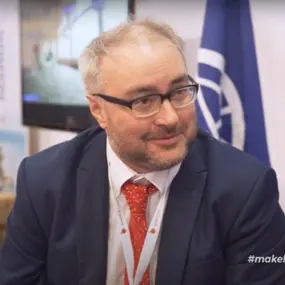
Diaspora Engagement Expert
Dr. Martin Russell is co-founder of The Diaspora Institute and has contributed to diaspora engagement in approximately 60 countries. This work includes authoring several diaspora policies, strategies and action plans with a proven record of impact in driving diaspora engagement at scale across sectors including diplomacy, philanthropy and investment.
He holds a PhD from University College Dublin and was previously a visiting fellow at UNI-MERIT. He is currently a member of the Transition Assistance Practice Group of the Institute for Integrated Transitions, serves on the steering committee of a new 4-year Diaspora Diplomacy Research Project at DCU funded by Research Ireland, and serves on the boards of a select number of diaspora organisations globally. In 2022, he advised on the Global Diaspora Summit hosted by the Government of Ireland and led TDI’s advisory work with the Government of Ireland in support of their new national diaspora strategy launched in 2026.


