Finding Your Tribe 3,000 Miles From Home – John Cummins, Adele Farrell & the IABCN

From Crumlin and Tallaght to the City of Brotherly Love, Irish Stew spins another Philadelphia story, appropriately timed to America's Fourth of July celebration timed to the Declaration of Independence forged in Philadelphia 250 years ago. Recorded in advance at the Irish American Business Chamber & Network's Ambassador Awards Luncheon, cohost John Lee talks with John Cummins and Adele Farrell, who drew on their working-class Dublin to build business success and rewarding lives in Americ...

 YouTube
 TuneIn
 Deezer
 Spreaker
 Podcast Addict
 RSS Feed
 Apple Podcasts
 Spotify
 Amazon Music
 Overcast
 Castro
 iHeartRadio
 PocketCasts
 Castbox
 Podchaser
 From Crumlin and Tallaght to the City of Brotherly Love, Irish Stew spins another Philadelphia story, appropriately timed to America's Fourth of July celebration of the Declaration of Independence forged in Philadelphia 250 years ago.
Recorded in advance of the Philadelphia's Irish American Business Chamber & Network's Ambassador Awards Luncheon, cohost John Lee talks with John Cummins and Adele Farrell, who drew on the grit of their working-class Dublin roots to build business success and rewarding lives in America.
They tell of brutal Boston winters, tropical job sites in Puerto Rico, founding their breakout company NEXA Enterprise Asset Management, successfully exiting from it, and founding their new business initiative, Cummins Business Ventures.
The pair underscore the importance of the Irish American Business Chamber & Network in their success story, calling it the “missing piece” they wished they'd found on day one. They look forward to the Chamber’s signature Ambassador Awards event every year, especially in 2023 when John and Adele received the IABCN’s prestigious Taoiseach Award.
The episode wraps with a heartfelt Seamus Plug. This October, in partnership with the IABCN, John and Adele are launching a fundraising gala benefiting The Autism Hub, a new Dublin-based charity providing assessments, therapies, and family support for autism services in Ireland, a cause that's become deeply personal for them both. Hosted by their Rise Above Fund and the IABCN, The Infinity Gala will be held on Oct 15 in Warrington, PA.
It’s a warm, genuine, and often inspiring Global Irish Nation Conversation about finding your tribe in Philadelphia, three thousand miles from home.
LINKS
- John Cummins LinkedIn
- Adele Farrell LinkedIn
- The Rise Above Fund
- Irish American Business Chamber & Network
- Infinity Gala
IRISH STEW LINKS
- Website Home Page
- Media Partner: IrishCentral
Episode Details: Season 8, Episode 20; Total Episode Count: 161
00:00 - Introduction
01:47 - The Philadelphia IABCN Ambassador Awards
03:53 - Dublin Origins
07:12 - The Boston Experience
11:34 - The NEXA Enterprise Asset Management Story
15:01 - The Role of the IABCN
19:25 - The Importance of the Ambassador Awards Luncheon
24:20 - Giving Back
27:43 - Seamus Plug
31:12 - John Recaps
32:12 - Credits
IRISH STEW
Finding Your Tribe 3,000 Miles from Home
A Conversation with Adele Farrell and John Cummins
This transcript was generated using AI transcription technology and reviewed by Irish Stew. Minor inaccuracies may remain. For the full audio experience, listen to the episode at your favorite podcast platform or at irishstewpodcast.com
Episode Details
Host: John Lee
Guests: Adele Farrell and John Cummins
Topic: Irish American entrepreneurship, the Irish American Business Chamber and Network (IABCN) Philadelphia, and the Autism Hub fundraising gala
Released: Around the Fourth of July
Introduction
JOHN LEE [00:01:00]
That's John Cummins, and we'll be joined by his wife and business partner, Adele Farrell, on this edition of the Global Irish Nation conversation here on Irish Stew.
I'm John Lee, and I'll be flying solo for this episode, which we drop just before America's Independence Day, the Fourth of July. And appropriately, we go back to Philadelphia, where the Declaration of Independence was forged, to pick up where we left off on my trip to Philadelphia's Irish American Business Chamber and Network's Ambassador Awards luncheon.
Our guests, John and Adele, are two working-class kids from Crumlin and Tallaght who've gone from Boston winters to Puerto Rican job sites to a software company with a presence on three continents, and the sale of a software company John started thanks to contacts he made at the Irish American Business Chamber and Network.
Along the way, John and Adele picked up the chamber's 2023 Taoiseach Award as they are raising a family in the Philadelphia area and are now gearing up to launch a fundraising gala this fall to support autism services back in Ireland. So here's our conversation about finding your tribe 3,000 miles from home with Adele Farrell and John Cummins.
John and Adele, welcome to Irish Stew. As we look at the Ambassador Awards luncheon coming up, what does it mean to you both when you see that date coming up in the calendars? What does this event really mean to you?
The Ambassador Awards Luncheon
ADELE FARRELL [00:02:00]
I was actually just thinking about this morning because we were coming on to talk to you. It really is something that we both look forward to every year, and we kind of start thinking about it honestly in the January, February timeframe. For us, I think it's just an amazing opportunity for the Irish American community to come together. You hear success stories that you probably wouldn't be privy to otherwise.
You get the opportunity to share in those successes with people that you consider peers, and a lot of them friends. For us, it's the one time we kind of get to connect back with people that we would've met over the previous years. You always meet new connections, make new friends as well. And yeah, if we're honest, obviously being Irish, we love getting dressed up. We like having a drink, having a bit of craic. So it's always a good opportunity to do that as well. Really a phenomenal event that we look forward to every year.
JOHN LEE
Same on your side, John?
JOHN CUMMINS [00:03:00]
For me, being a board member with the IABCN, the talk about the Ambassador Awards starts as soon as the last one ends. So this has been an 11-month conversation ongoing from my side between the board meetings and the committees and preps and stuff like that. There's a tremendous amount of work, not from me, but from the team that goes into this event, and it shows on the day. It's always a phenomenal event.
Seeing the ambassador there, seeing, as Adele said, successful Irish companies, people, individuals that have come over, made a life here -- some of them with Irish companies, some of them with American companies -- it's actually a very prideful moment. I think at the start of the event, a young girl for the last few years has been singing the Irish National Anthem, followed by the US National Anthem, and it's an amazing moment of Irish American pride that the whole room seems to share. And that's the moment that starts off the day -- you're in for a good time.
Irish Roots
JOHN LEE [00:04:00]
No one would mistake you for having Philadelphia accents. Tell us about your Irish roots, your Irish stories, where you came from and how you ended up in Philadelphia.
JOHN CUMMINS
We have a similar background in terms of what we call council estates in Dublin, not too far from each other as the crow flies, a couple of miles. Didn't know each other growing up, but definitely very similar upbringings -- working-class Dublin life.
Solid group of friends on the road, and you have to learn your street smarts very quickly, and you need to have your wits about you. But I wouldn't have it any other way. By the time you've hit 18, 19 years of age, I think you're a lot more mature growing up in an area like that than you would be elsewhere if you're shielded from the real world, as you'd call it. A lot of the lessons that I would've learned growing up in Crumlin definitely applied themselves later on, just in terms of being able to get on with a wide array of people of a variety of experiences. Being quite down to earth, I would like to think, and being able to connect and communicate effectively with all different walks of life. That's been critical for personal success and with the business as well.
JOHN LEE
Similar for you, Adele?
ADELE FARRELL [00:05:00]
I'm from a place called Tallaght. Again, a working-class area, but we both come from really good families and had really good friends. It was instilled in us -- you just kind of got on with it, you didn't miss school, you never missed a day of work. That gave us both similar values. We both would have had a very strong work ethic, and I think that stood to the two of us at the start of our careers. John started out as an engineer. I worked for the Bank of Ireland for 12 years.
But we were both very driven. With that came a drive to maybe try other things, to branch out a little bit and try for a different level of success. And that's really what brought us to the US initially.
John was working for an engineering firm in Dublin at the time, and they had an operation in Boston. They asked John to come over initially for a 12-month period as their operations manager. That was a big one for me at the time. I had a 12-year history with the bank, and I had progressed into roles of increased seniority. When I said, 'Do you know what? I'm going to just put this career on hold and go over to America with John so he can experience a year over there in Boston,' my dad -- they were old school, that a good job in the bank was a job for life.
We had our first home. Our daughter was five. We were, from the outside looking in, quite settled in our career and family life. But it was something we'd always talked about. And when the opportunity came along, we absolutely felt we didn't want to be the couple later in life sitting around saying, 'Why didn't we give it a bash? Why didn't we try?' So I said, 'Look, let's do it.' We supported each other in it. And that was our first venture into the US. That was in 2013. We rented out our first home, said goodbye to everybody, packed up, and off we went to Boston with our five-year-old daughter, moved into a very tiny two-bedroom apartment. It was a change, a culture shift, absolutely, to say the least.
Boston: Two Worst Winters on Record
JOHN LEE [00:07:00]
Did you get to Fenway Park?
JOHN CUMMINS
Oh, yes, absolutely. And it's funny because the two years we were there -- I always tell people this, talking about snow -- they were the two worst winters on record. And Boston winters are bad anyway. I was traveling a lot for work, and Adele was shoveling the snow because I wasn't around, just to get the car out of the driveway while pregnant with our son as well.
ADELE FARRELL
I was pregnant with our son, horrific morning sickness, and I just remember standing outside with multiple feet of snow around me saying, 'How did I end up here?' But it was fun.
JOHN CUMMINS
I always say it was why we had such a healthy child.
ADELE FARRELL [00:08:00]
To continue on -- in terms of our progression, John was working as the operations manager for an Irish American engineering firm. And with my background in the bank, I said I'd worked since I was 15 years of age. So when we went over initially, I actually began working for the company that John was working with. They asked me to come in on the HR and recruitment side. So we worked for that organization in Boston for two years. I think it's fair to say we helped them grow the business.
JOHN CUMMINS
They doubled in size in terms of employees, mainly due to Adele, I would say. The person who ran the company was effectively trying to run recruitment and operations and everything else, and Adele coming in with her background in sales at the bank was really important. Because when you're trying to recruit someone, you're effectively selling them a new life, selling them a new job, and I always tell people Adele would've been able to convince somebody in California to take a job in upstate New York and move house and home. That was the job, and I know that's a very difficult thing to do. So being able to recruit that many people and effectively within two years double the size of the workforce was in no small part due to Adele's capability.
We left that position and that company a bit stronger than we'd found it, which was good. The deciding factor for us wasn't whether we liked living in America. It was a bit of a divergence in what I wanted to do and what I thought was possible versus the strategic goals of the company we were with. They just wanted to go left, and I wanted to go right.
But obviously, being tied with a visa to that company, you can't just set up shop in the US and start a new company. So we moved house and home again back to Ireland in order to start the company. That was, I think, July the 4th when we left Boston -- Independence Day. I always thought that was a weird coincidence.
Philadelphia Chose Them
JOHN CUMMINS [00:10:00]
By November of that year, we had a project in Puerto Rico. Within a very short space of time, we were in a US territory, working again, if not based in Ireland. And then within another six months, it was becoming very clear that the projects and the work we were doing were going to take us back to the US.
To be frank about it, we didn't pick Philadelphia. Philadelphia chose us. We'd done projects in County Carlow, then Puerto Rico, then France, and then the biggest project we were going to look at was in Pennsylvania. It was significant enough for us to really put roots down in PA, move our family back over, start the whole process again.
The difference between working for an Irish company that already had a transatlantic setup, and doing it yourself the second time -- very different experience. The immigration side, of course, but then landing here and someone said, 'You don't have a credit rating. You can't get a cell phone. You're always the bottom of the list trying to rent a property. You can't get a credit card.' Things that you just take for granted when you live here. As an immigrant trying to do all those things, it's a very complex situation. It probably took about two to three years before we were properly settled into the area. We've been here for nine years now.
NEXA Enterprise Asset Management: Building and Selling the Company
JOHN LEE
Is this now NEXA Enterprise Asset Management? Give us a quick word on what the company did and then why you sold your creation.
JOHN CUMMINS [00:12:00]
The divergence of opinion that led me to start the company was that I really believed that pharmaceutical companies were spending a lot of money on something that was compliance-critical. They had to make sure that all of their equipment was calibrated and maintained properly. If you look up the FDA website, they're shutting down pharmaceutical companies once every month for periods of time because they're not doing this properly. They throw money at the problem, and when you throw money at the problem, it's not always the best solution.
The company was basically set up to tackle that problem -- let's fix all of this so that we only have to do what's needed, when it's needed, and look after the equipment, the products, and the patients by proxy of doing all these things. We accidentally fell into the role of implementing a software system that supported this newfound optimization of the way these departments ran.
So what I'd set up as the company quickly pivoted into effectively a software system integrator. They loved dealing with us because I was a technician. I was the guy with the toolbox, walking around the site and calibrating and maintaining this equipment. Being able to see it from that side -- 'This is the software that's going to support that process' -- I wasn't an IT guy, and they liked that. This is a guy who understands what it's going to look like when it's actually in operation.
JOHN CUMMINS [00:13:00]
Our team grew quite quickly, and we surrounded ourselves with people that had a similar background -- people that had actually lived the day-to-day life of being a technician, being out on the floor, understanding the purpose of all of this. We grew that for six years effectively across multiple locations. At one point, we had projects from Singapore to San Diego at the same time. You can imagine trying to run that with the time difference -- there wasn't a lot of time off. But it was very successful, and we worked off our reputation. Our mentality was always: we're only as good as our last project.
I wasn't trying to sell the company at all. It wasn't actually in the plan. We were approached by a company that didn't operate in Ireland, but they were big enough that I knew who they were, being in my line of work. I'd been cold called and cold emailed 10, 20 times before and never took a call, never took a meeting. But just by virtue of who this company was, I said I'd sit down and have dinner with them.
And the craziest thing about the IABCN is that it was actually an IABCN connection that led to that first discussion. One of the guys who's also on the board -- his cousin was the general counsel working for this company and had brought it up in conversation, and he reached out to us. So we can in some ways credit the IABCN with the eventual sale of the company, because that was the genesis of where this all really started.
Discovering the IABCN
JOHN LEE [00:15:00]
How did you folks get acquainted with the organization? What were the early involvements you had with them?
JOHN CUMMINS
In Boston, there's such an Irish community that I almost felt like I never left the country. I would go to an event someone would call an Irish American event, and it was literally just Irish people -- off the boat, born in Ireland, raised in Ireland. Whereas when I came to Bucks County, Pennsylvania, you're narrow outside of the city, so there wasn't this massive Irish diaspora. There wasn't the same network. And the network is really important.
I thought it was really important, especially in our line of work, that the Irish will always try and help each other out. As a fledgling company, we were trying to win business, win people over, build our network. So how do I find out who's who in the Irish diaspora here? An initial search on LinkedIn for Irish American networks and chambers led me straight to the IABCN.
And it wasn't long after that where I found myself kicking myself saying, 'How was this not the first thing that I did?' Because I met people that worked on behalf of the state of Pennsylvania government, and they were telling me, 'Oh, you've got a company, we can help you out with this grant and this.' But it was too late -- the ship had already sailed, it could only be done for a certain period of time. My only regret is that I didn't do it day one, when I was off the boat.
And I think that's actually fed into what I'm trying to do with the board now. I have been very vocal about the fact that whoever wants to come here, whoever's considering Philadelphia, tell them to talk to me. Because I won't just be an evangelist for the IABCN -- all those things that I had to find out manually, I want to be able to impart on other people.
JOHN LEE
Similar for you, Adele?
ADELE FARRELL [00:18:00]
Going back to it -- we were so used to doing everything ourselves. Google was our best friend; we just figured things out. Whereas that was a big eye-opener for us when we did get involved in the Chamber. It's like we could have leveraged people to support us. So that's something that is very important for John now -- that he provides that support to young Irish entrepreneurs coming over.
Even on a personal level, the early days in the Chamber, and even still to this day, when you come over here on your own, especially when you're setting up a company, you need everything from accountants to solicitors to tax advisors. To have that group of people that you know aren't just trying to make money -- you're getting actual genuine advice from people who have walked the walk before you. That's been absolutely critical for us.
And then on a personal level, you're always going to miss your Irish connections, your Irish friends, your Irish family. I love that element of the Chamber from a personal perspective -- that when you come together at events, you're speaking with like-minded people who have faced the same challenges that you have faced, people who have tried to become successful in America and still hold on to their Irishness. So that's been really beneficial for us.
JOHN LEE [00:19:00]
I'm an Irish American and I see a lot of people coming over from Ireland, and for some of them, there's that period of resisting the connection back home. They came to New York, to Philadelphia to get away, to explore, to be their own person. But I often find them coming back into an organization like this, and they find a connection that they've been missing, and they find like-minded people.
A very keen observer of Irish America, an Irish friend of ours who has been on the podcast, told me that the Ambassador Awards Luncheon is the most important Irish American event of its kind. Would you agree with that assessment? Why do you think it is such an important gathering?
JOHN CUMMINS [00:20:00]
We've lived here in total for 11 years -- two years in Boston and nine now in Pennsylvania. I've never been to a better or more impactful event. The people that I've met through the IABCN in general, not just on the night itself, but on the lead-up to the event -- you're talking to people who are being recognized at the event, so they obviously have done something outstanding. You're talking to the Irish ambassador, you're talking to the consul general, you're talking to ministers of finance that I've met. I've met the Taoiseach or former Taoiseach of Ireland as part of those IABCN events. You're around Irish success a lot.
And being in a room of 450 to 500 Irish American people with that level of pride, there's a real recognition of what the Irish have built in America, what they've contributed to, how they still contribute to it. And this isn't generations away. My table at the event last year -- to my left is a guy from Dublin, to my right is a guy from Cork, across from me is a guy from Kerry. These are people who are currently active in the Philadelphia scene, who were born and raised in Ireland and now have a senior part to play in major companies in the US. And that's a testament to the Irish work ethic and how good we are given the right opportunity and landscape to work in.
ADELE FARRELL
I might talk about it from a personal perspective, just because it was something I was thinking about earlier today. The awards -- we were awarded the Taoiseach Award, myself and John, in 2023. And I'll be honest, when it was announced that we were receiving this award, I thought, 'What's going on here?' It was a shock, a welcome shock, but a shock nonetheless.
But I think what it did, especially for me, and this is something John and I had spoken about -- it really was such an honor. The two things that we have been passionate about over the last 10 to 12 years were creating job opportunities -- we created nearly 150 jobs between Ireland and the US -- and doing our bit to give back to Irish or American communities through charitable efforts. That Taoiseach Award recognizes leadership in business and those who support American and Irish communities. To receive that from such a prestigious chamber was absolutely huge for us.
I had never really taken a moment to step back and look at what we had done. We were so busy for so long with the travel and setting up companies and family and everything. We never took a moment, and we really had to stop and go, 'Look, actually, look at what we have done.' That success was celebrated for us on the night, and it genuinely was a true honor.
JOHN CUMMINS
There are certain moments where you have that thought, 'How did I get here?' Both from working-class backgrounds -- great families and all that kind of stuff, but Dublin's a small place and your suburb of Dublin's an even smaller place. So when you find yourself in the Union League talking to 450 to 500 of the best Irish Americans around and you're at the podium, it is a kind of a pinch-yourself moment. I've had that a couple of times with the chamber, being asked to speak at events or talk to young entrepreneurs coming over.
And I don't know if you've heard the story, John, but because the two of us won the Taoiseach Award, we gave two speeches. I gave the initial speech and said my bit and how thankful I was, and then Adele proceeded to blow me off the stage. All everybody talked about for the rest of the night was, 'You were good, but she was great.' I'm still hearing it years later.
JOHN LEE
You were the opening act. You warmed them up.
Community, Giving Back, and the Irish Way
JOHN LEE
You have an amazing record of community service and causes that you back and promote and lead. Is there something -- an Irish vibe -- that you're drawing on to balance your family life, your intense professional life, and also that give-back element?
JOHN CUMMINS [00:25:00]
For me, and Adele will have more to say on this -- it's definitely very close to both of our hearts. Small things: when I was growing up, it wasn't a lot of money. We never wanted for anything, but there wasn't a lot of money going around. My dad used to work with a lot of boilers and copper and stuff like that, and he would fill the van with bits of copper over periods of months. Then eventually he'd bring me and my two brothers out -- we were only very young at the time -- and we'd go to a place called Cummins Metal, no relation. They'd weigh out the metal and give him some money for it. It could've been, at the time, big money -- like 100 Irish pounds, which would've been a huge thing. And then he would buy us a McDonald's, and the rest would go to the penny dinners in Dublin.
I think your parents impart a lot of that on you. So there was always that thing of giving back in any way, because even when my dad wasn't in a great position to give back, it was still a very important part of what you would do. So I think when we're in a position later on in life where we're passionate about certain things -- about kids getting the opportunities they want, about music, about community, about the autism spectrum disorder, which Adele might talk to -- it's our duty to give back and make other people's lives just somewhat better in whatever little way we can.
ADELE FARRELL
There's definitely something about being Irish and giving, isn't there? Irish people are world-renowned for being the most generous people. That was something, as John said, that was instilled even down to your Trócaire box -- do you remember back when we were in school? And it was just something you always did, you always considered how you can give.
One thing me and John have always been aligned on -- we operated this way in business as well: if we look after people, they will in turn look after us. Even when it came down to paying people or developing people, we were never trying to scrimp on pennies. We always felt if we give a little bit, we'll get double the amount back. And I think that's a universal thing. It's been our duty, in business and outside in charitable cause, to do our bit in the world to give back.
JOHN CUMMINS [00:27:00]
It also makes you realize how lucky you are. One of the small donations we gave was to Merrion's House in Dublin, which is a kind of heroin addiction center. And you go in and you see how people are living and what they have to deal with on a day-to-day basis. And you actually look at the people who are helping them, and you walk out of there going, 'These people are incredible.' And you're like, 'I am so lucky to do what I do, and not have to worry about this on a day-to-day basis.' It really brings you back down to earth. It's real, it's out there, and to ignore it is unfair, I think, as a human being.
The Seamus Plug: The Autism Hub Fundraising Gala
JOHN LEE
Let's wrap up with what I mentioned earlier, the Seamus plug. It sounds like you have a lot of ideas and causes and issues that will resonate for listeners. What's one or two places we could direct our listeners to, to learn more about what you're working on or support the cause in any way?
ADELE FARRELL [00:28:00]
One of our key focuses over the last couple of years -- and even more recently for further personal reasons it's even closer to our heart now -- is supporting the autism communities, both here in the US, but in particular in Ireland.
One of the things that we've become very aware of is the challenges that Ireland faces in relation to supporting individuals with autism. The supports are not there, unfortunately. At the moment, there are large waiting lists for children to even be assessed in Ireland, and huge challenges in terms of receiving the early-stage interventions, supports, and therapies that they need.
So from this October, in conjunction and collaboration with the IABCN, we will be running a fundraising gala for autism in Ireland. The beneficiary will be a new charitable organization that's been set up in Dublin by a man called David Nugent, and that's going to be called The Autism Hub. Within that Autism Hub space, David will be providing critical initial assessments, diagnosis, therapies for autistic people, and additional supports for their families as well in Ireland.
JOHN LEE
Is there a website at this point?
JOHN CUMMINS
No, it's to come. This is hot off the press. It's in the very early stages of planning, but it's happening.
ADELE FARRELL
We've spoken to Lisa and Éanna -- they're so supportive of what we're trying to do, and the whole Chamber wants to get behind it. We just need to lock in dates and venues and all of that good stuff. But it's absolutely going to be happening this year for a very worthy cause.
JOHN CUMMINS [00:30:00]
It's very important to recognize the Chamber for that, in terms of its mission. The whole thing is about taking the best from Ireland, taking the best from the US, sharing experience, sharing talent, sharing knowledge. And this is a perfect example -- where you have the ability to do something massive here, like a fundraising gala, with something that's going to be close to Americans' hearts as much as it is to Irish people's hearts. We're going to be able to take that money and give it to somebody who's running really coalface services in Ireland that are badly needed, and show tangible impact and results. Without the IABCN, it would be a lot more difficult to make that happen. It's another great thing they're going to help us collaborate on, and just show the power of those two countries combining and doing something special.
Outro
JOHN LEE [00:31:00]
Adele and John, we bill Irish Stew as a conversation for the global Irish nation, and the project and the plans you just outlined are perfect subject matter for us, and the whole conversation has fit in perfectly with what we like to do. I look forward to meeting you all in Philadelphia at the event.
JOHN CUMMINS
Thanks a million. It was a pleasure and much appreciated.
JOHN LEE
John Cummins and Adele Farrell -- two Dubliners who took a leap of faith, built something real in America, and never forgot where they came from. Keep an eye on Irish Stew social media and the Philadelphia Chamber's channels for details on their Seamus plug, the coming gala in support of Ireland's Autism Hub.
Thanks to John and Adele for the conversation and inspiration, and to the Irish American Business Chamber and Network for hosting us in Philadelphia at their most impressive Ambassador Awards Luncheon. Thanks as well to IrishCentral for sharing Irish Stew episodes with their global audience.
Credits
Irish Stew is produced by John Lee, Martin Nutty, and Bill Schultz.
Editing, mixing, and mastering by Martin Nutty. Additional editing by Bill Schultz.
Music on Irish Stew was composed and performed by Rosa Nutty,
with Donal Bowens on drums, Cathal O'Riordan on bass and synthesizer.
For more on Rosa Nutty's music, please visit rosanutty.com
IRISH STEW PODCAST
irishstewpodcast.com | Media Partner: IrishCentral.com
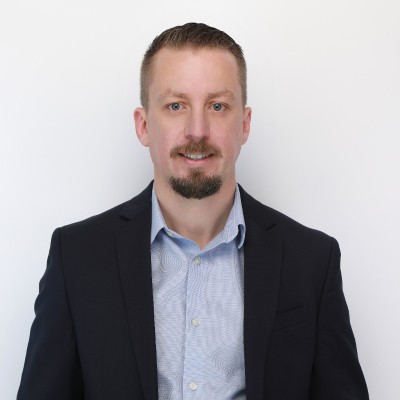
Entrepreneur / Investor
John Cummins is an entrepreneur and investor based in Pennsylvania. Originally from Dublin, John founded his own technical services firm, NEXA, in 2015 and expanded into the US the following year.
After six successful years of growth between Ireland and the US, NEXA was acquiredby NASDAQ-listed Transcat, and John became Vice President of the parent company.
After three years, John left his role at Transcat to focus full-time on his passion: providing investment and advice to fledgling Irish startups.
A big believer in social-responsibility, John and his wife Adele have been supporters of several charities over the years, including Ronald McDonald House in John’s hometown of Crumlin, Rock to the Future – a Philadelphia-based Music Organization, and most recently have provided funding for schools in PA & NJ that are working with Neumann University and Cubbie (an Irish Startup) to assess the role of sensory regulation in education for neurodiverse students
Founder / Community Leader
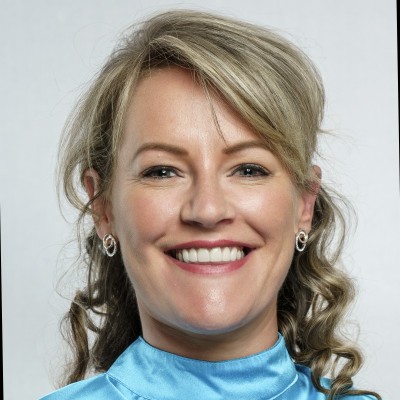
Adele Farrell is the co-founder of NEXA Enterprise Asset Management (NEXA/EAM)and a recognized leader within the Irish-American business community. In 2015, she and her husband John Cummins launched NEXA, to provide calibration and asset-management services to life-science organizations. Adele built the company’s human-resources and recruitment division from the ground up, earning the internal title of “Queen of People and Culture.” She oversaw talent acquisition, training, and retention, and remained dedicated to creating high-quality job opportunities across Ireland and North America. Under her leadership, NEXA expanded from Ireland to the Philadelphia region in 2016 and continued its strong growth until the company was acquired by Transcat in 2021. In 2025 she and John founded Cummins Business Ventures
A big believer in social-responsibility, Adele and John have been supporters of several charities over the years, including Ronald McDonald House in Crumlin, Dublin, Rock to the Future – a Philadelphia-based Music Organization, and most recently have provided funding for schools in PA & NJ who are working with Neumann University and Cubbie (an Irish Startup) to assess the role of sensory regulation in education for neurodiverse
students.
In 2023, the Irish American Business Chamber & Network honored Adele and John with its prestigious Taoiseach Award in recognition of their business leadership and philanthropic impact.
A proud native of Dublin, Ireland, Adele now resides in Bucks County, Pennsylvania, with her husband John, and their …


