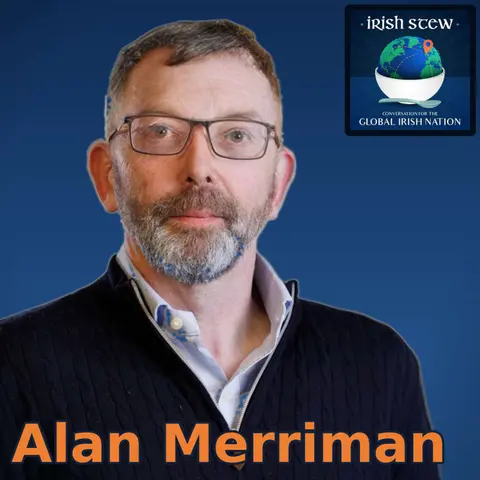
The Case for Irish Venture Capital: Alan Merriman

 Apple Podcasts
 Spotify
 YouTube
 Overcast
 Podcast Addict
 iHeartRadio
 PocketCasts
 Amazon Music
 Castro
 Castbox
 Podchaser
 TuneIn
 Deezer
 Spreaker
 RSS Feed
 Why doesn’t a country good enough to produce Ryanair and Stripe have a normal venture fund industry? Alan Merriman spent three years lobbying the Irish government just to be allowed to launch one, and what he ran into along the way says more about Ireland’s capital gap than most economic reports ever will.
Merriman built Elkstone from a boutique advisory firm into one of Ireland's most active venture investors, and in this conversation he's candid about what it actually took to get there. In this episode, you'll learn:
- Why Ireland’s tax code made venture investing nearly impossible before 2022, and what it took to change it
- Why Merriman puts the quality of a founder at eighty percent of any investment decision, and what he’s really screening for
- Why Elkstone bets on the country instead of a sector, and what that says about the depth of the Irish market
- What Merriman calls “network compounding,” and his pitch for why the Irish diaspora is worth more than its checkbook
If you've ever wondered what it actually takes to build serious venture capital in a small country, or how Merriman makes the case for engaging the Irish diaspora as more than a source of sentiment, this one's worth the full listen.
ALAN MERRIMAN LINKS
IRISH STEW LINKS
- Website Home Page
- Media Partner: IrishCentral
Episode Details: Season 8, Episode 22; Total Episode Count: 163
00:00 - Introduction
01:46 - Origin Story
03:25 - PWC and EBS
09:43 - Scar Tissue Learnings
13:48 - Why Business in Ireland?
16:08 - The Irish Venture Capital Scene
20:17 - Changing the Law
23:46 - Venture Success Stories
31:14 - The Diaspora Strategy
37:32 - Investing Fun
39:11 - Picking Early Stage Winners
45:24 - Seamus Plug
47:17 - John & Martin Recap
47:27 - Credits
Irish Stew Podcast — Episode Transcript
Guest: Alan Merriman, Co-Founder & Executive Director, Elkstone
This transcript was generated with AI assistance and reviewed by the Irish Stew production team. It reflects the final published cut, including the cold open, intro, and outro. Timestamps have been removed from this reading copy.
[COLD OPEN]
Alan Merriman:
Going back to Warren Buffett, I talk about not financial compounding being the eighth wonder of the world, but network compounding being the eighth wonder of the world. And I think the Irish diaspora it's a real asset that I think Ireland hasn't properly leveraged.
John Lee:
that was Alan Merriman, founder and executive director of Elkstone. I'm John Lee
Martin Nutty:
And I'm Martin Nutty. Here's a question worth sitting with. Why does a country good enough to produce Ryanair and Stripe still not have a normal venture fund industry? Our guest, Alan Merriman, spent three years lobbying the Irish government just to be allowed to launch a venture fund. He'd already built Elkstone as a financial advisory firm years before that effort started. And once the law was changed, he backed the kind of Irish founders most investors overlooked.
In this conversation, he makes the case that the founder matters more than the pitch, that the Irish diaspora is worth more than its checkbook, and that Ireland's biggest problem isn't ambition, it's capital.
A quick disclaimer. We talk about matters monetary in this episode. The content of this conversation should not be construed as financial advice. Before making any investment decision, talk to your own financial advisor. Now, here's Alan Merriman
Martin Nutty:
Alan Merriman welcome to the Irish Stew podcast
Alan Merriman:
Thank you, Martin, John. Delighted to be here
Martin Nutty:
We're going to start off here, Alan. Where are you from? What county you're tied to? Tell me about your people?
Alan Merriman:
A very simple story. I'm Dublin born and bred. It's always been Dublin other than a short stint on a J-1 visa to New York quite some time ago. I’m very much Dublin, very much Ireland, and that's very much been the center of my thinking. I think from the very off how to stay in Ireland, how to have access to a global opportunity, but do it out of Ireland
Martin Nutty:
Northside, Southside?
Alan Merriman:
Southside, but the family originally were Northside, so East Wall and then out in Raheny, and then we moved to Templeogue. And when I started my own family, we moved to Ranelagh, and now we're in Harold's Cross. So little bit of both. Certainly, a heritage there Northside and, grew up I think primarily Southside
Martin Nutty:
For our American listeners and non-Dubliners, can you explain what East Wall is?
Alan Merriman:
East Wall is, I suppose broadly speaking, an inner-city Dublin location. It's transformed hugely over the last 50-plus years. Originally Sheriff Street is a location that will be well known to people, relatively very poor and tenements and so forth. I remember with my grandmother, having to go to the bathroom was out the back, out down, an alleyway and so forth.
So today what's sitting there is the Irish Financial Service Center and Docklands and huge transformation. As somebody who genuinely grew up in that area as a very young kid and still has memories of it, the transformation is just incredible.
Martin Nutty:
Moving on from your East Wall origins and South Dublin origins I noticed on your LinkedIn profile you spent time at PwC and EBS. A big chunk of your career was in both of those. Tell me about the journey to those, and the experiences of those two companies
Alan Merriman:
What I love sharing with people is when I was in school, I went to Marian College beside the Aviva Stadium, Lansdowne, and my dad was an accountant and at that time, all I had in my head was I wanted to do a BCom, a Bachelor of Commerce in UCD.
Now, where I got that idea from, I have no idea, but that was the summary of my vision at that point in time. And thankfully, I managed to do it. I went there with six or seven of my classmates out of Marian. When I landed in the BCom, I had in my head I wanted to be a kind of general manager type go on a graduate program to Coca-Cola or Ford or somewhere like that, and the last thing I wanted to do was be an accountant.
Now, I had no good reason for that other than perhaps, just that notion of my dad had been an accountant, I'd like to do something different. But as I went through the BCom, I couldn't help myself. I actually was drawn and I loved accounting, and I did a master's program in accounting, and through that wonderful experience in that there were 78 or 79 people in my last year in college and university, and 29 of us, and I'm making no exaggeration, 29 of us joined PW together.
And you can imagine that was an extension of university. I went into PW at the time with a view of, look, I'll only be staying three or four years, get my accounting qualification, and then land in, somewhere as I said, a Coca-Cola or General Motors type context. But again, what I found was that I really, despite the maybe public perception, I actually really enjoyed the accounting world.
Why did I enjoy it? It was a tremendous opportunity to get to see lots of different organizations, lots of different companies, lots of different industries lots of different sizes, and you got exposure to, people who were doing their day job, and you got exposure to boards and the great and the good, and I genuinely loved that.
I just found myself immersed in PW, what became PwC, got very lucky, had good success there, made partner at a pretty young age. I think I was 32 maybe at the time, stayed there for five years as a partner, and then eventually left. I was headhunted. I kept on saying no, but I think eventually they fatigued me and I came to this kind of considered view eventually that as much as I, was having success in PwC, I didn't think it was the real world and would I be any good in what I called the real world? And I felt young enough that I could go and take that risk, and in the worst-case scenario, if things didn't work out, perhaps PwC would take me back. So that's ultimately what I did. But I spent 17, 18 years in PwC and it's been very formative in terms of my progression in life, and I learned so much there, like genuinely surrounded by really brilliant people from different walks of life, both within PwC and through the client base that I was lucky enough to have.
When I did ultimately move, I went to EBS, the Building Society, and in an Irish context, it was very rare to have a big four partner leave to go to industry. Very few opportunities, and I went there with the promise of becoming the CEO, which at 37 or 38 years of age was a big draw. That didn't happen. I got my timing badly wrong. It was the financial crisis and, working with EBS through a very difficult period, I ultimately left post the financial crisis. Not quite sure what I was going to do in kind of three and a half years, 2005 to and I left in March 2009.
I said at the time and I would say today that I probably had 10 years' experience compressed into those three and a half years. Some very extraordinary times going down to the Central Bank and dealing with what was going on and the trauma within the Building Society itself, dealing with what we had to deal with and accountability and all that good stuff.
But I left EBS then, wasn't quite sure what I would do. I'd nothing lined up and I was very fortunate. My reputation was still good despite the challenges that I'd gone through, and I had a number of offers, and I ended up working for a guy called Roger Jenkins, who'd come from Barclays.
He'd actually been pretty much running Barclays Capital globally and he'd come to Ireland to set up a business. Somehow, through serendipity, he found me and we clicked and he was very keen I join him as a COO in a business that was connecting S&P 500 companies to sovereign wealth money and stayed with Roger for two years.
That business did incredibly well. Ultimately, he got headhunted to go and become the managing director of BTG Pactual, the Latin American investment bank. He wanted me to go with him. I was reluctant to go. I had a young family at the time. I really wanted to stay in Ireland, as I explained at the outset, I've just been drawn to trying to make a career business work in Ireland, and I believe passionately in that.
So, I wanted to stay in Ireland. And Roger, to be fair, came up with the idea of, look, why wouldn't I work for him personally, help him with his wealth management? He was a wealthy guy, but also help him behind the scenes with BTG Pactual on the private equity side. So, I agreed to do that for a year, did well for him, and got lucky.
We made good money that year. He was very keen that I would stay on. I was less keen because I didn't want to really work for one individual. And it was remote. He was in the US and in Brazil, and I was in Ireland, and you can imagine the challenges around that. But ultimately, I came up with the idea of, look, I'd do it, but only if I could set up my own business and build out a multifamily office.
I didn't think Roger would agree, but he did. He was very good in that context. And in fact, he helped me get my second client, and that was the start of what I would call my business, Elkstone. And it's evolved over a long period of time. We're now up and running for fifteen years. We're very different today to what we were at the beginning.
We started off with that one single client and then two and built it up to ten, eleven, twelve, all international clients. But the team that I built was based in Dublin, based in Ireland.
John Lee:
Do you mind if I just yank you back into a painful memory? Just to kind of life lessons learned, cause we were interested to see your trajectory that took you through, the Celtic Tiger and then the crash after the Celtic Tiger and the turmoil that you had to deal with then. Are there things that you learned and gathered and you also referenced great exposure to different types of companies and different sectors, that you had at PWC. Those two experiences, are there things that you glean there that have helped your approach in Elkstone?
Alan Merriman:
In truth, so many, and I'll just, try and pull from my, memory scars and otherwise a handful. One of the things that was, not beaten into me but was instilled in me in PW at a very early age, I was very lucky, I worked for two of the managing partners in PwC, Donal O'Connor and then Bill Cunningham two great guys, amongst many others.
But instilled in me at a very early age is, look at the people around you, whether within PwC or outside of PwC amongst the client base, look at the people around you and learn to assess what they're great at and what they're not so good at. And if you can cherry-pick what's the best of everybody, that can be really special.
That's always stayed with me, trying to learn from everybody. Everybody has their strengths. And you remember I worked with PwC, I'll use Arthur Andersen, people used to talk about, the Andersen Android. But I know from my PwC experience, I was one of 80 partners in Ireland at the time.
Those 80 partners might have had a certain profile, but they were all very individual, all very different. So that was one learning. The other big learning I had when I moved from PwC into EBS was that I went from being, as I said, maybe one of 80 partners and I was on the leadership team and so forth, so I had influence.
But, when I moved into EBS, I was one of three executive directors, and I learned very quickly, be careful what you wish for and to slow down, because in PwC you'd be pushy, but it would take time to get things done. In EBS as one of three executive directors, if you said jump, it happened, and actually it might have happened before you really understood what you were asking for.
So I learned very quickly to be more considered, to be more patient before demanding or asking for things. The other thing I learned, whether it was in PwC, and it probably was in PwC, but it continues into industry and it continues into modern-day life for me, is that when things go wrong, it's never one thing, it's a multitude of things.
And again, that's served me well over time in understanding that, and therefore accountability and transparency and open culture and so forth. And probably the thing I've learned most through everything, the good times and the bad times, and it's very important, one of our core businesses today, the venture side of our business, is people, it's so important.
I'm a great admirer of Warren Buffett but I have a very different philosophy when it comes to business, the type of businesses that we back, early-stage businesses. Yes, the underlying vision and the underlying opportunity is very important, but by far the most important thing is the founders, the quality of the leadership team.
Because life's not going to work out. Those companies have to be agile, they have to change course, they have to be very responsive and therefore, the quality of the leadership, the quality of the people is so important. They're the type of things and again, people are people, so I'm very lucky in that, I say against myself in some ways as a kind of rounded individual that, look, my natural habitat is in the boardroom, and that's because I've grown up in boardrooms. Now, literally from being a kid, nineteen, twenty years of age in PW, then PWC.
And all I mean by that, is that it doesn't matter who I'm talking to, it doesn't matter whether it is the most junior person in a business or whether it is the chief executive who's, built billion dollar or trillion-dollar opportunities, people are people. I've learned that throughout my life and deal with them as people, and don't put anyone up on a pedestal and don't put anybody down. Everybody contributes
Martin Nutty:
We want to talk in depth about Elkstone, the company that you founded specifically your venture fund. But I'm going to boomerang back to something that you said earlier, that it was important for you to conduct business, establish business, grow business in Ireland itself. Tell me about that drive to set up business in Ireland. Why was that important?
Alan Merriman:
It’s hard to explain. What I put it down to is that I talked about the benefit of 29 people in my final year in university landing into PW and going in as a class to do our accounting in PW and how brilliant that was because, we were young, we had a great time, we were partying but we were working hard and it was our very early years.
I think in truth, of those 29 people, probably at least 20, and it was probably nearer 25, ended up having to go abroad. They ended up having to go to the States or having to go to the UK or having to go to Australia, be it was less popular back then, to find work. And, again, I'd be very clear, I'm not the brightest person in the room. If I go back to that class of 29 super bright people and many of them had to go abroad to get work and I was one of the lucky ones. I had the opportunity to stay in PwC. I got promoted and I did very well as I explained earlier on. And I loved PwC because I felt that we were on the world stage.
You got an opportunity to work with big global clients and you did it out of Dublin. So, I always was drawn to the idea of, real success and this is not talking against anybody else's success who's gone and had success outside of Ireland, but I always felt real success was to have a really stellar career from within Ireland, have global exposure from within Ireland, build something in Ireland that was of a global caliber punching beyond your weight.
And where that came from it's hard for me to be sure but my gut feel is it was those early years in PwC seeing my friends and they were my friends and my colleagues having to leave, having no choice but to leave and it being very difficult and only four or five of us were going make the cut out of what was genuinely, an incredible talent pool
John Lee:
Looking at the founding of Elkstone. I know you've been involved in different financial ventures within that, but I think it's the venture capital piece that's probably of most interest to us today, and specifically the whole startup venture capital scene in Ireland, but also your interest in involving the Irish diaspora
Alan Merriman:
Yeah if I go back to the history of Elkstone, when I made that decision, we'd done well as a small business. We'd built up to 10 - 11 clients, international clients. We had an Irish team. I'd done well financially, but my view was that in terms of building a scalable business and a business I could be proud of, I came to the view, I didn't want to be twenty-four/seven on a plane, and I wanted to go after what I call the Irish entrepreneur.
I felt that the Irish market wasn't sophisticated. I felt that the Irish entrepreneur was ill-served, and I felt there was enormous opportunity to bring the right type of service and product to the Irish entrepreneur. So, I made this pivot very intentionally to build the business now for the first time with an Irish client in mind as distinct to an international client.. And then when we made that pivot to an Irish client base, I took the view that one of the ways of attracting clients in Ireland was give them the opportunity of co-investing alongside me in the venture deals I was doing.
And I'd become relatively prolific at that point in time in terms of doing venture deals, and one thing led to another. So that idea became what we call the Elkstone Venture Club. We did over 40 deals in that way, deal by deal. It was both international deals and Irish deals, but as time went on, I found myself doing more and more Irish deals.
And we delivered a really good track record. We became very much associated with being the smart money in Ireland, the people who could pick the right deals to be in and that served us very well. But I felt that the Irish venture ecosystem it needed lifting up.
The angel ecosystem in Ireland is weak. We don't have risk appetite as Irish people. So I just felt, how do I move it to another level? What can I personally do? And I came up with the idea that rather than doing things deal by deal, a venture fund would be a breakthrough.
And I went to Enterprise Ireland, and I went to Department of Finance, and I convinced them that there was an opportunity to bring a fund to market that would marry together private money, high net worth individual money, and taxpayer money that could really build the right type of portfolio and make a big difference. And after three years of lobbying, finally got it through in legislation, which was back in 2022. And the deal day one, and, again, share this with you for, I haven't shared this elsewhere, I don't think, that the deal day one, that I did with Enterprise Ireland was they offered to give me 20 million.
They loved the vision and they respected me in terms of the track record and the reputation I had at the time. And they offered to give me 20 million if I could bring 10 million of private money to the table. And we ended up they kept to their deal. They delivered 20, and we found another 80, and we launched a fund with 100 million. And that's very small in North American terms, but I can tell you in Irish terms, that was a huge breakthrough and really, people woke up to what was happening. And with that 100 million, we've now invested in 28 companies. We're very happy with the quality of the portfolio. We've some real rock stars that are in that portfolio.
We're what I call generalists and your listeners will understand this those who are very familiar with Ireland, that Ireland's not deep enough or broad enough to be a specialist in any one sector when it comes to venture. We couldn't have 30 companies that are all brilliant at medtech or all brilliant at fintech or e-commerce. But we can definitely find 30 brilliant companies across the landscape of Ireland that are going to go on and do great things. So, we're what we call a generalist, but we're specializing in Ireland.
We're going to find you the 30 best founders in Ireland to back. And if you're Irish or you're of Irish descent you're going to know that of those 30 founder opportunities, quite a number are going to break through and do amazing things
Martin Nutty:
Alan I wanted to pick up on what you were saying there because it struck me as being a bit odd that you had to approach the government for a change in legislation to do what you wanted to do. It strikes me sitting in New York, which is, a major financial hub, what you were trying to do sounded fairly vanilla in terms of setting up a venture fund and then, let's say, securing some government investment and marrying that up with private capital. So, what was going on there?
Alan Merriman:
Maybe just to remind everybody of the context. So first of all, Ireland by contrast to the US in particular and you're probably contrasting the two extremes broadly speaking. In Ireland, we don't have the endowments, we don't have the foundations, we don't have the institutional capital.
So yes, we've government, and government would've always been supportive of venture, but it was only government funding. So institutional funding was really non-existent. So where else could the money come from? It could come from the private markets in the sense of retail or the wealth channel as it might be better known in the US.
However, in Ireland at the time, pre-'22 the incentives to get individuals to invest were centered around investing in an individual company rather than a fund. And therefore, there were good tax breaks to incentivize people to take risk. But unfortunately, the way the landscape was working is that individuals would take that one single bet, and as we all know, venture is high risk, very high risk.
So inevitably the one bet that they would take would go wrong and they'd have had that bad experience and that would be end of it. They would never invest again. My thinking, broadly speaking, was, look, what you need to do is build a vehicle, build an opportunity so people don't take single bets.
They can invest in a portfolio of 30 bets of the right quality, of the right standing, the higher quality opportunities. And by taking that portfolio approach, give them the same tax benefit because ultimately the government, Ireland Inc., is still getting the same net win. Give the tax break for the aggregate, but by doing that, you're bringing in the right type of money.
It's going to have a really good experience, and then you'll get the continuous recycling, and that's what we set out to prove. Convincing the government of doing that, took quite some time. In fact, the Irish Revenue the tax authorities were the most, what I might call, negative on it.
And it was the Department of Finance who were absolutely brilliant in giving us the support we needed to ultimately get it across the line. And therefore, it was, with great satisfaction that we delivered the 100 million, because people just felt there was no chance of that happening. But more importantly, as I said, it's not just about having got it done in terms of set up and raising the 100 million.
The most satisfying thing has been proving out that the quality of companies are here, to deploy the 100 million, and that people can see already. It's still very early in the venture landscape. You can be 10 years building out your performance. But here we are in year five, and it's very clear the average portfolio company, those 28 companies, the average age of them in our portfolio is only two years. But already there's clear signals of emerging stars coming, and that's very heartening
John Lee:
Actually, could you give us an example by name or just describe a company that you ferreted out or how they came to you and what you saw in them and how you were able to help them grow and create jobs and assist the Irish economy in general?
Alan Merriman:
There's so many and, look, maybe if I just cherry-pick two or three out of the fund, and then I'll talk about that club model because the club model predated the fund. And actually, I might start with the club just, in terms of sequence. So I'm going to cherry-pick two or three that, some of your listeners will have heard about.
Let's Get Checked is probably the company we're most associated with in terms of being a home run, for the want of a better phrase. Let's Get Checked, we invested I think it was the seed round. We were the first money outside of family and friends, and the valuation might have been, I don't know, 6 million or thereabouts euro.
I think at one stage we ended up supporting them through a month where they were struggling to make payroll. Today, UnitedHealth better known as FuzeHealth they're now a $5 billion market cap company, and our largest shareholder is UnitedHealth. They're making a huge impact across North America, and they're still headquartered out of Ireland. Over 800 employees. An amazing success.
A more recent example is a company called Protex.ai. They're doing AI and camera vision to help proactive health and safety on site in areas like logistics. Think of ports think of warehouses. Amazing clients globally. They've clients like Procter & Gamble and FedEx and DHL. Again, we would've been the original backers of that team. I think the round again was probably about 5 or 6 million starting off. The last round, it's still at an earlier stage a Series B 150 million or thereabouts post-money. And the company's only getting started. They're going to go on and do amazing things.
Another company is called Evercam. Evercam they're in the construction space. Again, they're using camera vision and AI, again in the health and safety space, but using drones, using body cameras integrated with BIM systems to help data center infrastructure deliver on time and on budget and in a very compliant way. Again, amazing customers, the likes of Intel and Digital Reality and so forth.
In the fund, maybe to pick a different example altogether, one of the companies we're most proud of is a company called Blue Drop Medical. Blue Drop Medical have come up with a very innovative device that's helping diabetics in terms of identifying early risk of foot ulcers. Foot ulcers, believe it or not, are the third-biggest medical expense in the US. There's a very high preponderance to amputations and again, this looks like a weighing scales, but it combines technology which is both taking temperature and taking images that can be fed automatically to the clinicians. And one of the best things about it is eliminating false positives. Again, the Veteran Association is going to be a key customer of Blue Drop Medical. And again, it's great example of Irish innovation being brought to the US and having a real impact on lives in the US and beyond. So, there are a couple of examples, but many more.
You asked earlier about the Irish diaspora. We're now looking at fund two. Fund one is done. The 28 companies are identified. They're part of the portfolio. We've reserved money. We still have money to back the winners that emerge from that portfolio. But now in the Irish market we need to get fund two done. And we've done a first close, and we're focused on getting a second close done by the end of this calendar year, and we want to look after the next 30 best opportunities in the Irish market.
There's three differences between fund two and fund one, and the first one is that we want fund two to cover the entire island of Ireland. Fund one was only the Republic. I say only, but we want the next fund to be Ireland in every definition and there's great companies coming out of the North and out of Belfast, and we want to be able to back them and support them.
Secondly, we're going to do some initial checks on what's known as Series A. Series A are companies that are just that further progressed. They have a product. They have customers. They need capital to grow, and we believe we'll have our absolute pick of Series A companies in the Irish market to be able to back and invest in.
And then the third difference, and this is the most important one, I think, is that we want our investor base, this time round, to include Irish diaspora. Now, why? There's two really good reasons. The first one is a very selfish one. To get the capital that we need in Ireland, despite Ireland being a very wealthy country today, because we don't have the risk appetite, because we don't have the history, we need to get money into venture from outside of Ireland.
It'll take time to build the behavior within Ireland, and we think the Irish diaspora is one of the most likely ways of achieving that. So, it'll be very positive impact on Ireland itself and backing Irish founders and bringing them to America, bringing those businesses to America if we can tap into the Irish diaspora for the capital.
But the most important reason for the Irish diaspora is I see them as strategic, and what I mean by strategic is if we get the right constituent base of Irish diaspora, they'll be very influential. They'd be able to open up doors, they'd be able to give access to customers, they'd be able to use their network.
Network compounding, going back to Warren Buffett, I talk about not financial compounding being the eighth wonder of the world, but network compounding being the eighth wonder of the world. And I think the Irish diaspora it's a real asset that I think Ireland hasn't properly leveraged.
And I think it's not just about leveraging an asset; it's about providing real connectivity back home. It's about giving people a more contemporary reason to be interested in Ireland today, to be leaning into the country today, to give a bit of payback in a way that whether it's their capital, but it's not philanthropic because this is going to make good money, but it's their intellectual capital and it's their network, and knowing they genuinely can move the needle here.
And I think there's something very powerful in that, and we're already proving it, but I believe we're just scratching the surface in terms of what can be done there. And again, I think of the Irish diaspora, and we all know what Irish diaspora means different things to different people, and even within the US, by way of example, the Irish diaspora in Wall Street is very different to the Irish diaspora in Hollywood, which is very different to what it is in Chicago, which is very different to what it is maybe down in Miami or wherever I pick, San Fran.
So I just see these very obvious opportunities to really leverage the Irish diaspora in a really impactful way, helping Irish founders scale internationally, helping Irish founders build our businesses out in the US, bringing jobs to the US, bringing innovation to the US, and I just see that as a win-win in every conceivable way.
And yet, it’s an opportunity nobody's really grabbed, and it's not a sprint. This is a marathon or it's a triathlon. But I genuinely believe look, we're at the start of this, but what's this going to look like in 10 and 20 and 30 and 50 years' time?
And that's what excites me. That's what I want to make happen with Fund II being the start of that
Martin Nutty:
Our last guest was a gentleman by the name of Martin Russell. I'm not sure if you've crossed paths with Martin, but his expertise is in the area of diaspora. And capital is one of the elements or pillars of, what's involved in a good and healthy diaspora strategy.
One of the other things that we discussed when we were talking to Martin was the importance of a two-way flow in a diaspora relationship. In other words, you can't go out, okay, maybe you can, but you can't go out and say, "Hey, you've got an Irish last name. Why don't you invest in Ireland because you have a good, warm, and fuzzy feeling about Ireland?"
It can't just be sentiment, okay? So, I'm curious about that, and I'm also curious about the challenges in connecting to diaspora, and how do you make that happen, because it's not like there's a directory that says, "Here's a list of all the diaspora people that are going to invest in this fund." And let's be clear, the investment in this fund is not for people that have, a couple of hundred bucks. It's for people that have more money? Can you talk to some of those elements?
Alan Merriman:
Yeah. So look just going back to Martin and, I would know Martin and his colleague, Kingsley Aikens very well and, it's interesting, Irish diaspora, the broadest definition of Irish diaspora would include, for example, many, US citizens who've come to Ireland and they've had a tenure here in Ireland, whether it's as an executive or whatever, or people who've come and studied in Ireland and gone back home.
But look, absolutely, we're very focused on what in the US would be known as accredited investors. And that's important from a regulatory perspective in terms of the type of investment being made and the risk associated, but it's also in truth reflective of what I would call the network.
People of that ilk will have had success, and therefore they'll have that network around them that can make things happen. And I think that’s very powerful. Elkstone doesn't have a history in the US. I've been going out to the US probably for the last six, seven years building relationships, but very much in the context of how do we help our portfolio company as distinct to going out looking to raise money.
So, we're going out raising money now for the first time. And we're doing it city by city. We're looking to leverage off the friends and family that we have there, and we're hoping that one person will lead us to the next and that the story will resonate. And we think it will resonate because, as I said, we think we won't be given the money simply because somebody's got an Irish connection, but they may give us the opportunity of a coffee, or they may give us the opportunity of making the pitch, and they will understand the depth of talent within Ireland and the context.
But after that, it's about track record, it's about the quality of the companies we can give you access to, and it's about the belief in the strategy that people understand that actually, there's an arbitrage between Ireland and the US in terms of pricing and valuation, and there's an opportunity that Irish people do very well in the US when they get there.
And again, with the right support and network around them, that can be accelerated. So that formula, is I think very supportive to if you have an Irish fund that I can get access to and I can be part of in terms of the network, yes, that's something I can really believe in and get behind
John Lee:
Sounds like you're back on those jet planes that you wanted to avoid earlier in your career because, Martin and I have had a lot of conversations with people of looking to set up shop in, in the US, from Ireland. And there can be that missing component of you really do have to be here. What are you finding? What do you think really resonates? I'm sure it's case by case, but what are some of the things about your proposition that resonates, let's just say in the United States?
Alan Merriman:
I think there's a multitude of things, to be honest. I think if I make it a little bit more objective. I think there's no doubt that people are seeing this in terms of investment framework and allocation decisions. They're seeing this as being real diversification. This is something outside of the US and in the context of what's happening globally and so forth. Hey, there's maybe space for that I wouldn't have entertained previously. I could see some sense in having a small allocation to something outside of the US. That's one angle. I think people also get what am I called the price arbitrage. If they're thinking about venture, they understand that European venture and Irish venture, the price of access is at a lower level, and therefore, if you're going to get the winners and they come from an Irish portfolio as opposed to a US portfolio, there's even more upside.
I think people love what I call, the track record in terms of when they get below the hood and they see the companies that we've backed and the success of those companies. That gets them excited. And the big contrast I think is that, look, I'm very conscious there are super venture fund managers with super pedigree in the US.
Think of Sequoia by way of example. But the truth of the matter is even the very wealthy in the US can struggle to get access to a Sequoia fund. What Elks Stone guarantees, in quote marks, is we're going to get you access to the 30 best Irish venture. And the leap of faith is if we're going to get you access to the very best Irish venture, and you're going to back 30 of the 30 best companies that are coming in the next four or five years. Do you really think that four or five of them won't do very well? Because that's what the bet's about, the power law as it's known in venture. Yes, there'll be casualties. Yes, certain companies will not make it, but it only takes a handful and you can do super well.
So, do you really think if you back 30 of the smartest Irish founders, Irish businesses that are focused on scaling internationally coming to America, that you won't get the handful of companies that are going to do incredibly well? And in backing the 30 companies, you're having a really meaningful impact on Ireland itself.
And there's that social aspect that you're going to be part of this Irish diaspora and Elkstone family and network that's going to have a bit of fun doing this. And I mean that. Bit of fun and a bit of craic and, move the needle and feel really good about it, and make money. What's not to like?
Martin Nutty:
What does fun look like in that context?
Alan Merriman:
Fun can be, hey, you're coming to Ireland, and not only are you coming over to meet the family and play around a golf or two, but you're going to meet some of those companies that you've been supporting and you can move the needle with. And that's fun for some people. Sone people love that. I'm gonna lean in here, I'm gonna deal with, some really smart founders with really cutting-edge technology and that's fun.
Equally, again, if you think of the profile of the people who've been investing with us, we would have a big constituency that would be from what I would call recently retired. And, people are retiring at 55 and 60 and 65, and they've loads of energy, and they've loads of intellect, and they've loads of network, and they still want to be engaged. They want to be intellectually challenged. And that's fun for them. So fun means connecting back home.
One of the most interesting things I've witnessed is that as we've gone from city to city, we've brought people together, Irish diaspora people together, in rooms that haven't met each other. Different walks of life, different age groups. Venture is one of those rare things that, you can be, very senior, or you can be very young, and you're intellectually stimulated and interested and curious about venture, and it brings people together. And equally, a young buck or a very senior person can add value to a venture. So it's a really interesting experience, and it's a really interesting network, and it engages people
Martin Nutty:
Just thinking about the portfolio of companies that, let's say, comprised your fund one or even your earlier investment efforts, a lot of these companies, by virtue of what they are when you get involved, do not have long track records. They don't necessarily have lots of revenues. It's much different than investing in the stock market, where usually you have companies with long histories and you can say, "Okay, what have they done for the last 10 years?" And then making a judgment, as to whether you consider that to be a worthwhile investment. So how do you determine in the absence of lots of financial information, whether something is investment worthy?
Alan Merriman:
So, as you absolutely correctly highlight, in the vast majority of cases there will be no revenue or very little revenue. In some cases, there may not even be a product. So, we are talking about super early here. The kind of technical label for the stage that we invest in is seed or pre-A.
Some will have revenue, but it is very early. And as I said, the average age of our fund one portfolio today is still only around two years of age. But there are things you can look for. So, as I explained earlier, people is the most important thing, and I would say it's at least 80% of the equation, the quality of the people.
And if I distill that down to just founders, it's not just about founders, but if I distill it down to founders, when we're judging a founder it's not just about, say, their intellectual ability. It's about are they great storytellers? Are they visionaries? Can they attract the right type of talent?
Even more importantly, can they retain the talent? Are they bold? And there's lots of contradictions. I'm always saying that. Lots of contradictions in venture. You want founders to be confident, you want them to be a little cocky because you need that, but you also want them to be humble and you want them to be coachable.
So, you're looking for all these different characteristics, and they do have track records themselves. Where have they come from? What have they achieved in life? What hardships have they gone through? What's the rollercoaster of life been like for them so far? So, they're all incredibly important and but equally, as much as its 80% plus, it's not everything.
It's incredibly important, again, that the opportunity they're going after is worth the prize. And what I mean by that is they're going to be investing, 10 years at least, most likely, of their careers, of their lives to this. It's going be really tough. There's going to be more bad days than good days, is the reality.
So, they need to have lots of grit. They need to be very resilient. But ultimately the prize has to be worth it. So, we spend a lot of time assessing the market opportunity, assessing the idea. Now we expect if push comes to shove and that turns out to have been the wrong bet, if we back the right type of founders, they can pivot, they can adjust. So, people's the most important thing by far. We prefer businesses that are capital light for obvious reasons, because you can scale them much faster and there's less dilution. We clearly need to have founders who have huge ambition and want to build international businesses who are prepared to move if they need to move or at least build out some of their team in the US, et cetera, et cetera.
John Lee:
Alan I really only have deep experience in one area of financial investment, and that's betting on the horses. And with the racing form as we call it here, you have all the possible data, statistics, everything you can possibly need to make your selection. Yet it's often something that's out there in the ether that you have a hard time pinning down that leads you one direction or the other. Is there something in the ether that helps you land on one company versus another?
Alan Merriman:
Look, I think there is, there's more art than science, if that makes sense. As I said, I genuinely have a really good track record in picking the winners and therefore picking the founders, and credit that to, maybe my unusual background.
I spent 17, 18 years, immersed in different cultures and different businesses in that PWC context, and somehow or other ended up being a venture capitalist, and I think that served me well in terms of judging people and being able to, what I might call, figure out very quickly who's got real substance and who's bullshitting. But there's so much to it.
So, I think luck comes into it as well. But the thing I'd like you to understand and your listeners to understand is that, yes, in a horse race you're picking, you're having to pick that one or two that are going to get across the line, and it's one or two out of a 10-horse race or a race depending on what's going on. The big difference here, I'm going to say, is that, hey, we're going to have 30 runners, and they're all high quality, and a number of them are definitely going to win. And you're going to be in those winners, you're going to have those winners, and they're going to pay off very well. So, the real bet you're making is, again, to distill it back down, if you support Irish venture, and if you invest in Irish venture through Elkstone, and you understand that of our 28 portfolio companies that we have in fund one, we made 32 offers.
In plain English, 28 times out of 32, we won the race to get access to that particular opportunity. When I say we're going to give you access to the very best Irish venture opportunities over the next four or five years, do you really think you won't get three or four really good winners to emerge out of that set of 30? No Irish person who's connected to Ireland or Irish American who's connected to Ireland is going to conclude no to that
Martin Nutty:
Unfortunately, we're getting to that point where we have to introduce our friend Séamus Plug into the room. So Alan Merriman of Elkstone Partners, tell us about your Séamus Plug
Alan Merriman:
Look, I'm going to cheat a little bit. Elkstone's focused on two really core activities today in the Irish market, real estate, the housing crisis being one, and venture being the second. Housing crisis in Ireland's not going away. It's a great opportunity. It's an area that needs investment. But for your shameless plug, Elkstone Ventures. It’s fun to be part of that Irish diaspora cohort, make an impact, get involved in something that genuinely will pay back in spades. It'll give you real tangibility back home. You'll see amazing companies. You'll be part of their journey. You'll make a difference, and the access is from as little as €100,000, or call it $125,000, and that gets called over five or six years.
This is for those accredited investors amongst your listener base, this is something they can truly make a difference with, and it's going to be a very special journey
Martin Nutty:
And so with that, we'd like to thank Alan Merriman of Elkstone. We will put links into our show notes so you can find more about Alan's work. It's been a fascinating conversation, and we look forward to continuing to engage and track your progress, as you bring more capital, both intellectual and financial, to Ireland. And how can that not be a bad thing? So thank you, Alan
Alan Merriman:
Super guys. Really appreciate it. Thank you
John Lee:
So Martin, here's the case that Alan Merriman makes, that Ireland's problem was never talent, it was capital, and that fixing it took three years of lobbying just to make a basic venture fund legal. That the founder is worth more than the pitch deck every time, and that the Irish diaspora doesn't just write checks, it opens doors.
For more on Alan and Elkstone, check our show notes
Martin Nutty:
That's about as good a summary as I've heard of an episode in a couple of lines. And with that, a big thanks to our media partner, IrishCentral, for helping get this conversation in front of more people.
And if you want more of this in your inbox, why don't you sign up for the Irish Stew newsletter at our website, irishstewpodcast.com? It's the easiest way to keep up with new episodes and guests
John Lee:
I'm John Lee
Martin Nutty:
And I'm Martin Nutty. Thanks for listening. Slán go fóill.
Production Credits
Irish Stew is produced by John Lee, Martin Nutty, and Bill Schultz. Editing, mixing, and mastering by Martin Nutty. Additional editing by Bill Schultz. Music on Irish Stew was composed and performed by Rosa Nutty, with Donal Bowens on drums, Cathal O'Riordan on bass and synthesizer. For more on Rosa Nutty's music, please visit rosanutty.com.
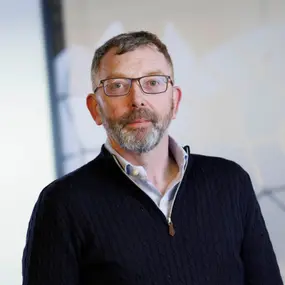
Co-Founder & Executive Director, Elkstone
Alan Merriman holds a Master's degree in Accounting and Finance from University College Dublin. He spent 17 years at PwC, rising to partner before becoming Finance Director at EBS, where he served through the 2008 banking crisis. In 2011, he co-founded Elkstone, now one of Ireland's leading investment houses, spanning venture capital and real estate for entrepreneurs and high-net-worth clients.


