The Viking Settlement That Moved a Road: Neil Jackman on Woodstown
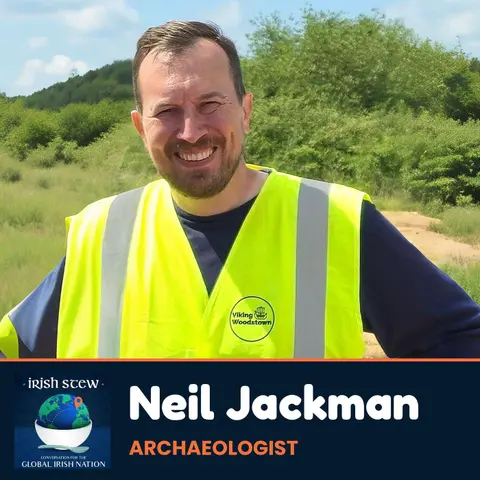
"They had to redesign the road to preserve the site in situ, which to my knowledge is the first time that has ever happened on a road project." Archaeologist Neil Jackman, who joined us four years ago for our 50th episode, returns to tell the story of Woodstown, a Viking settlement in a field just outside Waterford City. It was first uncovered in 2003, when archaeologists testing the route of a planned road bypass turned up so much Viking material that the road had to go around it. This summe...

 Apple Podcasts

 Spotify

 YouTube

 Overcast

 Podcast Addict

 iHeartRadio

 PocketCasts

 Amazon Music

 Castro

 Castbox

 Podchaser

 TuneIn

 Deezer

 Spreaker

 RSS Feed
"They had to redesign the road to preserve the site in situ, which to my knowledge is the first time that has ever happened on a road project."
Archaeologist Neil Jackman, who joined us four years ago for our 50th episode, returns to tell the story of Woodstown, a Viking settlement in a field just outside Waterford City. It was first uncovered in 2003, when archaeologists testing the route of a planned road bypass turned up so much Viking material that the road had to go around it.
This summer Neil, director of Abarta Heritage and Tuatha Ireland, co-directed a research dig there with the Discovery Programme and the Museum and University of Stavanger. Geophysical surveys revealed at least 61 structures lined up along what may be a street, and the team opened the biggest of them: nearly 16 meters long, the largest Viking structure identified in Ireland to date.
Neil explains why early medieval Ireland is less Game of Thrones than The Sopranos, how a soapstone cooking pot points to Vikings moving house rather than raiding, and how a silver coin minted in Iraq ended up in Waterford. Along the way there are puffins on Skellig Michael, Viking fleets and Irish kings, and hints that the great building burned.
Neil also tells Martin Nutty about Tuatha.ie, his platform of itineraries, online courses, talks and tours for anyone who wants to get under the skin of Ireland's past. Irish Stew listeners get 20% off a Tuatha subscription with the code IrishStew20. It works on the 30-day pass, the annual subscription and gift memberships.
LINKS
NEIL JACKMAN
- Neil's first Irish Stew episode: Making Ireland's Ancient Past Present (2022)
- Bluesky
- Tuatha
- Abarta Heritage
IRISH STEW LINKS
- Website Home Page
- BlueSky
- Mastodon
- Media Partner: IrishCentral
Mentioned in this episode (48) click to show or hide
The people, places and ideas Neil Jackman and Martin Nutty talked about, part of the Irish Stew Global Irish Web.
People (11)
- Neil Jackman: Our guest; archaeologist and director of Abarta Heritage and Tuatha Ireland
- Cerball of Ossory: 9th-century king of Ossory who allied with the Vikings, then turned on them
- Ivar the Boneless: Viking leader the Ivar dynasty claimed as its grandfather
- Jarl Ottir: Led the great fleet that arrived in Waterford in 914
- Clare Downham: Historian who has written on the Ivar dynasty
- Ian Russell: Directed the original Woodstown excavations and the 2007 research dig
- Pat Wallace: Archaeologist behind the Wood Quay 'Type 1' Viking house
- Ger Dowling: Geophysicist on the 2026 Woodstown survey
- Damian Shiels: Historian and past Irish Stew guest; wrote Tuatha's 1916 Rising guide
- Daniel Curley: Led Tuatha's recent tour of Rathcroghan
- Sara Nylund: Illustrator of the maps in Tuatha's itinerary guides
Places (24)
- Woodstown: The Viking settlement outside Waterford City, and this summer's dig (raised by Martin)
- Waterford: Ireland's oldest city, itself a Viking foundation (raised by Martin)
- Skellig Michael: Neil's favorite site: a raided monastery and a puffin colony
- Ossory: The kingdom across the Suir, largely County Kilkenny today
- River Suir: Woodstown sits on its banks; once a boundary between kingdoms
- Norway: Home of the dig's Norwegian partners and of Viking soapstone
- Rogaland: Region of southwest Norway with soapstone quarries and many Irish finds
- Wood Quay: Dublin's great Viking excavation
- Waterford Greenway: The trail past the site, with about 400,000 visitors a year
- Annagassan: Viking camp in Louth attacked by the Ivar dynasty
- St. Mullins: Its Vikings and Waterford's were expelled by the men of Ossory
- Newfoundland: The network's western reach
- Byzantine Empire: The network's reach to the southeast
- Longford: Inland county whose name comes from longphort (raised by Martin)
- Lambay Island: Site of the first recorded Viking raid on Ireland, in 795 (raised by Martin)
- Glendalough: Monastery recorded as raided in the annals
- Inishmurray: Island monastery recorded as raided in the annals
- Saltee Islands: Puffin colony off the coast of Wexford
- Tory Island: Another place to see puffins
- Inishkea Islands: Irish source of steatite, too poor for cooking pots
- Vestfold: Home of the Norwegian geophysicists on the survey
- Rock of Cashel: Neil's example of seeing a site in its landscape
- Rathcroghan: Royal site toured with Tuatha
- Déise: Kingdom on the Woodstown side of the Suir
Organizations (6)
- Abarta Heritage: Neil's heritage company, co-leader of the dig (raised by Martin)
- Tuatha: Neil's platform of itineraries, courses, talks and tours (code IrishStew20) (raised by Martin)
- Discovery Programme: Ireland's Centre for Archaeological Research, a dig partner
- Museum of Archaeology, University of Stavanger: Norwegian partner in the dig
- Royal Irish Academy: Supported the 2026 research dig
- National Museum of Ireland: Its Viking exhibition has a model of a Viking house
Music, film and books (4)
- Irish Stew S4E10 with Neil Jackman: Neil's first visit, our 50th episode, in 2022 (raised by Martin)
- The Sopranos: Neil's best comparison for early medieval Ireland
- Game of Thrones: "Broadly a good comparison"
- Irish annals: Monastic records of the raids and the expulsion of 892 (raised by Martin)
Ideas and finds (3)
- Longphort: A Viking overwinter camp; what Woodstown was first thought to be
- Umayyad dirham: Silver coin from Iraq found in the earlier excavations (raised by Martin)
- Soapstone: Stone for Viking cooking pots; two rare pieces found this summer (raised by Martin)
Episode Details: Season 8, Episode 32; Total Episode Count: 173
00:00 - Introduction
01:32 - Puffins and Skellig Michael
04:00 - A Blow-In Among Vikings
05:58 - Finding Woodstown
10:33 - Longphorts and Viking Cities
13:53 - Kings, Gangs and Fleets
19:36 - Rivers Into the Hinterland
23:42 - From Survey to Dig
29:27 - The Biggest Viking Building
33:32 - Soapstone and Irish Silver
38:27 - A Coin From Iraq
41:12 - Fire and Deeper Layers
44:09 - Seamus Plug
47:22 - Martin Recaps
49:34 - Credits
The Viking Settlement That Moved a Road: Neil Jackman on Woodstown
Episode transcript · Released November 16, 2026
This transcript was generated with AI speech-to-text and given a light editorial pass, removing filler words, false starts and repeated words. Names, places and organizations were reviewed and confirmed by the Irish Stew production team. The episode itself is the authoritative record.
Speakers: Martin Nutty Neil Jackman
Jump to chapter
# TIME CHAPTER
1 0:00 Introduction
2 1:32 Puffins and Skellig Michael
3 4:00 A Blow-In Among Vikings
4 5:58 Finding Woodstown
5 10:33 Longphorts and Viking Cities
6 13:53 Kings, Gangs and Fleets
7 19:36 Rivers Into the Hinterland
8 23:42 From Survey to Dig
9 29:27 The Biggest Viking Building
10 33:32 Soapstone and Irish Silver
11 38:27 A Coin From Iraq
12 41:12 Fire and Deeper Layers
13 44:09 Seamus Plug
14 47:22 Martin Recaps
15 49:34 Credits
0:00 Introduction
Martin Nutty [0:00]
Before we begin, a quick ask. Every Wednesday we send out a short newsletter with the week's episode and the stories behind it. You can sign up at irishstewpodcast.com.
Neil Jackman [0:15]
That journey of just this kind of artifact, it tells you an awful lot. It pictures the extent of the tendrils of this Viking trade network that went all the way from Scandinavia, the Baltics, Newfoundland, on your side of the world, all the way down into places like the Byzantine Empire. These guys got everywhere, and Ireland's really part of that.
Martin Nutty [0:44]
Our guest this week is a returning one, Neil Jackman, archaeologist and co-founder of Abarta Heritage, who was last with us four years ago on our 50th episode. This time, we're talking Vikings. This summer, Neil co-directed a dig at Woodstown, just outside Waterford City, where his team uncovered the largest Viking structure identified in Ireland to date. And stay with us to the end. Neil has a generous offer for Irish Stew listeners, just in time for the holiday season. And now, here's my conversation with Neil Jackman.
1:32 Puffins and Skellig Michael
Martin Nutty [1:32]
Welcome back to Irish Stew.
Neil Jackman [1:35]
Thanks so much, Martin. It's great to talk to you again.
Martin Nutty [1:37]
So delighted to have you back. It's been four years since you've been on with us, and there's been some interesting stuff happening in your life, and we're going to get into that. But the last time we had you on, there was a lot of talk of puffins. Any interesting puffin sights of late? And can you explain to our listeners the whole puffin thing? Maybe listeners don't know what a puffin is. So tell us about that.
Neil Jackman [2:03]
I have two great obsessions in my life. One is the archaeology of Ireland, and the other one is puffins. They're small seabirds. They're migratory. They spend half the year out in the wild Atlantic, off the coast of Canada mainly, and they come back to Ireland every spring, where they breed. They've got the very bright beaks, people might be familiar with them, and their bright orange legs. They look like little butlers as they waddle around the place. You find them on places like Skellig Michael, on Tory Island and some of the remote western parts of the country, and the Saltee Islands off the coast of Wexford too. They're just the most charming, beautiful little birds. If you meet one in person, if you go to the Saltee Islands or Skellig Michael, I think you can't help but get a little bit obsessed with them.
Martin Nutty [2:58]
I always think of them as having the same adorability factor as penguins, except they can actually fly. And of course, the beak color is just so beautiful. So I couldn't agree with you more. I've never seen one in person, so that's on my checklist. And of course Skellig Michael, which you just mentioned, has become a site for people who are obsessed with Star Wars, because Luke Skywalker ends up there and there was a lot of filming done there. But from a historical point of view, it is this extraordinary site of Irish monasticism, and geographically it's an extraordinary place to visit, if the sea conditions are right. Again, another place on my checklist that I haven't had the pleasure of visiting, so I hope to do that at some point.
4:00 A Blow-In Among Vikings
Martin Nutty [4:00]
But we're here to talk about Vikings. I know you've done lots of archaeology around all sorts of different periods, all the way up to the 20th century and all the way back to the Neolithic. But I think the whole Viking thing is really in your wheelhouse. Is that a true assessment of your passions?
Neil Jackman [4:20]
Yeah, I think it's pretty fair. Actually, it's a nice connection to Skellig Michael as well, because they very famously raided Skellig Michael. It was one of the first places that they hit. When people think of history and they're thinking of eras, the Vikings are definitely one that everybody knows. They can conjure a picture of a Viking. They're so popular, obviously, with the TV series and in movies and so on, and the actual story of them is as exciting in some ways. In my own sense, I have a sort of weird relatability to them, if that makes sense, because as people might guess from my accent, I'm a blow-in to Ireland. I'm originally from the northwest of England, and I moved to Ireland about 27, 28 years ago now. So I've lived my entire adult life in Ireland. And with the Vikings, when they arrive in Ireland and they've been here a little while, it becomes almost impossible to pull apart Irish culture and Viking culture in places like Dublin. They call it Hiberno-Norse because it becomes so intertwined. They're neither purely Norwegian or Viking anymore, and they're not purely Irish anymore. And I kind of feel like that myself. I'm not fully Irish, although I'm an Irish citizen with an Irish wife and Irish children who go to the Gaelscoil. But I'm not English either. So I think of myself as Hiberno-Northern, in a sense. So I relate to them on that score. They're a very interesting group, and they make some big changes in Irish history as well, which is very exciting.
5:58 Finding Woodstown
Martin Nutty [5:58]
Just to put them in the right historical context, the first recorded instance, as far as I know, of a Viking incursion into Ireland is in 795, so the end of the 8th century, on Lambay Island, which is literally a couple of miles from where I grew up. They show up and they raid a monastic settlement there. But we're going to talk about the Woodstown archaeological site. I wonder if you could set the table and describe to listeners exactly where this is. As I understand it, people probably pass by it regularly when they're on vacation, because it's very close to a greenway.
Neil Jackman [6:40]
That's right. It's quite a remarkable site. When we think of the Vikings, we tend to think of places like Dublin, Waterford and Limerick. And this site, the Woodstown Viking site, is just outside of Waterford City. It's right on the banks of the River Suir. It was first encountered back in around 2003, when they were planning to put a road bypass through these fields, and archaeologists turned up a huge amount of archaeological features and artifacts relating to the Vikings there. So today it's bordered by the River Suir and the Waterford Greenway, which is wonderful. You've got around 400,000 people or thereabouts passing it each year. It's on the doorstep of the city. It's right by the college, if people know where that is. And it's remarkable because for all of its significance, which hopefully we'll talk about, it's completely invisible. They look like ordinary fields, the same as all the other fields around them, but they hold this great secret.
Martin Nutty [7:44]
So how was it actually discovered, if visually you cannot see it?
Neil Jackman [7:49]
Ireland actually has some of the strictest laws governing its heritage. One of the laws we have basically means that if you're planning a large-scale development such as a road project, you need to have archaeologists working in advance of that. One of the stages is what you call archaeological testing. When the road route has been decided, they send archaeologists in with a machine to strip the topsoil in one path all the way along the center of where the road is planned. Then roughly every 20 or 30 meters or so, they do what you call an offset, another trench going across the field. They call it herringbone testing, because from above it looks like a giant fish skeleton, if you can picture that. When they were doing that, the archaeologists watching the machines identified that there was archaeological material there. They saw patches of burning, and they started to find things like waste material from iron production. That turned into a bit of an excavation. They carried out further surveys in that area, and it was identified that there was a large site there that appeared to be related to the Viking era, largely because of discoveries such as the grave of a warrior. It's one of the richest warrior graves, because they were buried with a sword, spear, axe, shield, knife, a pin for the cloak, and a whetstone. So it was a very well-furnished grave. Unfortunately, because the soil at Woodstown is very, very acidic, like a lot of soil in Ireland, the bone didn't survive. So whether it was a man or a woman, we don't know, but we do know that it was somebody of great importance to be buried with that. The amount of artifacts being discovered and their significance was seen as so important that the planned road was actually moved. They had to redesign the road to preserve the site in situ, which to my knowledge is the first time that has ever happened on a road project. I think there were thousands of artifacts found, and they told a story of Viking trading. There were lots of lead weights, for example. This was before coins had a set value, so they would measure by weight. They found a structure there. They found evidence of craft and metalworking and things like that as well. So it looked very, very significant from quite an early stage.
10:33 Longphorts and Viking Cities
Martin Nutty [10:33]
When we think about the Vikings, I think you could make a pretty solid case that many of Ireland's major cities owe their origin to the Vikings. Dublin is obviously the primary case. And there are actually two names for Dublin as Gaeilge, as they say. There's Dubh Linn and there's Baile Átha Cliath. Now, Baile Átha Cliath, it seems there were two different settlements. And Dubh Linn is probably the more important one, in my view. It's probably the word that should be used, because it refers to the original Viking settlement around the Dubh, the black linn, pool, where they pulled in their ships. But in these city sites, and there's been some archaeology around those, there's layer upon layer upon layer that has been built, and this has essentially been destroyed. What fascinates me about the Woodstown Viking site is that this settlement came into being, but it had a fairly short window of existence, as I understand it. We've already established that the Vikings show up in Ireland around 795, maybe earlier, but that's the first account in the annals. Put the Woodstown settlement in the timeline. Where does it start? Where does it end? How long is the occupancy?
Neil Jackman [12:00]
The way to think about this, in a sense, is through episodes, if you like. At the end of the 8th century, coming in around 795, for the next decade or so, what you see is a lot of raiding. We know about these not necessarily archaeologically, but through the accounts in the Irish annals. The monks are writing down that the monastery of Skellig Michael was raided, the monastery of Glendalough was raided, the monastery of Inishmurray and so on. So we have all of these accounts of raids going on, not only in Ireland, but across Britain as well. And you get another phase that comes in then, in the 830s, 840s really, where the Vikings don't just hit and run, do their raids and head off back home. They actually start to stay. They set up overwinter camps, and they're referred to in the Irish annals as longphorts. And that's what Woodstown was originally seen as being, a longphort. They're creating a defendable camp that they could stay in year-round, which obviously gives them many more opportunities to raid further inland, to set up different kinds of trading relationships and all that kind of thing. In some cases, such as Dublin, these longphorts develop, they stay and they grow, and they become the cities, as you say. In Woodstown's case, it seems that didn't happen. For one reason or another, and we might talk about that, the settlement didn't transform. The longphort didn't evolve into a modern urban center. But there are a few intriguing pieces of the jigsaw which might give an indication here or there of why that happened.
13:53 Kings, Gangs and Fleets
Martin Nutty [13:53]
Yeah, because as I understand it, Waterford, which is very close by, and for those of you who don't know, Waterford officially has the title of the oldest city in Ireland. I'm sure there are other people who might want to dispute that, but it's generally recognized and accepted as the oldest city. That is, of course, itself a Viking settlement. Now, if you look at the timeline, do we have any evidence that this longphort precedes the actual Waterford settlement? How do those two relate to each other, or do we know?
Neil Jackman [14:30]
That's a crucial question. I don't think we have enough evidence to be certain on anything right now. In archaeology, quite often what you have is pieces of a jigsaw. The more evidence you find, the more pieces you get, but nobody's given you the box lid that shows exactly what the picture should look like when you put those pieces together. So you're putting them together in a picture that makes sense for you. Now, we don't have a direct historical smoking gun that points to Woodstown being established and Waterford necessarily being established, but you do have some really intriguing hints. One of the things that I think is really interesting is where Woodstown is actually sited. As I said earlier, you're just outside of the modern city of Waterford, and you're right on the banks of the River Suir. The River Suir was also a boundary. On one side, directly across from Woodstown, you have the old kingdom of Ossory, which is largely County Kilkenny as we know it today. On the Woodstown side, let's say, you have the Déise, which is largely County Waterford and a little bit of Cork as well. And you have the kingdom of Munster alongside that, and the bigger overkingdom of Leinster is there as well. So the Vikings very cleverly chose these boundary spaces, where they could play one side off against the other very effectively. Now, one of the things which is really interesting, and this is a circumstantial jigsaw piece, so it might not necessarily fit our picture: as we get into the 9th century, something really interesting happens to the kingdom of Ossory. It goes from being a bit of the bullied kid at school, a bit of a political football. It gets kicked around between these big powers around it, Munster, Leinster, the kingdom of Meath to the north. It's basically a vassal state of pretty much all of those in turn, until a guy gets to be king called Cerball. And Cerball of Ossory has a biography written by his grandson, or great-grandson, The Life of Cerball. He turns Ossory into a bit of a powerhouse, and one of the ways he did that was by forming an alliance with the Vikings. He traded with them. He fought alongside them. He used them as mercenaries. And when he got to the point he wanted, he double-crosses them, turns his back on them. And you get this really interesting reference, I think it's the year 892, that the Vikings of Waterford and St. Mullins were expelled by the men of Ossory. The way to think of early medieval Ireland, by the way: Game of Thrones would be broadly a good comparison in terms of what went on, but I think your best comparison is actually The Sopranos. These are all different gangs, essentially, all looking to be the one that everybody's kicking up to. So when Cerball got what he wanted, he turns his back on the Vikings, and I wonder is Woodstown part of that story, and that's why it didn't develop. That's a little bit of a loose theory at the moment. The archaeology will support that one way or another. But then you get two other really important references. In the year 914, a great fleet arrives into Waterford under Jarl Ottir. And they're shortly followed in the year 917 by another group of Vikings who we know today as the Ivar dynasty. Clare Downham has written really well on the Ivar dynasty. To me, they're really interesting. They claim to be the grandsons of the famous Ivar the Boneless, who had spent quite a bit of time in Ireland. And interestingly enough, one of the first things the Ivar dynasty does is attack the Viking camp at Annagassan in Louth. They attack the Vikings in Limerick, and they immediately start attacking everybody all around. So Woodstown is somehow caught up in all of this. Whether it's founded by the first group, who perhaps had relations with Cerball of Ossory, or whether it's one of these later groups of Vikings that come in, we're not sure right now. I have my own theory on it. But that's the complexity you're looking at. You haven't got a good historical account saying, these guys came in from this part of Scandinavia, they stayed for this long, and the reason they didn't stay was this. You have to use these historical stepping stones and balance them with the archaeological evidence to develop that picture a little further, to get a few more pieces of your jigsaw.
19:36 Rivers Into the Hinterland
Martin Nutty [19:36]
It's kind of a process of triangulation. I just want to go back to a word you mentioned there, where you talk about penetration into the hinterland of Ireland. For those who were paying attention, and I hope you were paying attention, the word longphort was used, and that is actually like the name of a county in Ireland, Longford. That was always a head-scratcher to me, because if you know anything about the counties in Ireland, Longford is a very inland place. It wasn't until John and I traveled in the Midlands last year that we developed an appreciation for just how deeply the Vikings penetrated into Ireland. They used the Shannon River. They certainly had a settlement around the Lough Ree area, and there are historical records of conflict on Lough Ree. And I'm assuming that the county of Longford gets its name from that. The one thing I think is important, again looking at the geography, is the river system right around Woodstown. You mentioned the River Suir, but that also connects with the River Barrow, which also connects with the River Nore. So do we have a sense of that being used as a staging area? Any evidence at all that these guys were working their way up and down these rivers, raping and pillaging, or what were they doing?
Neil Jackman [21:03]
That's such a really interesting question, and it's something I'm hoping Woodstown will serve as a spur to look at, because a lot of Viking studies in Ireland has tended to focus on the cities, with spectacular discoveries like at Wood Quay, for example, in Dublin City. That's taken a lot of the focus. I'm hoping that we start to examine these questions about Viking movement through the landscape, how they used the hinterland, the relationships with the surrounding Irish kingdoms, because it wasn't all negative, as I mentioned earlier with Cerball of Ossory. You can definitely see positive connections there as well. So these are big questions that we hope to tease out and begin to get a better sense of. And I think what Woodstown gives an incredible opportunity for is that it's all there under the surface of the ground, in land that is still largely owned by the local authority. We can get at it. Whereas in Dublin, for example, although the archaeological remains there are spectacular, you're only ever looking through a tiny keyhole, because it's only when developments are happening. So you get a bit more evidence for this part of Dublin and a bit more evidence from that part of Dublin, and there's been some really interesting work in recent years there. But with Woodstown, you've got the whole picture. So Woodstown gives you that overview, if you like, but the preservation isn't brilliant. Dublin has the preservation. So Dublin can answer questions about Woodstown, and Woodstown can answer questions about Dublin. A big focus of all the work that's been done over the last number of years at Woodstown has been about collaboration and working with different disciplines, and I'm really hoping we're going to see more of that going forward, to understand these big questions of the Vikings in Ireland. Because to some degree, the old picture of them as raiders and pillagers is accurate, and we found evidence of that in our recent dig. And in other ways it's inaccurate, because there's more to it. There's more complexity and more nuance to the story. So it's something I think we need to do more work on.
23:42 From Survey to Dig
Martin Nutty [23:42]
2003, the site is found. This summer, you did a dig. Tell me about the history in between. Why hasn't it already all been dug up and everything discovered? Come on, man, get with the thing. I think, obviously, things progress quite slowly and carefully when you find a site like this. So can you tell our listeners about the work that has happened between the discovery of the site and your dig this summer?
Neil Jackman [24:14]
Yeah, for sure, because it is really important. And I guess when everything's over a thousand years old, you don't need to rush. The crime scene has already happened, so to speak. It was first found in 2003 and '04, when they did those initial works. Then Ian Russell, who was directing the excavations back then, went back in 2007 to do a small research dig, which targeted one of the structures that was identified at that stage. All of that work was then put into a book, and you can actually get it if you go to the Digital Repository of Ireland and search Woodstown. You should be able to find a PDF download of the book. It's sadly out of print now. It gives an overview of everything that was found at that stage. Then my connection to Woodstown comes along in 2020, because I was appointed by Waterford City and County Council, with the Heritage Council, to produce a conservation management plan and a research and interpretation strategy for the site, with an expert steering committee helping with that as well. Because we had this problem. You have this really, really important archaeological site, one of the most important archaeological discoveries made in decades in Ireland, but it was completely invisible, so it has a number of vulnerabilities. So it was my job really to look at all of this. How do we put together a research strategy for the site? How do we find out its story? And importantly, how do we communicate that story to the people around it? The plan I came up with was essentially to carry out research archaeology, but in the public view, so the public can come along and see it happen, see history discovered in front of them. And all of the evidence coming from the excavations, the further surveys and the research would then inform a process of experimental archaeology, where you reconstruct the settlement in an adjacent field, using only the techniques available to the Vikings. So the site comes back to life. And during that process, that would tell you much about the archaeology. For example, how long does the roof last on a Viking house before you have to change it? And you might see that reflected in the archaeology. It gives an opportunity, of course, for local groups and social groups to get involved in the reconstruction. And at the same time, it creates a very tangible visitor and education attraction right on the Waterford Greenway. That was the plan, and that's what we're working towards. But it's a very long-term plan. It's based on a couple of existing models that work really well in Britain, in France and in Scandinavia. You're looking at about a 20-, 25-year plan. But in the meantime, we also carried out a large amount of geophysical survey using different techniques. We had geophysicists from Vestfold in Norway. We had the Discovery Programme. We had Dr. Ger Dowling as well. And we combined different techniques, like ground-penetrating radar, electrical resistivity and magnetometry, all on the one site. Usually in archaeology in Ireland, you'd only use one of these techniques. We used all of them, because it's a bit like going to your doctor and getting your MRI, your CAT scan and your X-ray. Each one shows something different, and when you put it all together, you get a better picture. And the picture we got was far more impressive. The original thought was of it being a longphort, and maybe it still is, but we identified that there are at least 61 structures there. There are areas of craft, industry, metalwork, and 61 structures aligned, with what appears to be maybe a street in between them. This is looking far more like an attempt at a permanent settlement. So that changes the approach. You're looking at something far more complex and far more substantial. What we wanted to do this year was basically to test that geophysics. Was our interpretation of what we were seeing in all of these scans correct? Did what we were seeing as the foundations of a house actually match what was physically in the ground? So we got funding from the Royal Irish Academy, and we had a really nice collaboration between ourselves at Abarta Heritage, the Discovery Programme, who are the Centre for Archaeological Research in Ireland, and the Museum and University of Stavanger in the southwest of Norway. So we had Norwegian archaeologists working alongside Irish archaeologists to carry out a targeted research dig at the biggest of these 61 structures, a building that seems to be of some real significance. Just to see, firstly, were we correct in our geophysical interpretations, and secondly, what was that structure? How was it built? Can we get any dating evidence and all of that kind of thing?
29:27 The Biggest Viking Building
Martin Nutty [29:27]
So if I understand that correctly, you went after the biggest structure on the site.
Neil Jackman [29:33]
Yeah.
Martin Nutty [29:33]
I was like, oh, that's cool. And if I'm correct, I think the speculation is that this is a long hall. So in the scheme of Viking life, what is meant by a long hall? And is there evidence that you came across that would confirm that assessment?
Neil Jackman [29:57]
To put this into context, the vast majority of the other 61 structures, and there's a little bit of variation, by and large measure about eight and a half meters long and about four and a half, five meters wide. That would be very typical of what Dr. Pat Wallace calls his Type 1 Viking house, which they turned up at Wood Quay. If you go to the National Museum of Ireland and into the Viking exhibition, you'll see a really nice little reconstruction model of what one of these houses looks like. The one we were looking at was nearly 16 meters long and about 8 meters wide, so it's pretty much twice the size of any of the other structures on site, which is really stark. It gives a ground area of about 127 square meters, which is a decent-sized house by our standards, and by theirs, massive. So it's the biggest Viking structure ever identified in Ireland to date. That doesn't mean it's the biggest ever in Ireland, because maybe there's more lurking out there we haven't found yet, but it is substantially the biggest Viking structure identified to date. So this gave us our clearest signal on the geophysics as well. You're going from, what was the Rumsfeld phrase, the known known, and you're trying to see, okay, is this definitely the foundations of a structure? And what we found was that it was, for sure. There was a foundation trench there, a big sub-rectangular foundation. It was built using post and wattle, and it had a very large frame of large, load-bearing timbers that supported the roof, with the double line of post and wattle around it. We found floor surfaces in there as well, and we also found evidence of pretty high-status activity going on. There was evidence for trading. We found lead weights, we found a silver coin and hacksilver. Really excitingly, we found fragments of two different soapstone vessels, and we found a number of other things as well, which all point towards quite high-status activity. Is it enough evidence right now to say it's definitely a hall? Jury's out, for sure. I'd say the size, and the difference between it and the rest of the structures, suggests to me that it's a principal structure within that settlement. The activities in there seem to be domestic. A hall was the heart of a Viking settlement. It was the domestic house of a jarl and his family, the leaders of the settlement, if you like. But it had a bigger role than that. It was also a social place. It's where feasts happened, where justice was dispensed, where decisions were made and plans were made. So it's kind of like the town hall. I'm not going to use the word White House, because we're in a political time and all of this kind of stuff. But it's kind of both a political residence, if you like, of the leaders of the settlement. We don't have enough yet, because we only did these tiny keyhole surgical trenches to assess it. We only impacted, I think, about 30% of the structure. So if we go back again, it would be to try to resolve some of these questions.
33:32 Soapstone and Irish Silver
Martin Nutty [33:32]
You mentioned being excited about the discovery of various artifacts, and you dropped in the word soapstone. Obviously, when you think of soap, you think of washing. So were the Vikings washing themselves? I'm just playing here. But tell me the significance of soapstone.
Neil Jackman [33:51]
Well, it is really significant in an Irish context, because for a start, there are very, very few soapstone vessels found. So what is it? It's a type of steatite. It's a very soft stone. It gets its name because it's got a slightly greasy sort of feel to it. It feels quite soft, so it's very easy to carve, but it retains heat extremely well. You can carve it so it looks like pottery, in a sense, but it's robust, it's strong, and it's brilliant for retaining heat, so great for things like cooking. You'd quite often find weights made out of it and so on. But it's very rarely found in Ireland. There are less than half a dozen other pieces of soapstone vessels found, and we found two. Now, there is a source of steatite on the Inishkea Islands off the west coast of Ireland, but it's of a different quality to this. It wouldn't be of sufficient quality to make a cooking vessel out of. The other really interesting thing about the pieces we found was that you can see from the sherd that it had a really wide circumference. It would have been huge, a really, really big, my-arms-outstretched sort of vessel. You can imagine them cooking big stews or something like that for all the Vikings who came for these big meetings. It was very, very large, which means, since it's still made of stone, it would have been very heavy. Now, a longship, although it's big, it's not infinitely big. It's not like a cargo vessel we have today. You have to make real decisions about what you're bringing on one of those, and I would have said that would have taken up about the same amount of room as a small child or something like that. I don't know if a Ryanair-style cabin baggage allowance counted for a longship, but it also tells me that whoever decided to bring that with them made a real decision to bring it. They decided they were in a significant enough position to make that call, that they were going to give over that part of the ship to their favorite cooking pot. It also tells me a little bit that it's not the kind of thing you would bring on a raiding expedition for a summer. You could get by with a nice barbecue, a nice roast, a bit of ox or something. That's the kind of thing you bring when you're moving house. So it's interesting from that aspect as well. Now, one of the key sources of soapstone is in the southwest of Norway, in a region called Rogaland, and that's where the University and Museum of Stavanger is. They have soapstone quarries out there. It's a very common find on all their Viking sites. But really excitingly, that area of Norway has more Irish artifacts than anywhere else in Scandinavia. What they typically find are pieces of very nicely made Irish ecclesiastical metalwork, from horse trappings, from things like chalices or shrines, and they've been converted to jewelry. They typically find them in the graves of high-status women in the southwest of Norway, which suggests that they were prized possessions and social symbols that the family was connected to Ireland. And one of the other things we found this year was just such a piece of Irish metalwork, a beautiful piece, probably from a harness mount from the horse of an abbot or somebody of very high rank. You can see it has a cross in it, and you can see that it has this beautiful gilded Irish decoration on it as well, and it appears to have been in the process of being made into jewelry, for being shipped back to Norway maybe. So we're getting very Norwegian artifacts in Ireland, and we're seeing Irish artifacts in this area in the southwest of Norway. And the opportunity to work alongside our colleagues from that part of Norway on site, for them it was kind of like a Norwegian site perfectly transplanted to Ireland. It's a Norwegian site in an Irish context. So that opportunity to work together collaboratively was wonderful, and it gave us real insights into the site that I think will stand as we go further with our research.
38:27 A Coin From Iraq
Martin Nutty [38:27]
One of the other artifacts you came across, in addition to soapstone, I think you're speculating is an Umayyad silver coin that originates from Iraq. And I believe from some of the prior excavations, that has been confirmed. What does that tell us about the Viking experience in Ireland?
Neil Jackman [38:50]
It's mind-boggling to think about it in some ways. In the original excavations, they found Kufic or Islamic dirhams. These had traveled all the way, and one of them was identified from the Umayyad dynasty, which I think was a late 8th-century dynasty in Iraq. It traveled all the way from the region of Iraq, Iran, all the way, as you say, to Waterford. And you just wonder, to turn up there maybe a hundred years after it was first minted, how many hands has it passed through? How many things were exchanged for that? What kind of goods? What kind of people were exchanged for that as well? Because let's not forget that the Vikings were very interested in the slave trade, for example. So the journey of just this kind of artifact tells you an awful lot. It pictures the extent of the tendrils of this Viking trade network that went all the way from Scandinavia, the Baltics, Newfoundland, on your side of the world, all the way down into places like the Byzantine Empire. These guys got everywhere, and Ireland's really part of that bigger world. It shows you these connections. So we found one near-complete coin and one little clipped piece of similar coins. Now, they must go through conservation to clean them up, and they must be analyzed by experts. We're just at the stage of what you would call post-excavation analysis at the moment. All of our artifacts have gone to conservators, and they're going to various experts to look at them and tell us their story. But that's what we believe it is, based on the previous findings and it being of a similar type. The specialist analysis will tell us for sure. But it's little moments like this, when you hold an object like that and you think of its personal journey to end up in a wet field, to be found more than a thousand years later. It's incredible. And that connection you sometimes get with archaeology, that feeling that the last person to hold this object before you, or the archaeologist who found it, was a Viking. It's kind of magical. It's a form of time travel and connection, and it's something I'll never take lightly or forget to find the wonder in. It's a wonderful thing to do.
41:12 Fire and Deeper Layers
Neil Jackman [41:12]
So as I say, we're just at this stage now, and hopefully we're going to find out even more. Within the structural evidence, we found lots of things like charcoal, bits of bone and so on, so we're going to get really good radiocarbon dates that should tell us exactly when this building was in use, when it was first built and so on. Now, intriguingly, the dig also encountered evidence from before the Vikings and after the Vikings. The building seems not to have had a terribly long life, because we can see that as the foundation level disappeared and got filled up, a later metalworking feature cuts over the top of it, and that in itself looks quite early. So it'll be really interesting to see what that dates to, because that might tell us when the building had already fallen out of use. Intriguingly, we found evidence along one part of the wall that it had been burned in a very intense fire. You could see the subsoil around it was very scorched. Now, fires happen for a variety of reasons. They can happen accidentally. They can happen when you're choosing to abandon your settlement: you choose not to leave it as a resource for the people who are going to move in afterwards, so you choose to burn it down. Or it can burn down through violence. And again, this is something we only have a tiny piece of the jigsaw for, and you can make a case for any one of those things. But if it's violence, if you think about that reference to the Vikings of Waterford being expelled in 892, what more symbolic thing to burn than the biggest building in the settlement? So again, we're getting these little hints. We also found, because we're greedy in a sense, hints at one end of the trench that there might have been a prehistoric building underneath the Viking building, that they themselves built on top of, unknowingly, the remains of an earlier prehistoric building, perhaps dating to the late Neolithic or early Bronze Age, the Chalcolithic kind of era, because we got lots of stone tools. We got a small piece of pottery. We got the most beautiful little arrowhead and so on there as well. So there's a whole picture beginning to be teased out there. And of course, a piece of land alongside a river like that would have been a desirable place for people to live for thousands of years. So it's a complex story. In Ireland, that's one of the things I never get bored of: there are layers upon layers upon layers of stories. And just those two small trenches are already picking up on that.
44:09 Seamus Plug
Martin Nutty [44:09]
So it's an exciting time. There's going to be a lot to discover. Unfortunately, we're getting to the point of the podcast where we have to introduce our friend Seamus Plug, and it's your opportunity to plug something. But I'm actually going to prompt you, because one of my favorite sites is your site, Tuatha.ie. So please plug it, its virtues, and why people should participate there.
Neil Jackman [44:39]
Oh, thank you, Martin. That's really kind of you. For me, one of the things I've always been most interested in is not only discovering the stories of the past through archaeology, but how we communicate that. I grew up fascinated by this and wanted to learn more all the time, and so I always felt compelled, whether people wanted to listen to me or not, to talk a lot about archaeology. And Tuatha is a way of me doing that. It's designed for people who want to get a little bit deeper beyond the surface of Ireland's history, archaeology and stories. It's designed for two kinds of people: people who want to research more about Ireland and find out a lot more about it, and people who want to visit Ireland and might not just want to see all the famous tourist sites, or maybe they've been there and done that. They want to go a little bit off the beaten track, and they want to really get under the skin of the landscape. They want to not just go and see the Rock of Cashel, but to understand why the Rock of Cashel is there, to see the context of all these other sites all the way around it, which most people don't bother to see. They hop back in their cars and down the motorway, or the coaches and so on. So it's designed for that. We have itinerary guides with lovely illustrated maps by Sara Nylund. We have online courses. We have lots of talks by leading experts, including Dr. Damian Shiels, who I know has featured with you a couple of times. He did a great guide at the start of the year to the 1916 Rising, for example. We do tours as well. We have tours every month or thereabouts. We just had a great tour of Rathcroghan with Dr. Daniel Curley and so on. So it's all about trying to connect people with real experts, I guess, and to give them an opportunity to get under the skin a bit more.
Martin Nutty [46:41]
Thank you so much for giving us such a fascinating insight into the exciting work that's being done at Woodstown. More to come, no doubt. We will put lots of links into our show notes so you can find Tuatha.ie, but also some of the other resources around Woodstown itself. So on behalf of our listeners, thank you so much for taking the time, Neil. It's great to reconnect, and I'm really excited to see the next chapter.
Neil Jackman [47:14]
Thanks so much, man. I always love talking to you, and keep up the great work. I love the podcast.
47:22 Martin Recaps
Martin Nutty [47:22]
And that was Neil Jackman. What stays with me is how much of the story is still under the grass. There are 61 structures, and this dig only opened up a third of just one of them. I loved the soapstone detective work. A cooking pot that size takes up as much room on a longship as a small child. Nobody packs that for a summer raid. You bring it when you're moving house. The radiocarbon dates are still to come, so we'll be keeping an eye on Woodstown for the foreseeable future. If this episode has you wanting to go deeper, Neil's platform, Tuatha.ie, I'll spell that, T-U-A-T-H-A dot I-E, has itineraries with illustrated maps, online courses, talks by leading experts and monthly tours. It's for anyone who wants to get under the skin of Ireland's past. And here's that offer. Neil is giving Irish Stew listeners 20% off a Tuatha subscription. Just enter the code IrishStew20, all one word, when you sign up. It works on both the 30-day pass and the annual subscription.
Martin Nutty [48:42]
And with Christmas coming, you can use it on a gift membership too, for the archaeology and history lover in your life. You'll find the code, a link to Tuatha, Abarta Heritage and the Woodstown research in the show notes. So thanks to Neil for joining us, and for the offer. Irish Stew is brought to you with our media partner IrishCentral. IrishCentral covers Ireland and the Irish around the world: news, history, travel, culture and opinion. It was founded in New York, and it's still where a lot of the Global Irish Nation goes to keep up with home. If Woodstown has you curious about Viking Ireland, their history section is a good place to start. Find them at irishcentral.com. Until next time, slán go fóill.
49:34 Credits
Martin Nutty [49:34]
Irish Stew is produced by John Lee and Martin Nutty. Editing, mixing and mastering by Lochlainn Harte. Music on Irish Stew was composed and performed by Rosa Nutty, with Donal Bowens on drums and Cathal O'Riordan on bass and synthesizer. For more on Rosa Nutty's music, please visit rosanutty.bandcamp.com.
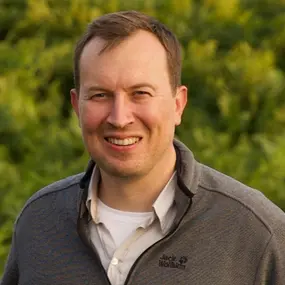
Archaeologist at Abarta Heritage and Tuatha Ireland
Originally from the North-West of England, Neil moved to Ireland to work in archaeology in 1999 and has since fallen madly in love with the country, becoming an Irish citizen in 2020. He has worked on archaeological sites all around Ireland, with a special grá for Neolithic passage tombs, early medieval monastic sites and the Vikings.
Neil is a director of Abarta Heritage and of Tuatha Ireland, an online platform of itineraries, courses, talks and tours for anyone who wants to get under the skin of Ireland’s past. In 2026 he co-directed a research excavation at Woodstown, the Viking settlement outside Waterford City, with the Discovery Programme and the Museum and University of Stavanger, uncovering the largest Viking structure identified in Ireland to date.
His chief passion is sharing the wonder of Irish archaeology with the public. As well as The Mill at Kilbegly (2013), he has written two popular guidebooks, Ireland’s Ancient East (2016) and The Wild Atlantic Way (2018). He has lectured in Public Archaeology at UCD, led one of Ireland’s largest public archaeology projects at the Hellfire Club in the Dublin Mountains, and hosts Abarta’s Amplify Archaeology podcast.
His favorite site is Skellig Michael, home to Ireland’s largest puffin colony, and if there’s one thing that obsesses Neil more than archaeology, it’s puffins.