Filmmaker Ruán Magan – making the invisible visible


 YouTube
 TuneIn
 Deezer
 Spreaker
 Podcast Addict
 RSS Feed
 Apple Podcasts
 Spotify
 Amazon Music
 Overcast
 Castro
 iHeartRadio
 PocketCasts
 Castbox
 Podchaser
 Award-winning director, producer, and writer Ruán Magan joins Irish Stew for a timely conversation ahead of his double appearance at this weekend’s Solas Nua Capital Irish Film Festival, where he’ll present two very different visions of Ireland on screen.
Ruán reflects on a creative life that has taken him from early collaborations with his brother, writer and broadcaster Manchán Magan, through decades of boundary-pushing work that has reached audiences around the world. He talks about growing up in a family steeped in story, language, and history, and how that background propels him toward projects that dig beneath the surface of Ireland’s past and present.
One of his festival offerings is the new documentary “Daniel O’Connell – The Emancipator,” which marks the 250th anniversary of O’Connell’s birth and revisits the life, legacy, and global impact of “The Liberator.” Ruán describes the film as “a chance to step back from today’s noise and remember how one determined Irish lawyer changed the democratic DNA of the modern world,” connecting O’Connell’s campaigns for Catholic Emancipation to later movements led by figures like Frederick Douglass, Mahatma Gandhi, and Martin Luther King Jr.
He then turns to his Irish-language drama “Báite,” a feature that takes his fascination with Irish history and identity into more intimate, psychological territory. Ruán calls it “a story where the past seeps up through the floorboards of ordinary lives,” using the rhythms of the Irish language and the coastal landscape to explore guilt, memory, and the pull of old ghosts.
Throughout the episode, Ruán shares his approach to filmmaking as “trying to make the invisible visible—whether that’s buried history, an overlooked revolutionary, or the quiet truths people carry inside them.” He talks about balancing scholarship and emotion, why collaboration matters, and what keeps drawing him back to Irish subjects for a global audience.
Irish Stew will be the Podcast in Residence at the Capital Irish Film Festival, Feb. 26 – Mar. 1, appearing on stage after the Friday 6:30 p.m. screening to discuss Northern Irish film with a panel of Northern Irish filmmakers.
Links
Solas Nua
Ruán Magan
Irish Stew Links
- Website
- Media Partner: IrishCentral
Episode Details: Season 8, Episode 10; Total Episode Count: 151
00:00 - Introduction
01:58 - Film Beginnings
04:48 - Manchán and the Himalayas
07:52 - The Meaning of Báite
12:05 - Báite and Irish Language Casting
15:34 - A Gaeltacht Film Set
17:42 - Maedhbh Mc Cullagh: CIFF 2026
22:08 - Emancipator Surprises
27:22 - The Challange of Documentaries
30:25 - Bringing Irish Films to CIFF
32:03 - John & Martin Recap
33:22 - Credits
The Irish Stew Podcast
Ruán Magan: Filmmaker, Capital Irish Film Festival 2026
Martin Nutty: We are delighted to have Ruán Magan on the podcast to talk about his Irish language film Báite, and about his documentary on one of the most seminal figures in Irish history, Daniel O'Connell: Emancipator.
Ruán, I came across a snippet that said you left UCD — you were studying art history and archaeology — to pursue a career in film. Tell us about that decision. I'm sure it made Mammy very happy.
Ruán Magan: I don't even know if it's fair to say I was at UCD, because I was only there for about a year. I'd already decided I didn't want to go to college. I was done with school and I wanted to do something creative. I had absolutely no idea what that was.
So I did a deal with my parents: if I sat my first-year exams at UCD, they'd let me go. I think they thought I'd just stay. But I did the first two exams, left, and went to New York — lived there for about a year and had the time of my life. But I was very young and it was very far away, so after a year I thought, I'm not going to stay. I went back, went to London for a year, and came home still with no idea what I wanted to do.
At that point my parents were very worried about me, so I went to a career guidance counsellor. She said, maybe you'd like to do forestry, or maybe the restaurant business. And then she said, or maybe you could work in the film business. I'll never forget that moment. It was like the universe had just opened and all my stars were aligned. I went, are you kidding me? You mean I can actually go and work in this thing? Because I had been madly passionate about films since I was four or five — watching them relentlessly on the BBC, which used to have double bills every afternoon during the week.
And so that was it. I just lucked out and ended up in my passion, and I've loved it ever since.
Martin Nutty: So talk to us about cracking that door open. What was the first gig?
Ruán Magan: The first movie I worked on was Far and Away, which Ron Howard filmed in Ireland with Tom Cruise and Nicole Kidman.
John Lee: Great start. An amazing start.
Ruán Magan: Extraordinary. I was 21. I speak Irish because I was partly reared in the west of Ireland, and a portion of the film was going to be shot down there — they were going to build an entire village, Tom Cruise's character's home place. This was before CGI, so they were constructing it from scratch. They sent me down for six months to mind the guys building the set, take care of locations, and wait for the big monster crew to arrive.
After that I worked on a whole string of big movies in Ireland — Ireland had become a very popular place to film. Saving Private Ryan came through, Mel Gibson came in with Braveheart, Neil Jordan was making great films at the time. But I was always working in documentaries at the same time. Six months on a movie, four or five months on a documentary. Always one foot in each camp.
Martin Nutty: We had the pleasure, as I mentioned before we hit record, of talking to your brother Manchán. On behalf of our listeners — and ourselves — our condolences to you and your family. He's a special man. He told us a story about 1996: a worried mother sending her son off to dig his younger brother out of a cow shed somewhere in the Himalayas. And that apparently triggered a whole new direction in your career. How accurate is that?
Ruán Magan: It's fairly accurate. Manchán had been traveling ever since he left school — Africa, South America, India, all over. Meanwhile I was working in the film business, and TG4 was just starting up, which is the Irish language television channel.
For your listeners, this was an extraordinary act of cultural revolution that happened in Ireland around 1995 and '96. The Irish language had nearly died, but a group of cultural activists had pushed hard to create an infrastructure — a scaffolding on which a rebirth of the language could begin. One of their key actions was to establish a television channel, TG4, which still exists and has gone from strength to strength.
I noticed all of this and thought: I could make a documentary in Irish for TG4. Maybe not a full documentary — just a little video diary with my brother. He had no idea it was coming. It wasn't my mother who sent me — it was my own ambition.
Manchán was way up at the top of the Himalayas, right on the border of Nepal. If you've ever looked at the front cover of The Lord of the Rings — the map Tolkien drew — the Misty Mountains are there in the distance. The hut where Manchán was living was just beneath the peak that Tolkien wrote about, and the vista from Tolkien's house is exactly what he drew on that map.
Manchán was living in a cowshed, drinking his own water, communing with angels, going slightly out of his mind — and probably speaking Irish to himself, because he was a brilliant Irish speaker. I turned up and knocked on the door in a full safari suit, with steel aluminium flight cases, which at the time I considered essential to filmmaking.
From that point on, Manchán and I fell in love with making films together. We made over sixty documentaries all over the world. It was just the most amazing experience. And it was the beginning of an extraordinary path that led him to become such a remarkable cultural influence.
John Lee: Thank you for that, Ruán. Let's move the focus back to the Capital Irish Film Festival — the annual Irish film gathering on the outskirts of Washington DC. We have two films screening. The one I'd like to start with is the Irish language drama Báite. Can you give us the English meaning of that word?
Ruán Magan: Báite means drowned in Irish — but of course, being Irish, it carries multiple additional layers of meaning. It also means submerged, or the thing beneath, or to be lost. A multiplicity of meanings, all to do with being drowned. But you don't necessarily have to be dead.
John Lee: That works very well for the film, because I found it defies easy labeling. There's a mystery aspect, a police procedural thread, a family drama, a portrait of a small town confronting the outside world, immigration, threads of romance and sexual tension. When Martin and I have filmmakers on, we like to talk about the film in a way that doesn't give anything away — so people can enter into it with the same surprise we did. Do you have a tagline? Like Alien's "In space, no one can hear you scream" — a line to guide people toward it?
Ruán Magan: I have to say, you've just done a very good job of it yourself. But at its heart, it's about a woman named Peggy. She has a clear and compelling vision for what the future of her community could be, but everyone is conspiring against her. It seems like a coherent and reasonable thing to pursue — and then a mystery begins. A body appears, and that undermines everything and everyone.
I see it as a metaphor for the new Ireland that was beginning to be imagined at that time. The film is set in the 1970s, with flashbacks to the 1950s — that tension between old Ireland and what Ireland might become. But there's something universal in it too. We all want to develop and evolve in a particular direction, and then life conspires against us. You can never quite get where you want to go.
John Lee: And it feels like it's not just people in the present conspiring against her, but people from decades past still casting a shadow — and then forces of modernity arriving to complicate things further. Where is the film set, both literally and in terms of how you created it?
Ruán Magan: It's an imagined place, which we created using some very inventive, limited-budget VFX. We shot a lot of plates and built a location that doesn't exist. All of the creative departments — wardrobe, production design, camera, color grading — conspired to give the film a very particular palette. It's a rhapsody of blue and green, entirely intentional. You're looking at a beautiful, vibrant, verdant space — an Ireland you'd just love it to be like, you know?
For me, that was about getting inside Peggy's head. She's a woman trying to create a different Ireland against all odds, so I thought: let's try to visualise what she was hoping to build.
We actually filmed it in Connemara, which is the very opposite — stony, dark, rocky, rainy. Not very green. Very brown. But also beautiful in its own way. Connemara has this wild, powerful spirit, so we drew from many different parts of it to forge this new imagined place. It doesn't exist — except in Peggy's mind. And now in all of ours.
John Lee: Let's talk about the casting. The pool of Irish-speaking actors you drew from — and of course Eleanor O'Brien received an Irish Film and Television Award nomination for lead actress, as did you for Best Director, along with nominations for the script and the original music, which I was very struck by. Tell us about casting a film of this scale.
Ruán Magan: Báite is, I think, the eighth film made under a scheme that TG4 set up with Screen Ireland, called Cine4. They established this about five or six years ago, and it's a visionary idea: a dedicated fund for films made entirely in Irish.
If we go back to 1996, when Manchán and I started making television programs, the vision was simply to have an Irish language channel. Now the new vision from that same channel is: could we make cinema in Irish too? And would there be an audience? An Cailín Ciúin — The Quiet Girl — which was nominated for an Oscar, was one of the films made under this scheme.
Now, there's a small but extraordinary pool of Irish-language cinema actors. But as we make more and more of these films, we face a challenge: we can't keep using the same actors. So with Báite, some of the cast are native Irish speakers. But some came to the film with no Irish at all — and I'm not going to tell you which is which, because that would give the game away. Some of those actors learned the entire script by heart — including every other actor's lines — so they'd know exactly when to come in with their own, because they'd hear the cue in the dialogue.
All of the actors had some Irish from school at primary level, so there was a foundation. And what's really radical about the approach is that a film like Báite offers a compass point, a path forward. In Ireland we do have a little of this language in us. We just need the confidence — and the experience — to speak it.
I had Irish from birth, but stopped using it around the age of eleven or twelve. So I'm a bit lame in how I speak it now, and I get quite nervous. I've gone back to lessons lately. And you see this across the country — people finding the courage to embrace the language again. That's very exciting. And films like this are part of it.
Martin Nutty: I think it's worth noting that, though a large part of our audience is American, there is a growing movement even here. In New York, Irish language classes are oversubscribed — demand outstrips availability. There's this odd global momentum. And that's why the canon of films being developed under the Cine4 scheme matters so much for the vitality of the language.
And if I'm right, you ran the set primarily in Irish?
Ruán Magan: Yes. Every member of the crew would speak Irish first. If something complicated needed to be expressed, they could fall back into English — and then back into Irish. That's the way we'll get the language running again: if people aren't afraid to speak it imperfectly. As the saying goes, it's better to speak broken Irish than perfect English. And that was the method on set. It was thrilling for me personally.
The reason I speak Irish goes back to family history. I was reared in Dublin, but my great-grand-uncle was one of the founders of the Irish Volunteers and a leader in 1916. My grandmother, Sheila Humphreys, went on hunger strike multiple times. She was commandant in the War of Independence and the Civil War. Very strong nationalist background, and in our little leafy suburb in Donnybrook, the Irish language was, shall we say, encouraged. We knew we were unusual.
Now, in my mid-fifties, I walk around Dublin and people are speaking Irish everywhere. Something has changed in just four or five decades. And movies like Báite are part of that change.
Martin Nutty: Let's talk about the other film screening at the Capital Irish Film Festival — a documentary about a truly titanic figure in Irish history. Daniel O'Connell: Emancipator. Let's start here: we all carry thumbnail impressions of great historical figures, but when you plunge into making a film like this, you discover things that can be unexpected. What surprised you?
Ruán Magan: Everything — is the honest answer.
Daniel O'Connell, for listeners who may not know him, was born in 1775. By the time of his death, and for the couple of decades following it, he was one of the most famous figures on earth — known across the planet, discussed in South America, in America, in India, across Europe. Why? Because over the course of his life, he had taken a broken, oppressed, impoverished, colonised people — the Irish peasantry — and raised them from their knees. He gave them a sense of their own strength and value. And he did this almost single-handedly.
The result was that the Irish forced Britain to abolish the Penal Laws and grant Catholic Emancipation — equal civil and religious rights to Irish Catholics, who until that point had been second-class citizens in their own land.
What's extraordinary is that we've almost entirely forgotten about him. He's not prominent in the Irish consciousness, even though our main thoroughfare in Dublin, O'Connell Street, is named after him and bears a great statue. Very few people today could tell you who he was and what he actually did.
There's a quote I love, which captures him perfectly. In 1818, nearing forty, he said: My political creed is short and simple. It consists of believing that all men are entitled, as of justice and of right, to religious and civil liberty. It's a message that still matters today — we're still fighting for equal rights for all citizens. He was drawing on the American Declaration of Independence, on the values of the Enlightenment, on the ideals of the French Revolution. Pulling together those emerging ideas that all men and women are born equal and should be treated as such.
Martin Nutty: I'm interested in how you managed to compress so much into a relatively short film — around fifty-five minutes. Because as you're making clear, this man had a titanic life that played out on a global stage. And when I searched for other film treatments of O'Connell, I found very little. Is that a fair assessment?
Ruán Magan: It is. There are a couple of things that have been made, and they're very good — but nothing recent. What I found with the existing work is that it all begins with the assumption that you already know who Daniel O'Connell is. Which is a problem, because most people don't.
We could easily have made a three-hour film. To bring it down to fifty minutes, we started with something around three hours long and condensed it and condensed it again, until what remained was very concentrated — powerful and impactful.
I should mention the editor, John Murphy, who is absolutely central to this. Editors are always critically important to filmmaking, certainly to mine — I see them as partners in the work. John Murphy edited An Cailín Ciúin and also cut Báite, and he brought those skills to the O'Connell documentary. I think if you watch it, you'll come away with a real sense of the man — what was driving him, his family life, his legal career, the extraordinary hard work he put into every single day. But there's always more to say. For anyone who wants to go deeper, there are excellent books. I always say: if you liked what you saw, go buy one.
John Lee: You mentioned editing down from three hours — I wanted to ask about that creative process. With Báite you have a script, you do shoots, you choose between takes, but you have a framework. With a documentary like this, you're pulling together such disparate elements — paintings, animated engravings, maps, modern imagery, stock footage, historians from around the world. And you have quite a notable narrator. Could you say a word about him, and then tell us how all those pieces come together?
Ruán Magan: The narrator is Domhnall Gleeson — the extraordinary Domhnall Gleeson — who was so generous in coming to do it. He delivers this bright, youthful, modern reading of the narration. He's just beautiful. And I should also mention Colm Mac Con Iomaire, who wrote the music.
But you're getting at something real about documentary filmmaking. I have a suspicion — one I'll probably wait another few decades before fully articulating — that making documentaries, certainly ones that reach large audiences, is extraordinarily difficult. Until the last moment, when you pull that final thread, nothing is hanging together. Nothing makes sense.
We're starting a new one now on the history of slavery in the Caribbean and the case for reparations — that entire four-hundred-year history, which is just appalling. I was speaking to someone I hope will compose the music, and I was trying to explain: we're going to give you rough cuts that are rough as hell. Loose, incoherent. Whereas in a dramatic film, even a rough cut has a shape — a character walks into a room, sees a problem, says something. There's a beginning, middle, and end to every scene.
In documentary, it doesn't work that way. You're trying to gather things that are ephemeral and moving and unclear. And then suddenly there's a moment when you know you have it right. You pull that final thread, and the whole thing locks together and makes sense. They're very, very different creative processes.
John Lee: As we attempt to pull the thread ourselves, Ruán, and with time running short — a word about bringing both these films to a US audience. The experience of encountering a historical figure who may not be well known here, but who feels ever more relevant today, in Daniel O'Connell: Emancipator — and then encountering a beautifully made film that happens to be entirely in Irish. What does it mean for you to bring these to the States, and to the Capital Irish Film Festival?
Ruán Magan: I'll answer in two ways. First: the only reason I make films at all is because of American filmmakers. They are what inspired me. So from that point of view, it's just such a privilege and a thrill to be bringing work from my career to audiences in the US.
Second: Báite has already won a couple of awards in America. Audiences there seem to really connect with it. And to see people without any Irish — people who've never been exposed to the language — fully appreciating a film made entirely in Irish is just the most thrilling thing. It feels like we're at the beginning of something: a real revival of Irish culture and the Irish language.
And then Daniel O'Connell — well, anyone who gets to see it will recognize that it is very much a story for our times.
Martin Nutty: On that note, on behalf of myself and John and our listeners — we really enjoyed this conversation, and the insight into your remarkable career. We're looking forward to seeing you in DC. There will be an opportunity to engage in Irish after the screenings — I've arranged with Maedhbh Mc Cullough, the festival curator, that we'll have a pop-up cúpla focal table. So if you want to bring your few words of Irish, we'll be delighted. And we are very much looking forward to seeing these films on the big screen.
Go raibh maith agat, Ruán.
The Irish Stew Podcast is a conversation for the Global Irish Nation. Find us wherever you listen to podcasts.
Important Editorial Note
This transcript was generated from an audio recording using automated speech recognition (ASR) technology and subsequently reviewed and edited by the Irish Stew Podcast editorial team. While every effort has been made to ensure accuracy — including the correction of proper nouns, Irish language terms, and place names — some passages may not perfectly reflect the original spoken word.
Automated transcription has known limitations, particularly with Irish language phrases, proper names, and overlapping or fast-paced dialogue. Readers who require a verbatim record are encouraged to consult the original audio, which remains the full and authoritative rendering of this conversation.

Director of Capital Irish Film Festival
Maedhbh is a multidisciplinary cultural producer, arts programmer, and creative consultant from Ireland. For more than two decades she has been producing and managing artistic programs, presentations, productions, and special events for international festivals and cultural organizations, in Europe and the US, including appointments as the Associate Director of Irish Screen America, Managing Director of the contemporary interdisciplinary Abrons Arts Center, independent freelance producer at The Trailblazery, The Civilians Theater Company, Performance Space NY, The Foundry Theatre, the Alliance of Resident Theatres NY, Program Manager of the international Dublin Fringe Festival and Associate Producer of the award-winning Aurora Nova international program of physical theatre, dance and cross-disciplinary performance at the Edinburgh Festival Fringe.
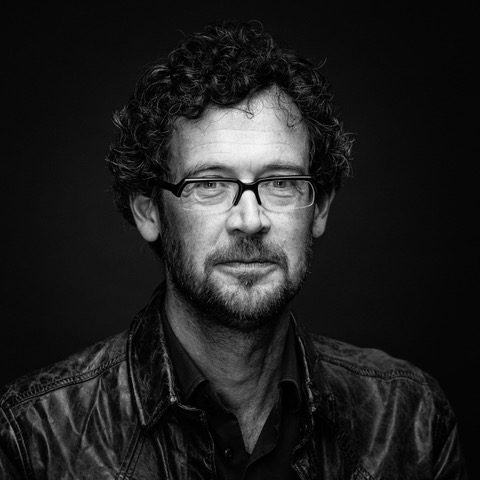
Director / Producer / Writer
Ruán Magan is a producer, writer and director whose work in drama, documentary and stadium events has reached audiences of millions throughout the world.
Having begun his career in the movie business, Ruán has worked as an assistant director and location manger in major Hollywood films including Far & Away, The Devil’s Own and Michael Collins.
Ruán established Create One in 1996 spurred by the ideal of creating high end content that explored and celebrated the human condition. The company’s first production was a documentary presented by the writer and playright, Manchán Magan filmed in India. This led to a long collaboration which saw the two brothers producing 30 documentaries filmed in India, South America, the Middle East, the USA, Europe and China.
In 1998, Create One produced By Design. This six-part documentary series produced by Ruán Magan in collaboration with Fox Laurber and Little Bird, design expert, Garrett O’Hagan and directer, Geoff Dunlop, looked at the crucial role that design plays in the human world. It aired across Europe and the US.
Since then, Ruán has continued to produce project through Create One while also embarking on an international career that has seen him direct and produce projects in the US, Europe and China for Discovery, History Channel, Smithsonian, BBC, ARTE and Tencent.
Drama projects directed by Ruán Magan include Báite (Danu Media), Wrecking The Rising/Éirí Amach Amú (Tile Films), Éoinín na nÉan (TG4) and Angel (Create One). His screenplays No Fury and The Noticer.
Major stadium events inc… Read More


